Quranic Answer
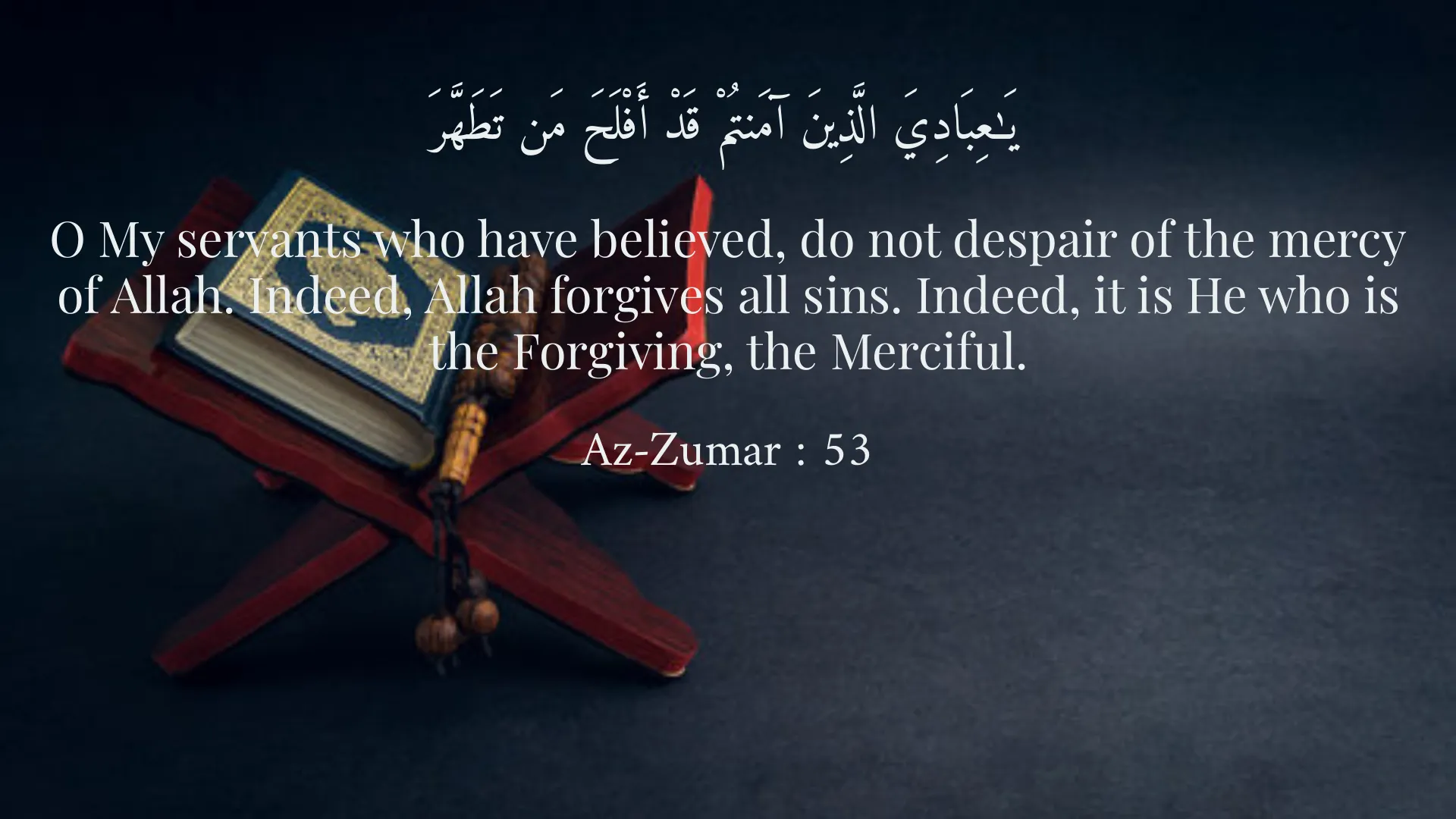
In the Holy Quran, hope for God's forgiveness emerges as one of the fundamental pillars of Islamic faith. This vital concept inspires believers to maintain a sense of optimism and aspiration even in the face of their shortcomings. The Quran frequently emphasizes the boundless mercy that Allah extends toward those who seek His forgiveness and repent for their misdeeds. Within its verses, this theme resonates strongly, providing both guidance and comfort to believers navigating their spiritual journeys. One of the most compelling reminders of God's mercy is found in verse 53 of Surah Az-Zumar, where Allah states: 'O My servants who have believed, do not despair of the mercy of Allah. Indeed, Allah forgives all sins. Indeed, it is He who is the Forgiving, the Merciful.' This verse serves as an essential lifeline for those grappling with despair over their actions. It reassures believers that they are not beyond redemption, regardless of the magnitude of their transgressions. This declaration encapsulates the essence of divine compassion—a reminder that Allah's mercy is all-encompassing and unwavering. The phrase 'do not despair of the mercy of Allah' is particularly significant, as it conveys a direct message to the heart of humanity—never succumb to hopelessness. Despair can lead individuals down a path of spiritual stagnation, ultimately pushing them further away from divine grace. Instead, the Holy Quran encourages believers to foster hope, as it is an integral aspect of their faith. Even in their lowest moments, individuals are reminded to summon the courage to reach out to Allah. Furthermore, the Quran presents a comprehensive framework for understanding the nature of sin and redemption. In Surah Al-Baqarah, verse 286, the scripture states: 'Allah does not burden a soul beyond that it can bear.' This profound assertion emphasizes that God, in His infinite wisdom, is aware of the human condition. It indicates that, even amidst our failings, we possess the capacity to recognize our faults and seek repentance. The implication of this verse is that every soul has the ability to return to Allah's mercy through sincere remorse and contrition. No sin is so great that it cannot be absolved through genuine repentance. The concept of repentance, or Tawbah, is further explored throughout the Quran. In order for one’s return to God to be accepted, it must be marked by true remorse for past actions and a determination to amend one’s ways. Believers are urged to actively seek forgiveness through prayer, reflection, and righteous deeds. Tawbah is not a mere recitation of phrases; it is an active state of seeking Allah's forgiveness with a heartfelt intention to improve oneself and to refrain from repeating past mistakes. Moreover, in Surah An-Najm, verse 32, the Quran elaborates on the relationship between righteous conduct and Allah's mercy: 'And those who do not commit major sins and minor sins, they are closer to Allah's mercy.' This verse introduces an intriguing dimension to the moral landscape—highlighting that while striving for righteousness is essential, the recognition and avoidance of sins also play a crucial role in attaining divine mercy. Believers are encouraged to cultivate a lifestyle marked by virtue while remaining vigilant against actions that may lead them astray. In light of these teachings, it becomes apparent that the hope for God's forgiveness should never diminish in the hearts of believers. Life is an unpredictable journey, filled with moments of both spiritual highs and lows. However, the Quran's steadfast message persists: God's mercy is always accessible to those who sincerely seek it. This unwavering promise serves as a powerful motivator for individuals to continually strive for improvement and self-betterment, rather than to resign themselves to despair and hopelessness. Furthermore, it is pertinent to note that in Surah Ta-Ha, verse 82, Allah emphasizes His readiness to accept repentance: 'And indeed, I am the Accepting of Repentance, the Merciful.' This declaration is pivotal; it encapsulates not only God's willingness to forgive but also His eagerness to do so. Such assurance fortifies the belief that God is perpetually observing human endeavors, ready to embrace those who turn back to Him with sincerity. The overarching narrative within the Quran communicates a heartfelt invitation to individuals to engage in a reciprocal relationship with the divine. By proactively seeking forgiveness, believers are afforded the opportunity to transform their lives and augment their spiritual journeys. This relationship underscores an essential aspect of faith that extends beyond mere belief—it emphasizes action, awareness, and a commitment to moral excellence. In conclusion, the concept of hope for God's forgiveness, as articulated throughout the Quran, serves as a profound foundation for Islamic belief. The affirmations of mercy and forgiveness woven through its verses provide a steadfast source of comfort and motivation for believers. Through sincere repentance, individuals can find solace and restoration in their relationship with Allah. The Quran's teachings remind us that spirituality is not a linear path; it involves setbacks and challenges. However, it is through genuine effort, reflection, and the constant pursuit of divine mercy that one can navigate the complexities of life and ultimately return to the fold of God's compassion. With hope as our guiding force, we can forever anticipate Allah's mercy, as it remains an integral and everlasting component of our faith.
Related Verses
يَـٰعِبَادِيَ الَّذِينَ آمَنتُمْ قَدْ أَفْلَحَ مَن تَطَهَّرَ
O My servants who have believed, do not despair of the mercy of Allah. Indeed, Allah forgives all sins. Indeed, it is He who is the Forgiving, the Merciful.
Az-Zumar : 53
لا يُكَلِّفُ اللَّهُ نَفْسًا إِلَّا وُسْعَهَا
Allah does not burden a soul beyond that it can bear.
Al-Baqarah : 286
إِنَّنِي أَنَا التَّوَابُ الرَّحِيمُ
And indeed, I am the Accepting of Repentance, the Merciful.
Ta-Ha : 82
Short Story
One day, Zainab was sitting by the sea, pondering her life. She was worried about her past mistakes and felt a sense of despair. Suddenly, she remembered the verses of the Quran, and a new calm filled her heart. She realized that she should never lose hope in God's mercy. With a renewed perspective, she decided to repent and start anew, marking the beginning of a new chapter in her life.