Quranic Answer
The Holy Quran holds language and literacy in high regard, elucidating their significance in shaping human relationships and interactions. Language is not merely a tool for communication; it is an essential medium through which individuals express their emotions, convey thoughts, and articulate beliefs. It is through language that we connect with others, build communities, and foster understanding among diverse groups. Given the central role of language in human life, it is sensible to conclude that the Quran places a profound emphasis on the importance of mastering language and literacy. In Surah An-Nisa, verse 94, Allah provides believers with crucial guidance regarding the use of their words and the intent behind their speech. This verse states: 'O you who have believed, fight in the cause of Allah and with your wealth and your lives, and speak good words.' Here, we observe a highly illustrative message where language is highlighted as a powerful tool capable of promoting faith and uniting believers under a common purpose. It encourages believers to engage in righteous actions, but simultaneously warns against the perils of careless speech. Reckless words can undermine collective efforts and create division among followers of the faith. Thus, the Quran advocates for the responsible and thoughtful use of language, urging believers to choose their words wisely. Moreover, the Quran elevates the idea of good speech further in Surah Al-Hashr, verse 11, where Allah advises believers to speak noble words to bolster their faith and spiritual standing. The emphasis on noble language suggests that the quality of our expression can indeed strengthen our relationship with Allah and others. By using language thoughtfully and respectfully, believers can cultivate a nurturing environment grounded in faith, understanding, and compassion. This underscores the notion that language is not only a means of everyday communication but also a sacred entity that has the potential to enhance one's spiritual journey and deepen their connection with the divine. Language is also interwoven with an individual's journey of self-expression and development of faith. Our ability to articulate our thoughts and feelings plays a pivotal role in how we perceive and practice our religion. Mastery over language, whether through reading, writing, or speaking, can serve as an instrument for promoting religious values and fostering a deeper understanding of the teachings of Islam. The Quran continually returns to the significance of eloquent speech, demonstrating how language serves as a conduit for conveying divine messages and encouraging moral conduct. The Islamic perspective on speech further suggests that the preservation and enhancement of language are not merely educational pursuits; they are moral responsibilities rooted in faith. When believers neglect the careful use of language, it may signify a lack of attention to their spiritual duties. Therefore, proficiency in language becomes a reflection of one’s piety and dedication to practicing their faith diligently. A person who embraces the teachings of the Quran should not only strive for personal righteousness but also promote positive discourse that nourishes community cohesion and fosters understanding. To understand the critical importance of language in the Quran, it is essential to explore the socio-cultural context in which these verses were revealed. At the time of the Quran's revelation, language was the primary vehicle for sharing knowledge, transmitting teachings, and maintaining social order. The efficacy of communication could have profound implications for the spread of Islam, shaping interactions among people and communities. In this regard, the Quran recognizes that fostering strong language skills and respect for eloquent expression will have trickle-down effects on broader society, nurturing a culture built on shared values of kindness, respect, and virtue. Furthermore, the Quran's focus on language extends beyond mere syntax or vocabulary. It reflects the underlying philosophy that words possess intrinsic power, capable of inspiring change and promoting justice. The Quran commends individuals who employ their linguistic capabilities not only to benefit themselves but also to uplift and guide others. By utilizing language responsibly and compassionately, believers fulfill their role as ambassadors of faith, bridging divides and encouraging dialogue rooted in understanding. The call to maintain language and enhance proficiency in expression echoes beyond the realm of Quranic instruction. It invites scholars, educators, and individuals alike to recognize the transformative power of language in their lives. In light of contemporary challenges, the prevalence of social media and fast-paced communication adds an additional layer of complexity to the discourse surrounding language. With rapid exchanges often ciphering meaningful communication, it becomes crucial to remain attentive to how we deploy language in these modern settings. In any society, the arts of communication, listening, and sharing establish a foundation for peace and collaboration. Language fosters relationships rooted in trust and respect, allowing individuals to transcend cultural boundaries and navigate social differences. The Quran’s timeless teachings on language offer a potent reminder: in expressing compassion, wisdom, and love, we not only strengthen our faith but also heal our communities. In conclusion, it is evident that The Holy Quran ascribes significant value to language and literacy, viewing them as vital components of human interaction and expressions of faith. The guidance provided in Surah An-Nisa and Surah Al-Hashr serves as an enduring reminder of the responsibility that lies upon believers to engage in righteous speech and employ their linguistic skills to nourish their faith, build community, and serve as conduits of divine wisdom. Ultimately, language is not merely a tool of communication—when embraced and practiced with intention, it becomes a path leading to spiritual growth, understanding, and opportunities to enhance and deepen one's relationship with Allah. As we cultivate our language skills, we nurture our faith and reinforce our covenant with the values and principles of Islam.
Related Verses
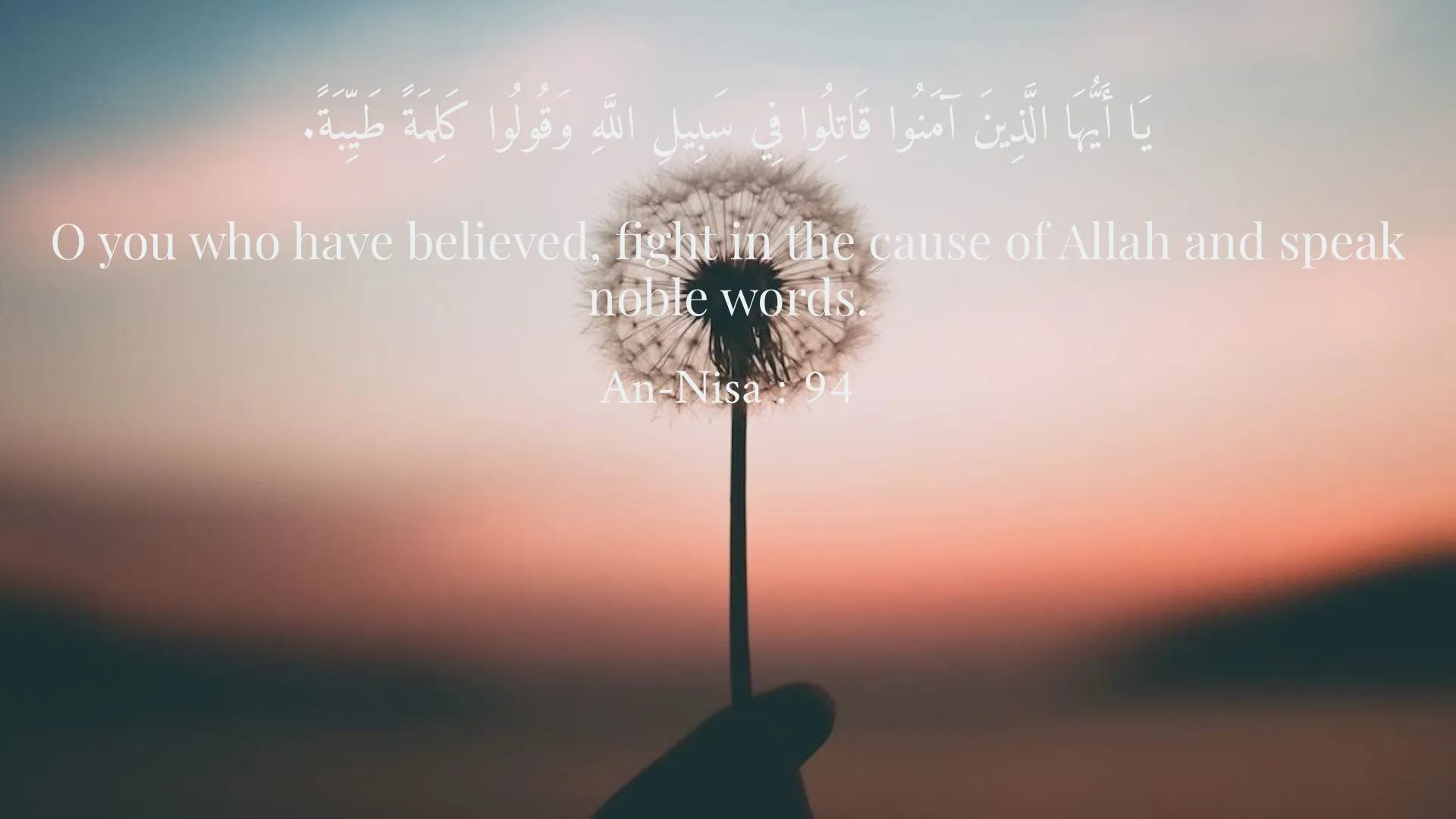
يَا أَيُّهَا الَّذِينَ آمَنُوا قَاتِلُوا فِي سَبِيلِ اللَّهِ وَقُولُوا كَلِمَةً طَيِّبَةً.
O you who have believed, fight in the cause of Allah and speak noble words.
An-Nisa : 94
وَذَكَّرْهُمْ بِأَقْوَالٍ طَيِّبَةٍ.
And remind them to speak good words.
Al-Hashr : 11
Short Story
One day, Adel was reading a book he had borrowed from his teacher. In it, he found a story about language and speech. His teacher had written that in every word we utter, a sign of our faith lies. Adel thought that everything he did should be done with honesty and love. One day, he told his friend, 'We must speak to each other with beautiful and kind words because our words can change our world.'