Quranic Answer
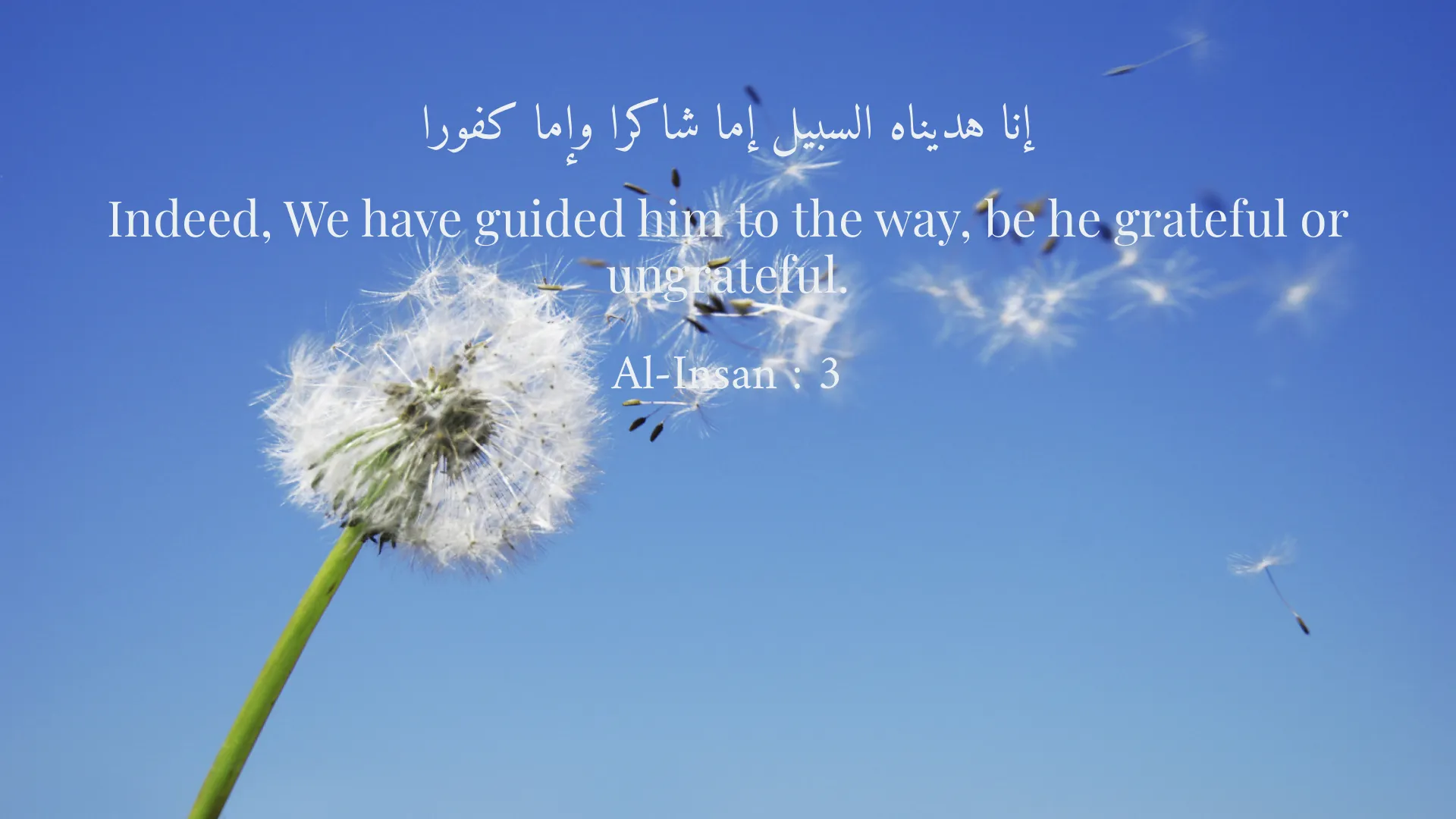
The intricate relationship between fate and free will has been a longstanding subject of exploration across various cultures and philosophies. The Quran, as the holy book of Islam, provides profound insights into these concepts, elaborating on the balance between divine decree and human autonomy. This exploration offers a rich understanding of human responsibility, moral accountability, and the essence of faith, drawing readers closer to the divine principles that govern our existence. At the core of the Quranic discourse is the notion that Allah created humans with the gift of free will, a fundamental aspect of our humanity. This autonomy empowers us to make choices, both good and bad, thereby shaping our destinies. In Surah Al-Insan, verse 3, Allah states, 'Indeed, We have guided him to the way, be he grateful or ungrateful.' This verse unmistakably demonstrates that individuals possess the ability to choose their paths in life. The guidance provided by Allah serves as a reference point, illustrating that while we are directed towards righteousness, the choice remains ours to embrace or reject it. The underlying message is that even amidst divine guidance, the human will is paramount, allowing individuals to reflect upon their choices in light of their gratitude or ingratitude. The theme of choice is further emphasized in Surah Al-Baqarah, verse 256, which asserts, 'There shall be no compulsion in [acceptance of] the religion. The right course has been made distinct from the wrong.' This declaration underscores the importance of personal conviction and the freedom to embrace faith without coercion. True belief, according to this verse, must spring from personal understanding and the voluntary acceptance of truth. The distinction between right and wrong provided in this verse illustrates that while guidance is available, the ultimate choice rests with each individual. The absence of compulsion signifies that faith is not a uniform experience; rather, it is a deeply personal journey shaped by individual reflections, experiences, and convictions. This emphasis on free will does not negate the presence of divine decree; rather, it interweaves with it to form a complex interplay that defines human existence in the world. The Quran acknowledges the overarching will of Allah, which governs the universe and dictates the course of events. However, this divine ordinance does not render human efforts futile; on the contrary, our decisions, actions, and intentions significantly influence our individual fates. The concept of free will promotes the idea that humans are not mere puppets of fate but active participants in the unfolding narrative of their lives, with Allah's guidance illuminating their paths. Moreover, the relationship between free will and divine will can be perceived through the lens of moral accountability. The Quran stresses the significance of human actions, reinforcing the principle that individuals are responsible for their behavior and its consequences. The teachings of Islam encourage adherents to exercise their intellect and judgment when navigating choices, ensuring they are aware of the moral implications of their decisions. The accountability for one’s actions fosters a sense of responsibility, compelling individuals to reflect on their choices consistently. Additionally, the Quranic perspective encourages a proactive approach to life, urging individuals to engage actively in their moral and spiritual development. This is particularly evident in the various parables and lessons presented throughout the Quran that spotlight the importance of making thoughtful choices and embodying virtuous behavior. The narrative of historical figures in the Quran serves as powerful examples for believers, demonstrating how free will can lead to varying outcomes based on the characters of the individuals involved. In contemplating the divine plan versus personal agency, the Quran reminds us of our intrinsic value as beings endowed with reason and the capacity to discern. It doesn’t frame fate merely as a chain of preordained events but rather as a dynamic interplay between divine wisdom and human action. Consequently, this perspective elevates the human experience, placing significant emphasis on the idea that we are, indeed, capable of influencing our destinies through conscious choices. As we navigate the complexities of life, the Quran serves as a timeless guide, emphasizing the importance of introspection and self-awareness. It encourages individuals to ponder their decisions carefully, urging them to seek knowledge, wisdom, and divine guidance in their pursuits. This reflective approach allows for a deeper connection with one’s beliefs, promoting a sense of authenticity in one’s religious practice. In conclusion, the themes of fate and free will explored in the Quran highlight the importance of human autonomy while underscoring the divine guidance provided by Allah. Humans are not mere spectators in the narrative of life; they are actors with agency, equipped to make meaningful choices that shape their destinies. This delicate balance between divine decree and individual choice not only fosters accountability but also empowers individuals to take charge of their lives, cultivating a sense of purpose and direction. Ultimately, the Quran teaches us that our thoughts, decisions, and actions form the fabric of our destinies, reminding us of our responsibilities in this world as we strive for a life defined by faith, integrity, and moral clarity.
Related Verses
إنا هديناه السبيل إما شاكرا وإما كفورا
Indeed, We have guided him to the way, be he grateful or ungrateful.
Al-Insan : 3
لا إكراه في الدين قد تبيّن الرشد من الغي
There shall be no compulsion in [acceptance of] the religion. The right course has been made distinct from the wrong.
Al-Baqarah : 256
Short Story
One day, a man named Hamid went to a park to contemplate. He had always wondered whether his fate was predetermined or if he could make choices himself. While walking, he saw children playing, and one of them exclaimed, 'I want to grow up and become a doctor!' This statement struck him deeply. Hamid realized that this child was determining his own fate. He decided that he too should take charge of his life and utilize the power of his will. Therefore, Hamid moved forward into his future with more confidence.