Quranic Answer
Patience is a central theme in many religious texts, reflecting its significance as a virtue that can guide individuals through the various storms of life. In the Holy Quran, patience is regarded as a highly valued and important trait. Numerous verses emphasize the significance of patience in facing life's challenges and difficulties, illustrating how it serves as a pillar of faith for believers. One of the most notable references is in Surah Al-Baqarah, verse 153. Here, Allah encourages the believers to seek help through patience and prayer, commanding, 'O you who have believed, seek help through patience and prayer. Indeed, Allah is with the patient.' This verse not only indicates that patience, alongside prayer, is expected of a person, but also signifies that it is a powerful sign of closeness to Allah. It establishes a framework within which believers can draw strength from their faith and develop resilience in the face of adversity. The inclusion of prayer alongside patience highlights that both components are interlinked; the act of praying can fortify one's resolve to practice patience. For many, the act of prayer can serve as a reminder of divine support during trying times, which cultivates a sense of community among believers. Furthermore, prayer often provides reassurance and a moment to reflect, which can help reinvigorate a person’s patience. However, it is essential to understand that patience, while crucial, might not always be sufficient. There are moments in life when a passive approach may not yield positive results, and decisiveness and action can be essential. The Quran discusses various circumstances where patience can be significantly tested; this is especially relevant when individuals face oppression or severe injustices. In Surah Al-Imran, verse 186, Allah states: 'You will surely be tested...' This proclamation serves as a poignant reminder that life is inherently filled with tests and trials. Rather than being discouraged, believers are encouraged to understand these as opportunities for growth. The acknowledgment of being tested can be both daunting and liberating. The promise that tests will come emphasizes the reality of human experience and prepares believers for life’s unpredictable challenges. Patience becomes a weapon against despair, as it allows individuals to endure pain while seeking justice and resolution. When faced with adversity, it is the strength of patience that helps individuals bear their burdens and move forward. While the Quran emphasizes the importance of patience, it is also critical to recognize that such qualities should not lead to inaction. Believers are called to be active participants in their lives and surroundings. There are historical examples within Islamic tradition where individuals demonstrated both patience and assertiveness. Take the case of the Prophet Muhammad (PBUH), whose life is replete with situations where he exhibited remarkable patience in the face of opposition. Yet, he also took decisive action when circumstances demanded it. His approach reflects the balance between being patient and taking necessary action to effect change. The interplay between patience and action is crucial. In moments of domestic or social injustice, simply enduring the situation without striving for reform can lead to a perpetuation of that injustice. Thus, patience should not be mistaken for passivity; instead, it should inspire constructive responses to injustice. When facing oppression, individuals can take inspiration from Quranic teachings to advocate for justice while simultaneously practicing patience. They can speak truth to power, engage in peaceful activism, and foster dialogue—thereby embodying both the quality of patience and the necessity to act. Moreover, it’s essential to understand the broader context in which patience operates. In Islamic thought, patience (known as 'Sabr') is not merely a personal trait but a communal one. The collective strength of a community practicing patience can spur significant social change. When individuals unite in patience against a common challenge—be it famine, oppression, or war—they can foster resilience within their community, inspiring others to maintain their faith and fortitude. This is beautifully reflected in the Quranic narrative of the Ansar and Muhajirin, individuals who exhibited tremendous patience during the initial struggles of the Islamic community in Medina. Their perseverance and collective support for one another ultimately led to the establishment of a vibrant, united society. In this context, patience becomes a tool for transformation—not just within oneself, but within the broader society. Reflecting on the significance of patience also leads to more profound personal insights. Patience cultivates empathy, helps individuals navigate relationships, and aids in overcoming personal struggles. By practicing patience, individuals learn to manage their expectations and responses. It develops character and moral strength, enabling a person to act wisely, irrespective of the temptations of anger or despair. The experiences of overcoming challenges can teach individuals invaluable lessons in humility and gratitude, thus transforming how they respond to various life situations. In conclusion, patience is a multifaceted trait in the Holy Quran, regarded as absolutely essential in both personal growth and communal resilience. Although it is a significant virtue, the teachings of the Quran suggest that patience should not exist in a vacuum. In many circumstances, decisiveness and action are equally vital for achieving justice and effecting change. Through patience, individuals can withstand life's trials, foster community among believers, and take meaningful action when necessary. Hence, while patience serves as a hopeful and empowering trait, adopting a holistic approach that balances patience with decisive actions ensures the best outcomes in the journey of life.
Related Verses
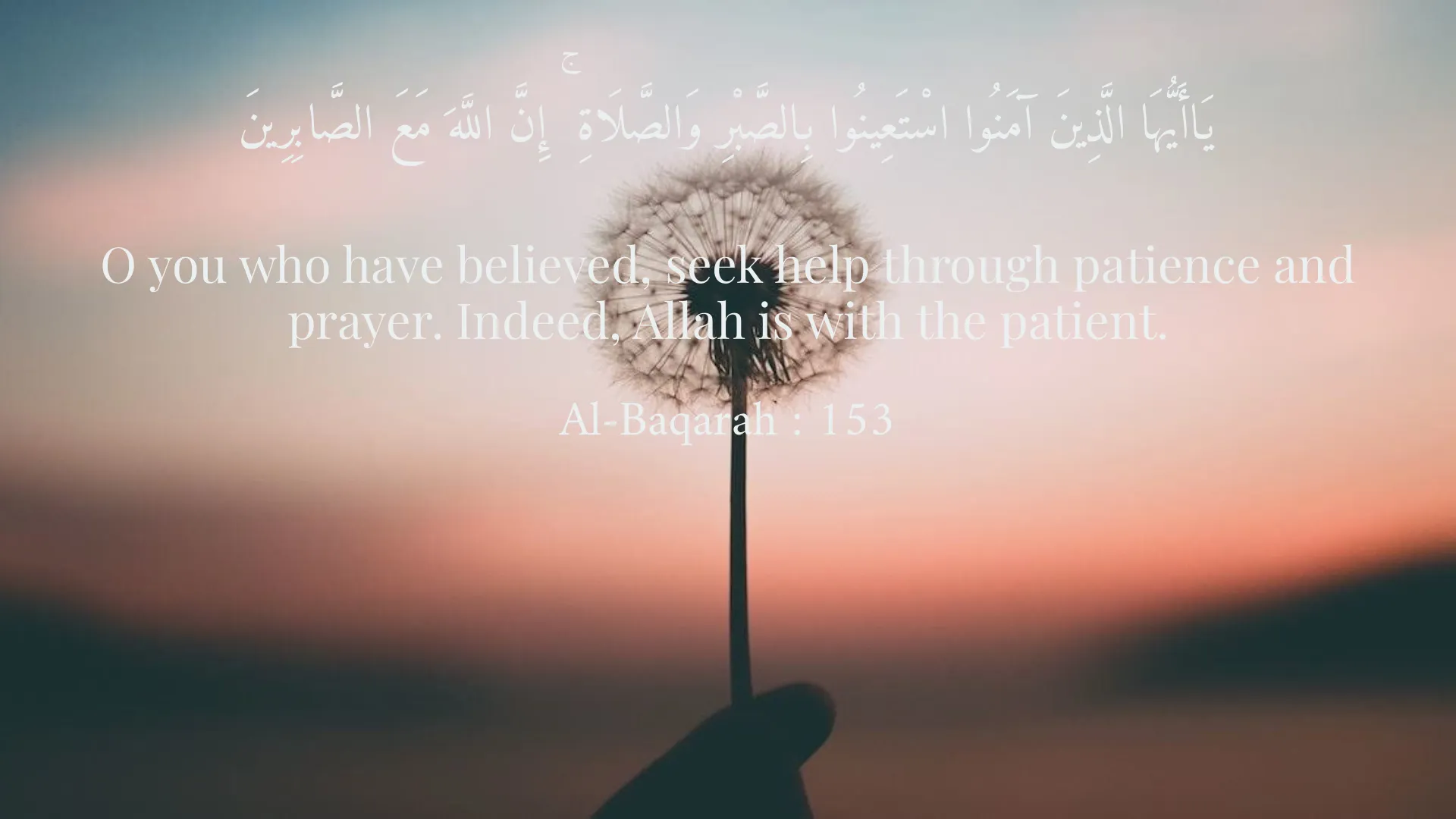
يَاأَيُّهَا الَّذِينَ آمَنُوا اسْتَعِينُوا بِالصَّبْرِ وَالصَّلَاةِ ۚ إِنَّ اللَّهَ مَعَ الصَّابِرِينَ
O you who have believed, seek help through patience and prayer. Indeed, Allah is with the patient.
Al-Baqarah : 153
لَتُبْلَوُنَّ فِي أَمْوَالِكُمْ وَأَنفُسِكُمْ
You will surely be tested in your wealth and in yourselves.
Al-Imran : 186
Short Story
One day, Ali was facing many challenges and wondered how he could overcome these issues. He remembered the verses of the Quran and decided to focus more on patience. As days passed, Ali realized that with patience and prayer, he could conquer his problems and find greater peace.