Quranic Answer
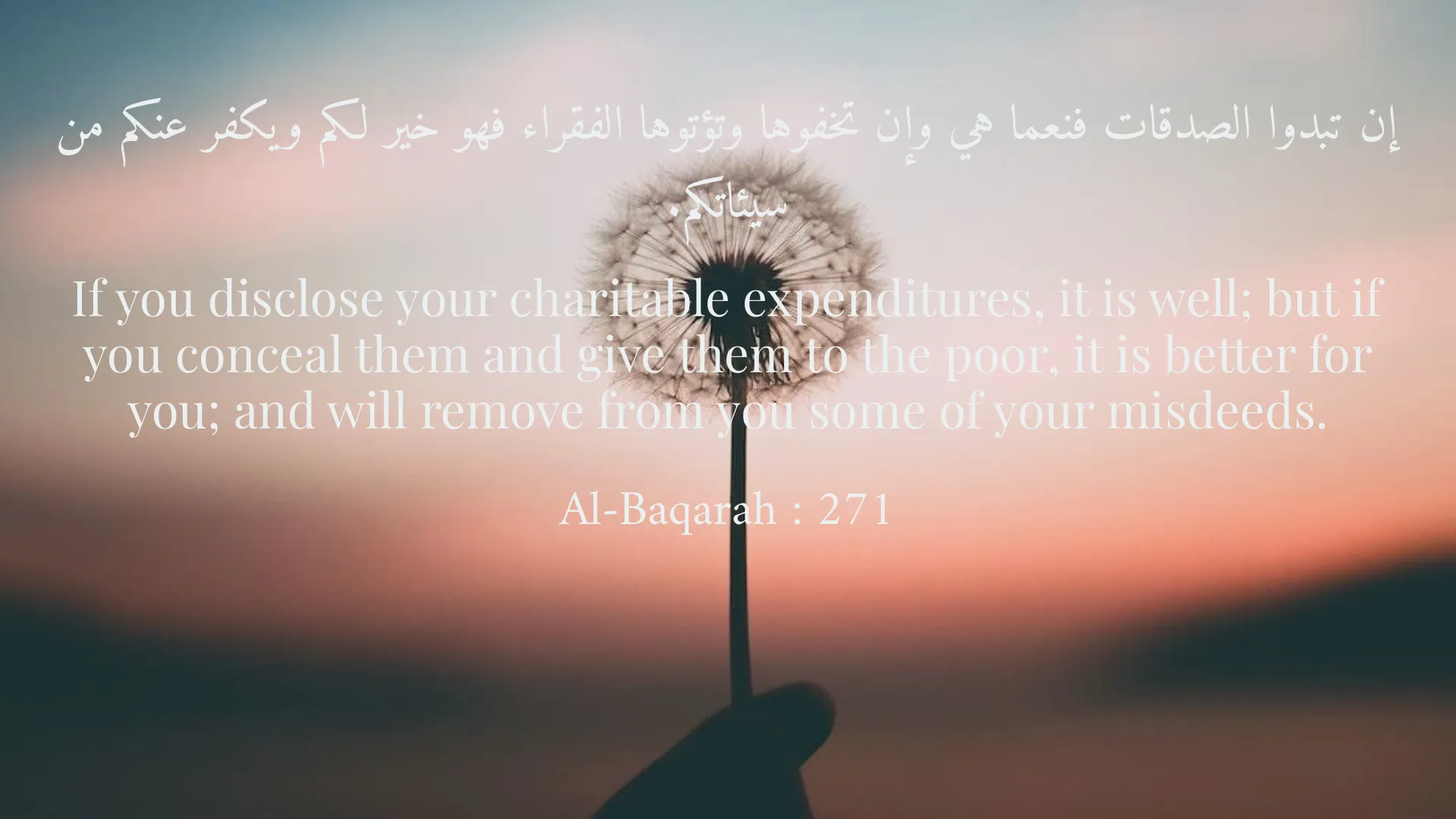
The Holy Quran holds a pivotal position in the lives of Muslims, serving not just as a religious text, but as a comprehensive guide that addresses various aspects of human life. One of the significant areas that the Quran deals with is the topic of spending and financial assistance. This concept is illuminated within several verses, highlighting the importance of charity, the motives behind giving, and the profound impact that financial support can have on both the giver and the receiver. In Surah Al-Baqarah, verse 271, Allah states, 'If you disclose your charitable expenditures, it is well; but if you conceal them and give them to the poor, it is better for you; and will remove from you some of your misdeeds.' This verse presents a thought-provoking perspective on the nature of charitable giving. It acknowledges two forms of charity: public and private. The public display of generosity can certainly garner social praise, bolster one’s reputation, and inspire others to follow suit, thus creating a communal environment of giving. However, the verse emphasizes the enhanced virtue of secrecy in charitable acts. When one gives in private, it not only preserves the dignity of those in need but also reflects a pure intention, free from the desire for recognition. This act of kindness dispenses peace and relief to those who may be struggling, ensuring that the focus remains on alleviating hardship rather than seeking personal accolades. Moreover, the Quran underscores that the nature of giving should be rooted in sincerity and compassion rather than ostentation. Secret assistance can often lead to a more profound sense of fulfillment, as it is an act performed solely for the pleasure of Allah. This notion reinforces the understanding that the reward of such actions is not bound by worldly recognition, but rather, it aligns with the divine promise of spiritual rewards. This seemingly simple act of kindness can serve as a means to cleanse one's soul of misdeeds and pave the path for a better life, both in this world and in the hereafter. In addition to the significance of secret giving, the Quran also encourages public acts of charity. In Surah Al-Mu’minun, verse 60, it is stated, 'And those who spend in the cause of Allah during nights and days, secretly and publicly, will have their reward with their Lord.' Here, the believer is reminded of the dual importance of both private and public charity. While individual acts of kindness can be impactful on a personal level, public generosity can cultivate a sense of community and shared responsibility. It inspires others to contribute, nourishing a collective ethos that uplifts the disadvantaged. The integration of both forms of charity appears to encourage a balanced approach towards giving. A believer is motivated to be generous not only for personal redemption but also to stimulate an environment where charity becomes a norm and a valued endeavor. This approach indeed plays a critical role in fostering a strong sense of community, solidarity, and accountability among individuals in society. Financial assistance also ties directly into the fundamental values of compassion and social justice that underpin the Islamic faith. The Quran’s guidance urges Muslims to look beyond their own needs and consider the plight of the less fortunate. This holistic perspective on financial dealings and altruism encourages believers to take responsibility for their fellow human beings and to understand their capacity to effect change within their community. Furthermore, the moral teachings surrounding spending and charity extend beyond mere financial assistance; they invoke a sense of duty. The faithful are reminded of the temporary nature of wealth, which is termed in the Quran as a test from Allah. Surah Al-Baqarah, verse 261, highlights this sentiment, stating that spending in the way of Allah is analogous to planting seeds that yield abundantly. Such metaphors illustrate how generosity can blossom into lasting rewards and divine blessings. The ramifications of charitable spending go beyond the immediate relief of poverty. It fosters interconnectedness and promotes a culture of empathy, understanding, and support. In societies where individuals feel a collective sense of responsibility towards one another, the barriers of isolation and despair begin to diminish. Financial assistance, as encouraged in the Quran, has the potential to erode societal divides and foster resilience. Additionally, it is essential to consider the psychological impact of giving on the donor. Engaging in charitable acts not only benefits recipients but also cultivates a sense of inner peace and satisfaction in the giver. Numerous studies suggest that those who donate their time and resources tend to experience higher levels of happiness and fulfillment. The Quran recognizes and enhances this intrinsic motivation, recognizing that with every act of charity, believers earn spiritual growth and a deeper connection with their Creator. In conclusion, the Holy Quran provides profound insights into the act of spending and giving. It presents a nuanced understanding of both public and private charitable acts, underscoring their unique advantages and the critical role they play in building a compassionate society. Financial assistance, whether bestowed anonymously or openly, holds immense value and ripple effects that extend through communities. The belief in the sanctity of giving fosters stronger bonds among individuals, consolidating the foundation of Islamic teachings on empathy, mutual support, and responsibility towards one another. As Muslims strive to practice their faith, the principles laid out in the Quran regarding charity serve to remind them of their role within society and the importance of helping those in need. In doing so, they not only fulfill a divine command but also participate in an age-old legacy of kindness, integrity, and community-building.
Related Verses
إن تبدوا الصدقات فنعما هي وإن تخفوها وتؤتوها الفقراء فهو خير لكم ويكفر عنكم من سيئاتكم.
If you disclose your charitable expenditures, it is well; but if you conceal them and give them to the poor, it is better for you; and will remove from you some of your misdeeds.
Al-Baqarah : 271
والذين ينفقون في سبيل الله بالليل والنهار سرًا وعلانية لهم أجر كبير عند ربهم.
And those who spend in the cause of Allah during nights and days, secretly and publicly, will have their reward with their Lord.
Al-Mu'minun : 60
Short Story
One day, a kind-hearted man decided to help friends and those in need. Initially, he thought that public assistance was better so that everyone would see. However, after a while, he realized that secret kindness, done without being seen, brought him greater satisfaction. He decided to assist those in need in both ways and continued his life with a joyful heart.