Quranic Answer
The notion of serving others is deeply embedded in the teachings of the Holy Quran, even though it may not be explicitly categorized as an act of worship. The Quran emphasizes the importance of upholding the rights of others and extending help to those in need, which aligns closely with the concept of righteousness in Islam. More than mere charity, serving others can be perceived as an intrinsic part of one's faith and devotion to Allah. This article delves into the Quranic verses that underline the significance of serving others, elucidating the connection between service to humanity and worship of the Divine. One of the most illustrative verses regarding the importance of serving others can be found in Surah Al-Baqarah, verse 177. Allah states: "Righteousness is not that you turn your faces toward the east or the west, but [true] righteousness is in one who believes in Allah, the Last Day, the Angels, the Book, and the Prophets and gives his wealth, in spite of his love for it, to relatives, orphans, the needy." This verse signifies that the essence of piety goes beyond mere rituals and outward appearances—it lies in one’s character, beliefs, and actions that demonstrate compassion for others. In this verse, Allah emphasizes that true righteousness is embodied in the act of giving, particularly to those who are vulnerable and in need. It fundamentally encourages individuals to share their wealth and resources, thereby fostering a sense of community and mutual support. The act of giving, as highlighted in this verse, is performed not just out of obligation, but from a place of genuine love and concern for others. This philanthropic spirit is what enriches the human experience, transforming the giver and benefactor alike. Moreover, Surah Al-Imran, verse 114, further reinforces the value of performing good deeds and extending kindness to others. The verse states: "And whatever good they do – never will it be removed from them; and Allah is Knowing of the righteous." This highlights a profound aspect of Islamic teaching—that good deeds and acts of kindness are perpetual in their reward. The idea that Allah is aware of every righteous action signifies that serving others is a significant facet of one’s spiritual journey. The interrelation between serving others and worship is intricate. While worship is commonly understood as acts performed directly in honor of Allah, such as prayer and fasting, the Quran invites its followers to extend their worship through service to humanity. Every virtuous action done with the intention of seeking closeness to Allah is considered an act of worship. Hence, when Muslims serve others and strive to alleviate their hardships, they do so not only as a humanitarian gesture but also as a means of worshipping Allah. It is also essential to reflect on the importance of intention (niyyah) in Islam. The Prophet Muhammad (peace be upon him) said: "Actions are judged by intentions, so each person will have what they intended." This authentic Hadith emphasizes that the underlying intention behind every act defines its value in the sight of Allah. Therefore, an act of kindness performed for the sake of Allah, regardless of its scale, transforms into a significant act of worship. In the context of community service, Islam encourages collective efforts to uplift society. Muslims are urged to engage actively in social work, volunteer efforts, and support systems that cater to the less fortunate. Historical instances within the Islamic tradition exemplify the spirit of community service. The early Muslim community in Medina provided various forms of assistance to the migrants from Mecca, ensuring they had shelter, food, and guidance. This foundational ethos continues to be relevant, inspiring contemporary Muslims to follow suit by establishing charitable organizations and initiatives aimed at improving lives. Furthermore, Islamic teachings encourage believers to understand their social responsibility. By prioritizing the needs of others, individuals can contribute towards building a more equitable society where compassion and empathy reign. Acts of service can vary from simple gestures such as offering a smile and a helping hand to organized efforts like establishing food banks, mentorship programs, and shelters for the homeless. Each of these acts contributes to building a robust social fabric and reflects the divine attributes of mercy, compassion, and generosity. Additionally, in Islam, the notion of serving others is not limited only to fellow Muslims. It extends to people of all backgrounds and beliefs, establishing a universal moral principle of kindness. The Quran emphasizes this inclusivity, reminding believers of their duty to treat all, regardless of their faith, with respect and compassion. This further reinforces the understanding that service to humanity is a divine commandment, echoing the fundamental teachings of the Quran about justice, equality, and love for all creation. In conclusion, while the Quran may not explicitly label serving others as an act of worship, the principles outlined within its verses illuminate the underlying sanctity and significance of altruism. The act of serving others is deeply rooted in the concept of righteousness, which calls for believers to aid those in need and to establish meaningful connections within their communities. When performed with sincerity and the intention of pleasing Allah, serving humanity transcends mere obligation and manifests as an act of worship itself. By embracing this ethos, Muslims not only enhance their spiritual lives but also foster a more compassionate and just society, reflecting the teachings of Allah and the noble character of His Messenger. Thus, let us strive to serve others, recognizing it as both a privilege and a profound expression of our faith.
Related Verses
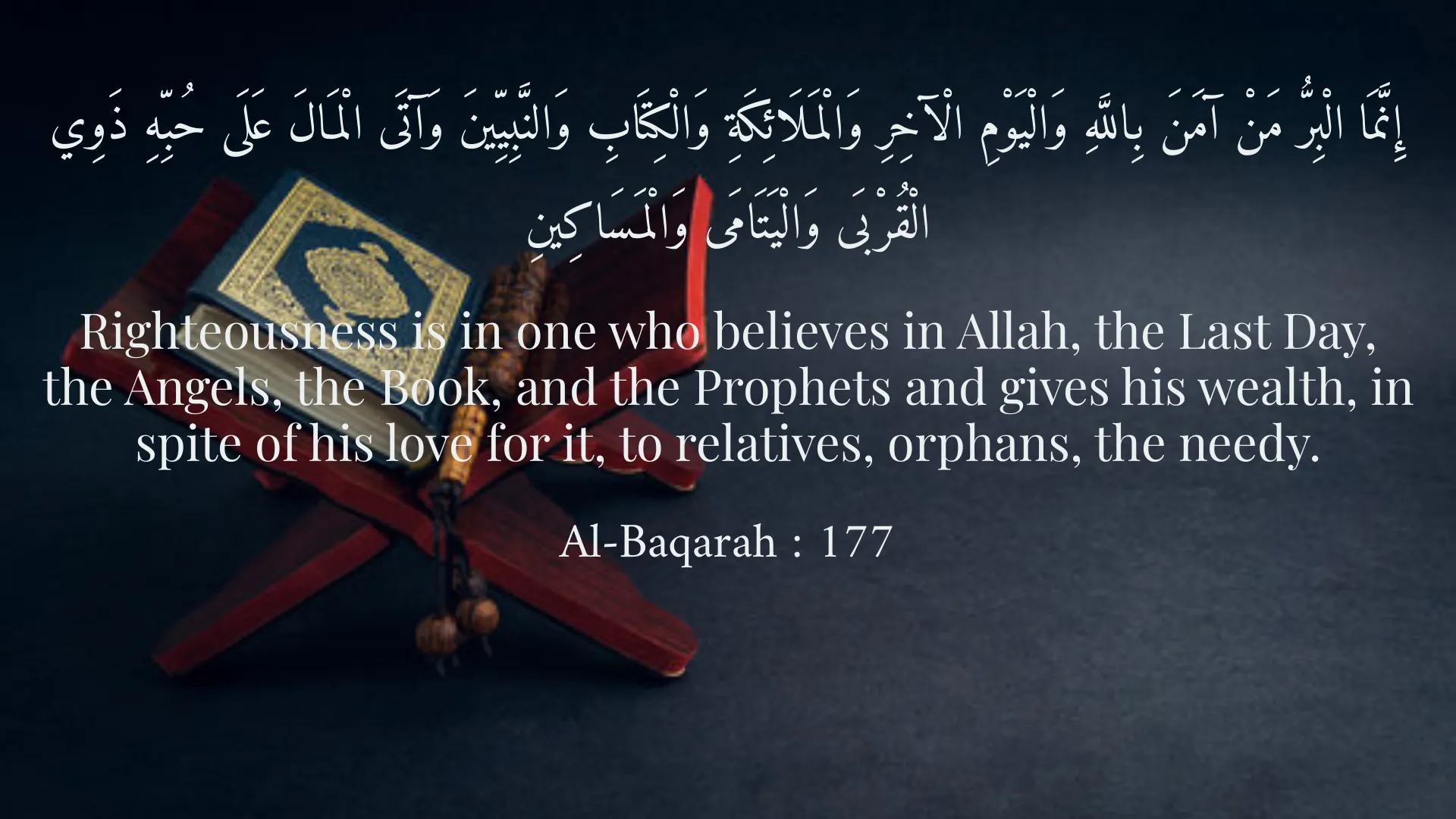
إِنَّمَا الْبِرُّ مَنْ آمَنَ بِاللَّهِ وَالْيَوْمِ الْآخِرِ وَالْمَلَائِكَةِ وَالْكِتَابِ وَالنَّبِيِّينَ وَآتَى الْمَالَ عَلَى حُبِّهِ ذَوِي الْقُرْبَى وَالْيَتَامَى وَالْمَسَاكِينِ
Righteousness is in one who believes in Allah, the Last Day, the Angels, the Book, and the Prophets and gives his wealth, in spite of his love for it, to relatives, orphans, the needy.
Al-Baqarah : 177
وَمَا تَفْعَلُوا مِنْ خَيْرٍ فَلا تُكْفَرُوا وَأَنتُمْ لَا تُظْلَمُونَ
And whatever good they do – never will it be removed from them; and Allah is Knowing of the righteous.
Al-Imran : 114
Short Story
Once upon a time, there was a man named Hossein living in a village. He always strived to help those around him. One day, while walking through the market, he saw an old man in need of assistance. Hossein immediately approached him, took his hand, and guided him home. The old man was immensely grateful for Hossein's kindness and offered sincere prayers for him. Hossein reflected that such virtuous acts not only positively impacted the lives of others but also brought him a deeper sense of happiness and contentment. This story illustrates that serving others can indeed be a form of worship.