Quranic Answer
In the Holy Quran, the subject of death and the fear associated with it has been discussed numerous times. In fact, the fear of death is a human trait that arises from the feeling of attachment to life and love for it. Humans are inherently drawn to what they know and understand, and death, being the ultimate unknown, evokes fear and anxiety. Yet, it is crucial to recognize that the Quran provides profound insights into the nature of death, urging believers to frame their perspective on it through the lens of faith, purpose, and hope in the eternal life that follows. One of the most poignant references comes from Surah Al-Imran, verse 185: "Every soul will taste death. And you will surely be given your full recompense on the Day of Resurrection. So he who is drawn away from the Fire and admitted to Paradise has indeed succeeded..." This verse clearly demonstrates that death is a part of life and is inevitable for all. It underscores the concept that life is a test leading to an eventual reckoning in the hereafter. By acknowledging that every soul must experience death, believers can cultivate a sense of acceptance and prepare themselves spiritually for the transition from this world.[[1](https://www.quranicstudies.com/surah/al-imran/)] Moreover, the Quran emphasizes that the fear of death can often stem from ignorance and disbelief. In Surah Al-Munafiqun, verse 11, Allah states: "And Allah will never guide a people who are disbelievers." This verse highlights that a limited understanding or rejection of God’s message can deepen one’s fear of death and the afterlife. Without faith, the idea of mortality can be utterly daunting, as it is perceived solely as an end, devoid of any belief in what lies beyond. This existential dread can alienate individuals from God, exacerbating their fears rather than alleviating them. Therefore, the foundation of belief in God’s wisdom and mercy is crucial in overcoming this fear. The Quran encourages believers to confront their fears surrounding death with knowledge and faith. It can be beneficial for individuals to engage in introspection and study the Quranic verses that address life, death, and resurrection. For believers, death is not seen as an end but as a transition from this worldly existence to an eternal existence. It is vital to view death as the next stage of a journey rather than an ultimate conclusion. This new phase, as outlined in various Quranic teachings, is filled with possibilities and hope for those who have led a righteous life. For instance, the concept of resurrection is a significant theme woven throughout the Quran. Believers are reassured of Allah's mercy, leading them to understand that death can be perceived as a doorway to paradise, provided one lives in accordance with His commands. Thus, the hope for mercy from Allah in the afterlife must be anchored in one's faith and good deeds performed in this life. Believers are encouraged to engage in righteous actions, seek forgiveness, and rely on God’s compassion, enhancing their readiness to face death when it arrives. Fear of death is a natural human emotion, but it should not result in distancing from God or indulging in despair. Instead, acceptance and trust in God's plan can transform that fear into a source of motivation for leading a life filled with purpose, good deeds, and devotion. Learning about and reflecting on the blessings of the afterlife can also provide comfort. The Quran illustrates vivid imagery of paradise, a place of eternal peace and joy. Surah Al-Baqarah, verse 25 encourages believers with the promise: "And give good tidings to those who believe and do righteous deeds that they will have gardens in Paradise beneath which rivers flow…" Such verses instill optimism in the hearts of believers as they navigate the challenges of life. In summary, while the fear of death is a common human experience, believers should take solace in the assurances provided within the Quran. Death is a fundamental aspect of life, and the transition it entails is not one to be feared but embraced. Understanding the realities of the afterlife can quell anxieties and foster a deeper relationship with God. Through faith, acknowledgement of one's mortality, and preparation for the life to come, believers can transform their perception of death from one of dread to one of hopeful anticipation. As summarised succinctly in Surah Al-Ankabut, verse 57: "Every soul will taste death, then to Us will you be returned." It is through embracing this profound truth that believers can find peace, reduce their fear of death, and conduct their lives with purpose inspired by the eternal promise of life after death.
Related Verses
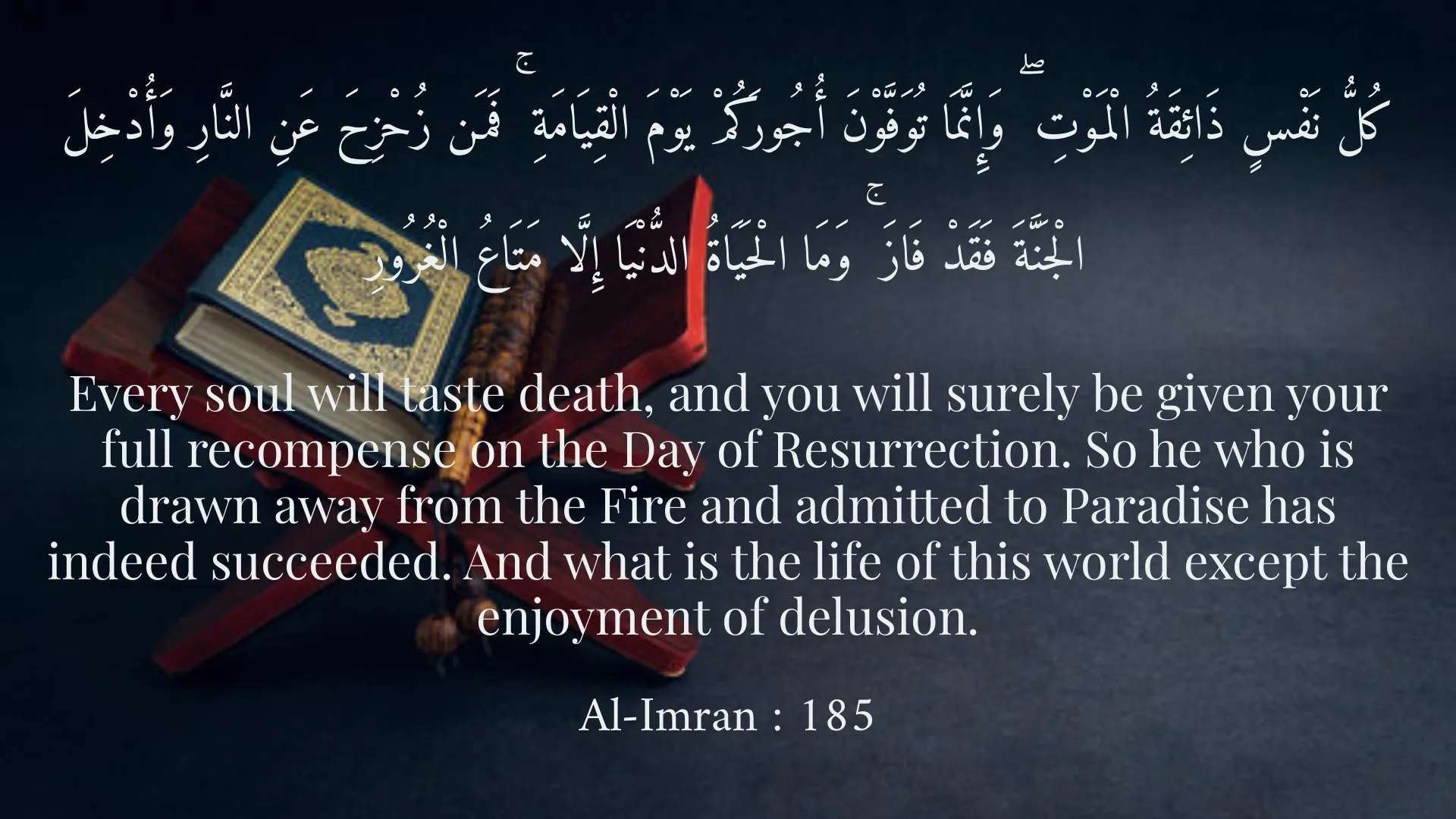
كُلُّ نَفْسٍ ذَائِقَةُ الْمَوْتِ ۖ وَإِنَّمَا تُوَفَّوْنَ أُجُورَكُمْ يَوْمَ الْقِيَامَةِ ۚ فَمَن زُحْزِحَ عَنِ النَّارِ وَأُدْخِلَ الْجَنَّةَ فَقَدْ فَازَ ۚ وَمَا الْحَيَاةُ الدُّنْيَا إِلَّا مَتَاعُ الْغُرُورِ
Every soul will taste death, and you will surely be given your full recompense on the Day of Resurrection. So he who is drawn away from the Fire and admitted to Paradise has indeed succeeded. And what is the life of this world except the enjoyment of delusion.
Al-Imran : 185
وَلَنْ يُهْدِيَ اللَّهُ قَوْمًا كَافِرِينَ
And Allah will never guide a people who are disbelievers.
Al-Munafiqun : 11
Short Story
Once upon a time, there was a man named Reza who pondered about death and life. He always feared death and couldn't think of it. One day, he turned to the Quran and read a verse that reminded him that death is just a transition. From that day on, Reza tried to be hopeful about the afterlife and found greater peace with this thought.