Quranic Answer
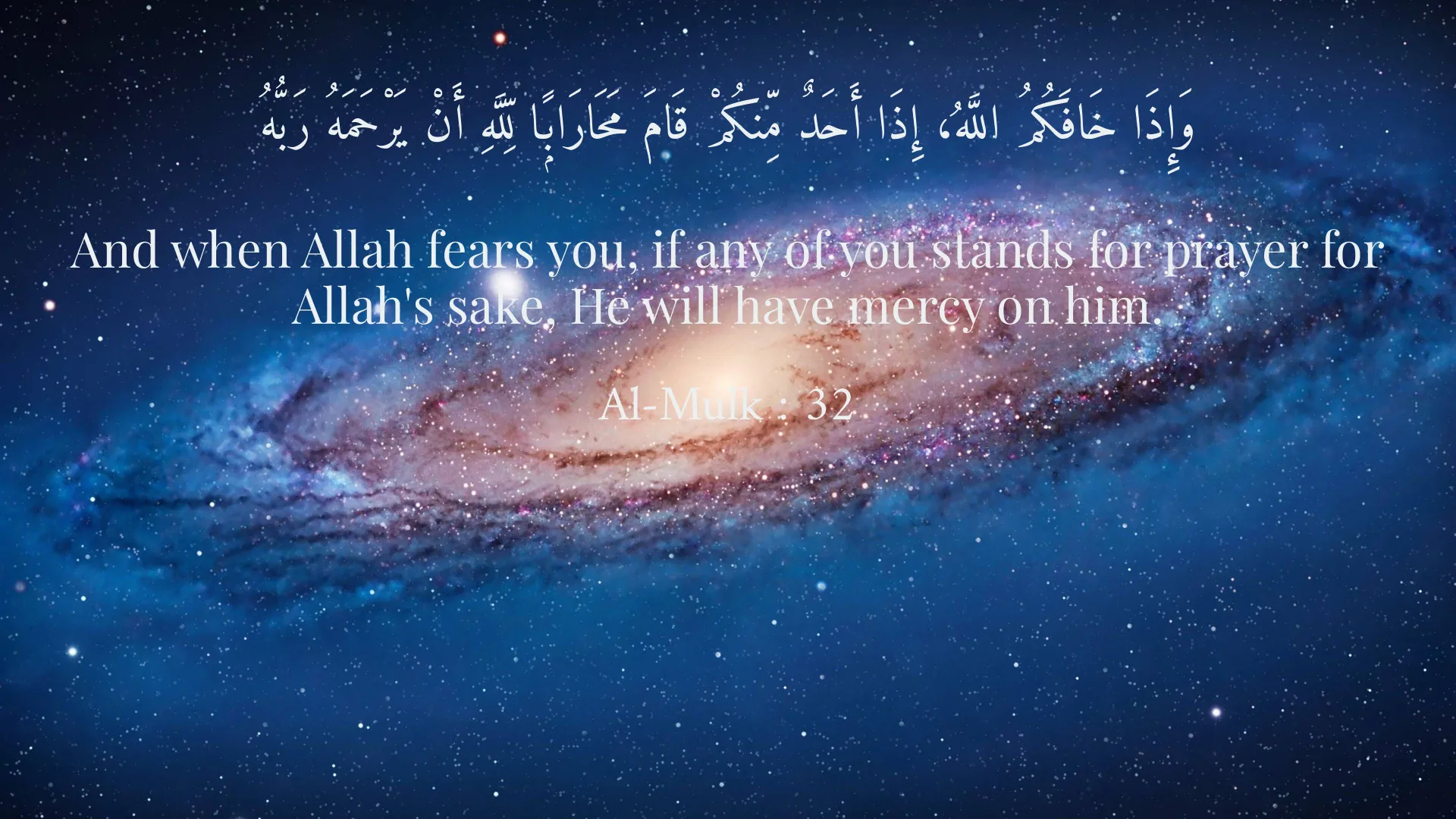
Fear of divine punishment is an integral theme articulated within the Holy Quran, serving as a significant marker of the faith and devotion of believers toward Allah. The concept enfolds a duality that embraces not only the apprehension of retribution but also the hope infused with Allah's mercy and forgiveness. This intricate relationship highlights how the fear of divine punishment is intricately tied to one's faith, encouraging adherents to strive for righteousness while never succumbing to hopelessness. In examining this theme, we begin with an exploration of the power and grandeur of Allah as the Ultimate Being. Believers are taught to recognize and comprehend Allah's omnipotence and the reality of His justice. This recognition manifests a profound sense of reverence, resulting in a natural fear of incurring His wrath. The Holy Quran, in Surah Al-Mulk (Chapter 67), verse 32, states, "And when Allah fears you, if any of you stands for prayer for Allah's sake, He will have mercy on him." This verse compellingly illustrates that true fear emanates from genuine belief, leading to action driven by devotion and sincerity. The act of praying, as highlighted in this verse, further establishes a connection between fear and righteousness. Prayer becomes not only a means of supplication but also an expression of a believer's recognition of their shortcomings and reliance on Allah’s immense mercy. Fear of divine punishment, therefore, transitions from mere anxiety to a catalyst for spiritual growth as it drives individuals toward humility and repentance. Furthermore, this relationship between fear and faith is substantiated in another profound Quranic insight found in Surah Taha (Chapter 20), verse 82: "And I forgive whoever repents, believes, and does righteous deeds, and then remains guided." This affirmation asserts that Allah's mercy knows no bounds and that forgiveness is readily available for those who sincerely seek it. This profound verse embodies not only the notion of fear as a precursor to righteousness but as a stepping stone toward the magnanimity of divine forgiveness. Within the framework of Islamic theology, the fear of Allah—known as "Taqwa"—is not designed to instill despair but rather to cultivate a deeper relationship with the Creator. It acts as a guiding principle diverting believers from unethical behavior while simultaneously encouraging them to pursue righteous paths filled with good deeds. Taqwa establishes a moral compass by which believers navigate their lives, shaping their character, decisions, and interactions with others. Additionally, it is crucial to delineate that the fear of divine punishment must not be conflated with terror or hopelessness. Instead, it encompasses a profound recognition of one’s limitations and frailties, fostering a sincere relationship with Allah steeped in humility. This perspective is further enriched by the Quranic promise of mercy that assures believers that their transgressions can be absolved through sincere repentance and faith. Islam teaches that while the fear of punishment serves as a motivator, it works hand in hand with the hope of forgiveness and mercy, reinforcing the dynamic tensions of faith. Moreover, religious scholars emphasize that the fear of divine punishment encourages believers to embody ethical principles in their lives, as fear acts as both a deterrent to sinful behavior and a source of motivation for virtuous actions. The moral framework established through this divine fear encourages people to engage in community service, uphold justice, and foster compassion, helping to build a harmonious society that reflects divine teachings. Examining historical contexts where divine fear has influenced societies can provide further insights into its function within faith. Throughout history, communities imbued with the awareness of Allah's power and the consequent fear of retribution have often demonstrated a robust sense of morality and ethics. Such a perspective invites adherence to honest dealings, societal justice, and compassionate engagement, crafting a world that echoes divine principles. On a broader level, this fear should inspire believers to live consciously, seeking a life that aligns with Islamic values—values that advocate for peace, equity, and mutual respect among individuals. The interplay between fear, hope, and righteousness serves as an encouragement to adhere to ethical practices, build character, and, ultimately, strengthen the bond between the believer and their Creator. In conclusion, the fear of divine punishment intermeshes with the core fabric of faith within Islam, acting as an intricate motivator that urges believers toward righteousness. Rather than instilling despair, this fear illuminates the path toward hope, emphasizing Allah's mercy and encouraging a life led by ethical adherence. The dialogue between fear and faith reveals the profound depth of the believer's relationship with Allah, fostering spiritual growth, ethical integrity, and societal harmony. It embodies a transformative journey that propels believers toward becoming their best selves while nurturing an enduring hope in Allah's compassion and forgiveness, bridging the relationship between divine justice and mercy in the hearts of those faithfully devoted.
Related Verses
وَإِذَا خَافَكُمُ اللَّهُ، إِذَا أَحَدٌ مِّنكُمْ قَامَ مَحَارَابًۭا لِّلَّهِ أَنْ يَرْحَمَهُ رَبُّهُ
And when Allah fears you, if any of you stands for prayer for Allah's sake, He will have mercy on him.
Al-Mulk : 32
وَأَنَا أَغْفِرُ لَمَن تَابَ وَءَامَنَ وَعَمِلَ صَـٰلِحًۭا ثُمَّ اهْتَدَى
And I forgive whoever repents, believes, and does righteous deeds, and then remains guided.
Taha : 82
Short Story
One day, a young man named Amin felt restless and wondered if he truly had faith. He recalled the verses of the Quran and decided to strengthen his fear of divine punishment by praying and aligning his actions with religious teachings. Gradually, he felt calm and realized that his faith was strengthened by the fear of divine punishment.