Quranic Answer
The Importance of Intention and Action in Islam: A Deep Dive into the Holy Quran In the vast and rich tradition of Islam, the concepts of intention and action play pivotal roles in defining moral and righteous conduct. These concepts are not merely theoretical; they form the bedrock of how adherents of Islam navigate their daily lives and interactions. They are particularly emphasized in the Holy Quran, where explicit references highlight their significance. This article explores these foundational principles, demonstrating that both intentions and actions are crucial in achieving righteousness and favor in the eyes of Allah. In Surah Al-Baqarah (Chapter 2), verse 177, Allah outlines the essence of what righteousness truly entails. The verse states, "Righteousness is not that you turn your faces toward the east or the west, but [true] righteousness is in one who believes in Allah, the Last Day, the Angels, the Book, and the Prophets and gives his wealth, in spite of love for it, to relatives, orphans, the needy, the traveler, those who ask [for help], and for freeing slaves; [and who] establishes prayer and gives zakah (charity); [and who] fulfill their promise when they promise; and [who] are patient in poverty and hardship and during battle. Those are the ones who have been true, and it is those who are the righteous." This verse encapsulates the essence of what it means to be righteous in Islam—namely, a blend of belief and action. The idea here is that true righteousness cannot be confined to merely performing rituals or seemingly holy acts. Instead, it is deeply rooted in the integrity and sincerity of one's intentions and the tangible actions that emerge from those intentions. The verse emphasizes that even in the most challenging circumstances, standing firm in faith and aiding others is a crucial aspect of being righteous. Thus, intentions attached to these actions become essential, reflecting one’s inner state, beliefs, and the quest for Allah's pleasure. A good and sincere intention, particularly when aimed at serving others, is regarded as a noble act of worship in Islamic teachings. This is further supported by Surah Al-Imran, verse 92, which conveys the divine command for believers to spend from what they love. The encouragement to share wealth and resources directs Muslims toward acts of charity as a pathway of spiritual elevation. This divine injunction highlights the importance of approaching service with a heart full of love and sincerity, reinforcing the idea that serving others is a form of worship that draws one closer to Allah. The Quran frequently exhorts Muslims to engage in acts of goodwill and charity, teaching that such actions carry immense weight in one’s spiritual journey. The message is clear: serving others and aiding those in need, when performed with good intentions, transcends the act itself, elevating it to the status of worship. The motivations behind these charitable acts are paramount; they should stem from a desire to please God and uplift humanity. Furthermore, Surah Al-Ma'un (Chapter 107) addresses the grave shortcomings of those who pray but neglect their obligations towards helping the needy. The verse beautifully encapsulates a fundamental principle: prayer alone is inadequate if it is not accompanied by righteous actions that serve humanity. Allah criticizes, "So woe to those who pray but are heedless of their prayer – those who make show [of their good deeds] and withhold [simple] assistance." This compelling verse reinforces the idea that the neglect of human welfare while outwardly performing religious practices is a contradiction. Therein lies a significant reminder: intentions must align with actions to form a coherent path of righteousness. Therefore, it can be concluded that the intention to serve people is not only commendable but is revered as a significant form of worship that enhances one’s relationship with the Divine. It encourages individuals to align their earthly endeavors with their divine aspirations. This duality of intention and action serves as a pathway to divine proximity, helping individuals cultivate a profound understanding of their faith, the responsibilities they carry, and their purpose in life. Moreover, the Islamic tradition emphasizes that for acts of worship to be meaningful, they must be performed with the right intention. This belief traces back to a well-known saying of the Prophet Muhammad (peace be upon him), which states, "Actions are judged by intentions, so each person will have what they intended." This principle invites believers to regularly self-reflect and ensure that their motives are pure and in alignment with seeking pleasure from Allah. Without this right intention, acts, even those that are outwardly significant, lose their spiritual efficacy and reward. In conclusion, the principles of intention and action form the core of righteous conduct in Islam. They are inextricably linked; the former gives meaning to the latter. A sincere intention to serve humanity, coupled with altruistic actions, leads to higher moral and spiritual standing in the eyes of Allah. Hence, the desire to serve others should be nurtured as a fundamental aspect of worship, reinforcing the interconnectedness of faith and practical ethics in the Muslim experience. By embodying these principles, adherents not only fulfill their religious obligations but also contribute positively to a more compassionate and just society. Thus, it is evident that the intention to serve people, recognized as a noble act of worship, is integral to the Islamic way of life, nurturing a profound closeness to Allah through serving His creation.
Related Verses
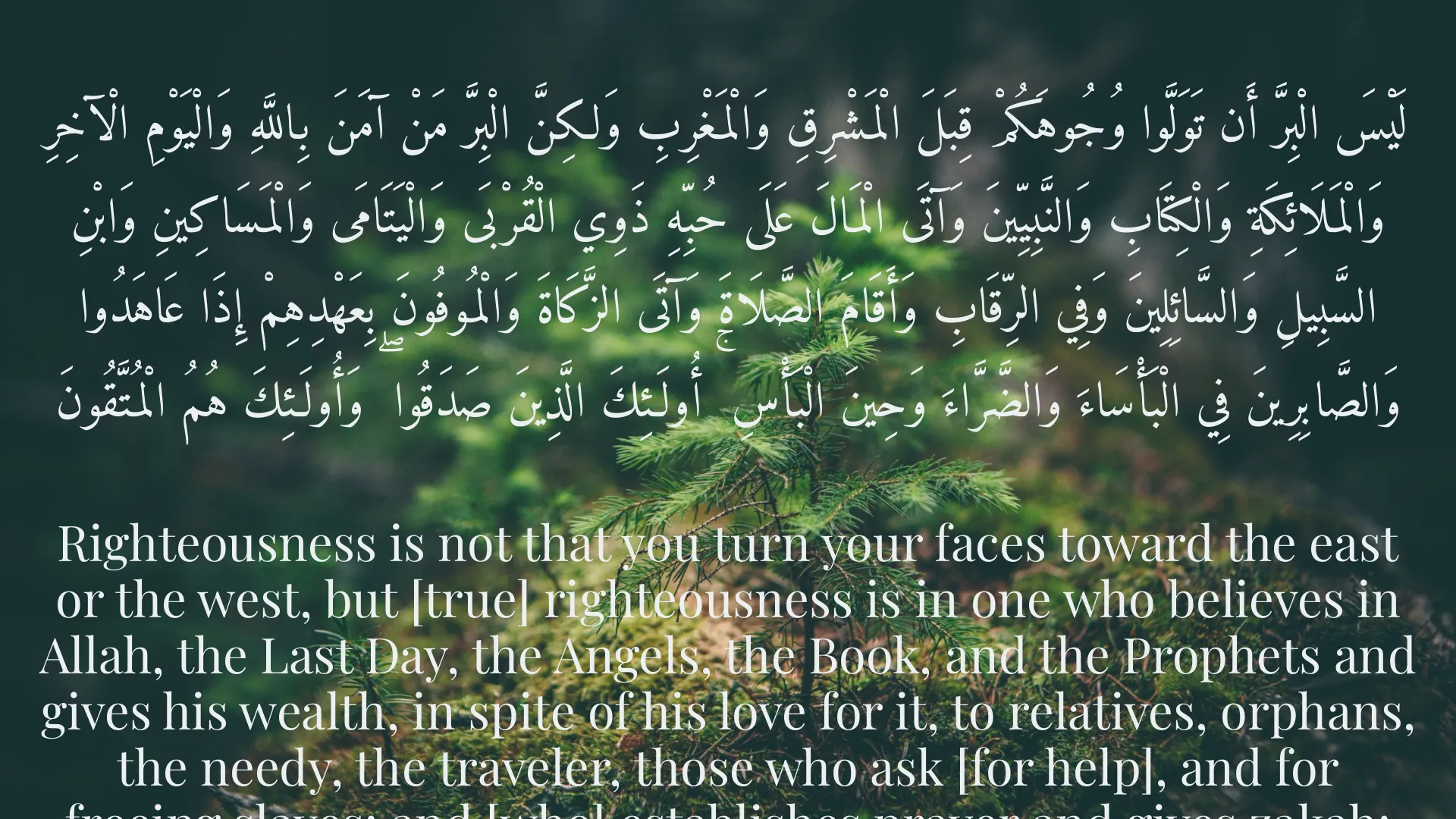
لَيْسَ الْبِرَّ أَن تَوَلَّوا وُجُوهَكُمْ قِبَلَ الْمَشْرِقِ وَالْمَغْرِبِ وَلكِنَّ الْبِرَّ مَنْ آمَنَ بِاللَّهِ وَالْيَوْمِ الْآخِرِ وَالْمَلَائِكَةِ وَالْكِتَابِ وَالنَّبِيِّينَ وَآتَى الْمَالَ عَلَى حُبِّهِ ذَوِي الْقُرْبَى وَالْيَتَامَى وَالْمَسَاكِينِ وَابْنِ السَّبِيلِ وَالسَّائِلِينَ وَفِي الرِّقَابِ وَأَقَامَ الصَّلَاةَ وَآتَى الزَّكَاةَ وَالْمُوفُونَ بِعَهْدِهِمْ إِذَا عَاهَدُوا وَالصَّابِرِينَ فِي الْبَأْسَاءَ وَالضَّرَّاءَ وَحِينَ الْبَأْسِ ۚ أُولَـئِكَ الَّذِينَ صَدَقُوا ۖ وَأُولَـئِكَ هُمُ الْمُتَّقُونَ
Righteousness is not that you turn your faces toward the east or the west, but [true] righteousness is in one who believes in Allah, the Last Day, the Angels, the Book, and the Prophets and gives his wealth, in spite of his love for it, to relatives, orphans, the needy, the traveler, those who ask [for help], and for freeing slaves; and [who] establishes prayer and gives zakah; [those who fulfill their promise when they promise]; and [those who are patient in poverty and hardship and during battle. It is those who have traded in faith; and it is those who are righteous.
Al-Baqarah : 177
لَن تَنَالُوا الْبِرَّ حَتَّى تُنفِقُوا مِمَّا تُحِبُّونَ ۗ وَمَا تُنفِقُوا مِن شَيْءٍ فَإِنَّ اللَّهَ بِهِ عَلِيمٌ
Never will you attain the good reward until you spend [in the way of Allah] from that which you love. And whatever you spend - indeed, Allah is Knowing of it.
Al-Imran : 92
أَرَأَيْتَ الَّذِي يُكَذِّبُ بِالدِّينِ
Have you seen the one who denies the Recompense?
Al-Ma'un : 1
Short Story
Once upon a time, a man named Hamid lived in a bustling city. He always intended to help people and daily tried to devote his time to support the needy. One day, while walking down the street, he encountered an elderly woman in need of assistance. With pure intent and a warm smile, Hamid approached her and helped her cross the street. After that, he asked the woman if she needed further assistance, and she thanked him profusely and said she would pray for him to always be guided by righteousness. After this encounter, Hamid felt a special peace in his heart and realized that serving people as an act of worship could rejuvenate the soul.