Quranic Answer
The Holy Quran, regarded as the sacred book of Muslims, holds a unique and transformative position in the lives of over a billion believers. It serves not only as a book but as a comprehensive source of light and guidance, touching upon various aspects of human existence. The Quran's journey begins with a divine revelation to the Prophet Muhammad (peace be upon him) in the 7th century, forever changing the course of history and ethics in the Arab world and beyond. Its teachings continue to guide Muslims in navigating through the challenges of life while aligning their daily actions with a higher moral compass. One of the fundamental assertions found within the Quran is echoed in Surah Al-Baqarah, verse 2, where it states that this book acts as a guide for the pious. The implication here is profound: those who adhere to its teachings are not merely followers of a religious doctrine but are potential candidates for salvation, both in this world and the Hereafter. This perspective reinforces the Quran's essential role as a moral and spiritual compass that sets a framework for righteous living. It indicates that the Quran is not just a collection of verses recited; it is a practical guide for anyone seeking clarity in their morals and direction in their journey of faith. Furthermore, in Surah Al-Ma'idah, verse 48, Allah expresses that He has provided every nation with guidance through a book and the tradition of a messenger. This universal approach to guidance highlights a significant concept: that the Quran is not restricted to a single community or ethnicity. Instead, it stands as a cosmic message for humanity, inviting diverse nations across the globe to engage in its timeless wisdom. The broader implication is that every community has the means to access salvation and understanding through their unique interactions with God's message, potentially leading towards a harmonious coexistence among different faiths and beliefs. However, while the Quran serves as a beacon, it is crucial for its adherents to realize that mere recitation and passive acknowledgment are inadequate. The key to unlocking its transformative power lies in the correct interpretation and practical application of its teachings in daily life. This requires a profound understanding and, considerably, an open spirit receptive to the transcendent messages embedded within its verses. A multitude of passages emphasizing good deeds, societal justice, honesty, and unwavering faith in God reinforce this necessity. Thus, the relationship between the Quran and its followers is interactive— believers are invited to engage with its teachings actively and internalize its principles. In Surah Al-An'am, verse 155, we come across another significant portrayal of the Quran as a means of salvation: 'And this book We have sent down to you as a clarification for those who are conscious of God.' This verse underlines the importance of consciousness and mindfulness in one’s spiritual practice. It calls for a deeper level of engagement that goes beyond superficial understanding. Being conscious of God entails striving for a consistent moral and ethical framework in every aspect of life, enhancing a believer's ability to navigate through the trials of existence with grace and integrity. Therefore, the essence of the Quran goes beyond being merely a text to be recited; it is a guiding light that illuminates the path of righteousness when embraced with sincerity and diligence. It is also crucial to recognize that alongside the emphasis on good deeds and ethical practices, the Quran extends compassion and a message of hope to humanity. It invites believers to engage in acts that foster community well-being, support the marginalized, and promote peace and justice. Such engagement reinforces the idea that true adherence to the Quran’s teachings reflects a tangible commitment to social responsibility and collective welfare. The Quran challenges its followers to step beyond individualistic pursuits of salvation, calling them to partake in a greater communal struggle towards fostering an inclusive society. Therefore, an essential takeaway from the Quran's teachings is that while it serves as a source of divine guidance, the resulting actions taken by its followers reveal the true measure of belief. The journey of interpreting and practicing the Quran is one fraught with challenge, requiring not only intellectual engagement but also emotional investment and spiritual devotion. Believers are called to actively participate in nourishing their souls through constant learning and application of its messages, which ultimately translates to a richer understanding of their faith and purpose. In conclusion, the Holy Quran undeniably plays a vital role in the salvation of humanity, offering an essential framework for moral living, spiritual growth, and social responsibility. Yet, that role is contingent upon individuals' commitment to embodying its teachings in their lives. By actively engaging with the Quran, seeking to comprehend its depths, and allowing its principles to guide daily actions, believers move towards achieving true salvation. As such, the Quran invites each individual not just to read and recite but to fully embrace a path that aligns with divine wisdom, ultimately leading to a life lived in righteousness and fulfillment.
Related Verses
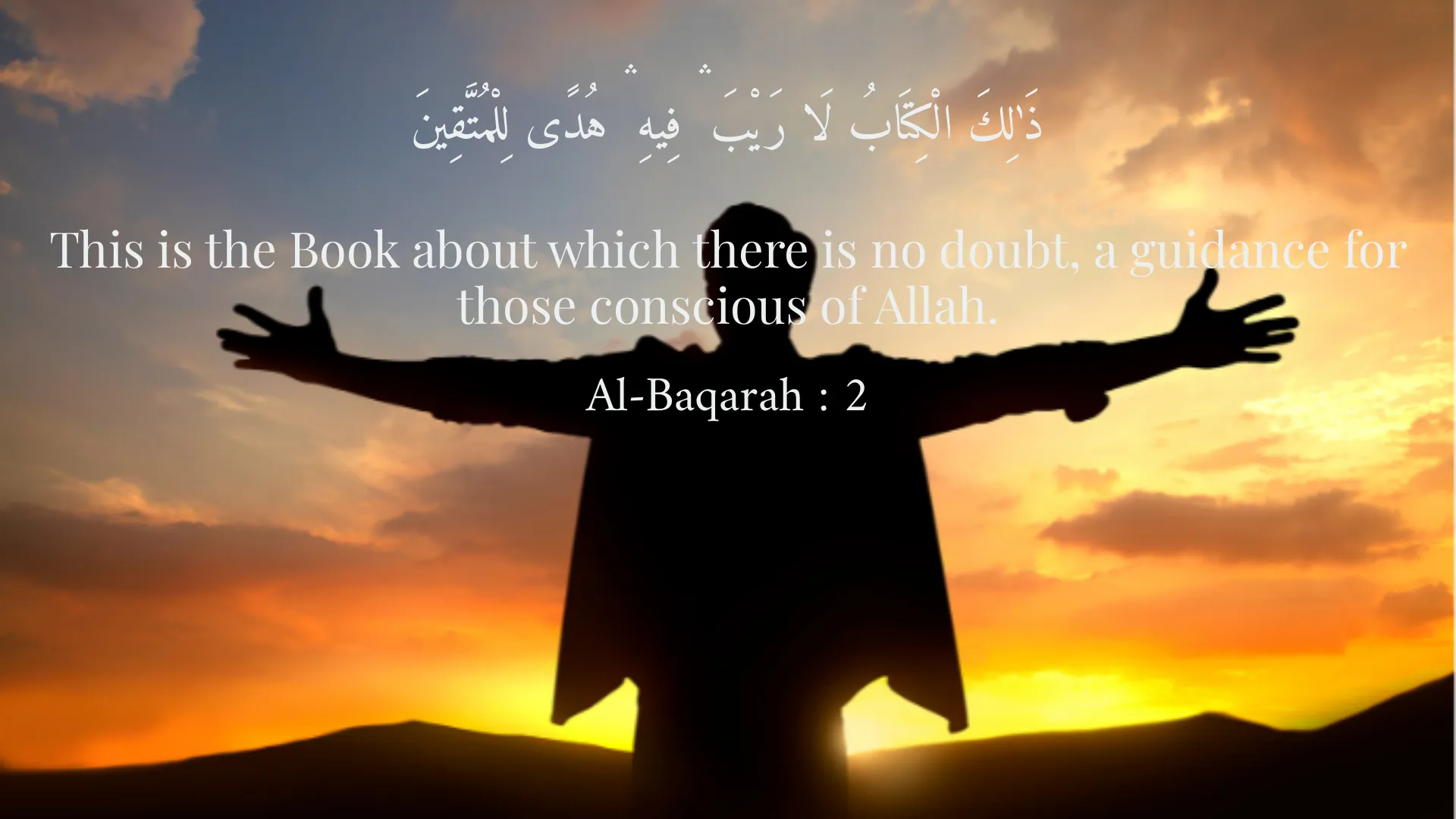
ذَٰلِكَ الْكِتَابُ لَا رَيْبَ ۛ فِيهِ ۛ هُدًى لِلْمُتَّقِينَ
This is the Book about which there is no doubt, a guidance for those conscious of Allah.
Al-Baqarah : 2
وَأَنزَلْنَا إِلَيْكَ الْكِتَابَ بِالْحَقِّ مُصَدِّقًا لِّمَا بَيْنَ يَدَيْهِ مِنَ الْكِتَابِ وَمُهَيْمِنًا عَلَيْهِ ۚ فَاحْكُم بَيْنَهُمْ بِمَا أَنزَلَ اللَّـهُ وَلَا تَتَّبِعْ أَهْوَاءَهُمْ عَمَّا جَاءَكَ مِنَ الْحَقِّ ۚ لِكُلٍّ مِّنكُمْ جَعَلْنَا شِرْعَةً وَمِنْهَاجًا ۗ وَلَوْ شَاءَ اللَّـهُ لَجَعَلَكُمْ أُمَّةً وَاحِدَةً وَلَـٰكِن لِّيَبْلُوَكُمْ فِي مَا آتَاكُمْ ۚ فَاسْتَبِقُوا الْخَيْرَاتِ ۚ إِلَى اللَّـهِ مَرْجِعُكُمْ جَمِيعًا فَيُنَبِّئُكُم بِمَا كُنتُم فِيهِ تَخْتَلِفُونَ
And We have sent down to you the Book in truth, confirming that which was before it and as a criterion over it. So judge between them by what Allah has revealed and do not follow their inclinations, diverging from what has come to you of the truth. To each of you, We prescribed a law and a clear way.
Al-Ma'idah : 48
وَكَتَبْنَا عَلَيْهُمْ فِي كُلِّ شَيْءٍ أَنَّهُ مَنْ تَقَىٰ رَبَّهُ فَلَهُ جَنَّاتٌ تَجْرِي مِن تَحْتِهَا الْأَنْهَارُ
And We wrote for them in the Scripture that indeed, the righteous will have gardens beneath which rivers flow.
Al-An'am : 155
Short Story
On a beautiful summer day, Hamid went to the park and sat on a bench, thinking about his salvation and ways to achieve it. An elderly man approached him and said, 'My son, life is full of challenges and hardships, but only by reading the Quran and acting upon it can you find the path to salvation.' Hamid listened attentively to his words and from that day decided to pay more attention to the Quran. After a few months, he understood well how the Quran helped him overcome life's challenges and he felt a sense of peace and happiness.