Quranic Answer
In the Holy Quran, there is a profound emphasis on the significance of a pure heart and honest intentions. The teachings of Islam highlight that the purity of one's intentions and the goodness of one's heart are crucial elements that underpin the value of our actions in the sight of Allah (SWT). These concepts are intricately woven into the text of the Quran, guiding believers toward a path of spiritual fulfillment and moral integrity. This article delves into this important theme, drawing from relevant verses from the Quran, sayings of the Holy Prophet Muhammad (PBUH), and the teachings of the Imams, while also elucidating the practical implications for Muslims in their daily lives. The importance of intention can be most clearly seen in Surah Al-Baqarah, verse 225, which states, 'Allah is All-Aware of what you intend.' This powerful verse conveys that Allah does not merely assess the outward appearance of our actions; instead, He investigates the motivations that drive us. A person may perform a good deed with the intention of showing off or seeking worldly gains, thereby nullifying the merit of that action. Conversely, a seemingly small deed performed with pure intentions, such as helping another being or contributing to the welfare of the community, can hold immense value in the eyes of Allah. Thus, this verse serves as a reminder that our intentions serve as the essence that animates our actions. Further supporting this notion, Surah Al-Imran, verse 30, reminds us that 'On that Day, every soul will be compensated for what it has earned...' This verse implies that not only will we reap the rewards of our deeds, but our deeds will be evaluated based on the intentions that accompanied them. This brings about a crucial recognition: that the purity of our hearts can significantly affect the outcomes of our actions. Therefore, cultivating a pure heart and sincere intentions is paramount for earning Allah's pleasure and mercy. The interplay between intention and action underscores a moral framework that shapes the way Muslims are expected to conduct themselves in their worldly affairs. Moreover, the sayings of the Prophet Muhammad (PBUH) greatly enrich our understanding of the heart's role in intention. He is reported to have said, "Actions are judged by intentions, and everyone will receive what they intended." This saying reinforces the notion that no action can be deemed valuable without proper intention. It acts as a stark reminder for Muslim believers that the heart, the seat of intentions, must be purified for our actions to be meaningful in the divine context. In a broader scope, Islamic tradition consistently underscores the importance of a pure heart. The Imams, particularly, emphasized that the heart must be free from malice, envy, and other negativity, as these emotions cloud judgment and moral clarity. The challenge for many believers is to maintain a relentless pursuit of goodness while combating the darker influences and distractions present in society. The process of purifying the heart requires self-awareness, honest introspection, and an unwavering commitment to righteousness. The practical implications of these teachings are manifold. For Muslims, the act of purifying the heart becomes an ongoing journey rather than a singular event. This purification process may involve various spiritual practices such as prayer, reflection, and community service. Each of these acts serves to heighten awareness of one's intentions. Muslims are encouraged to reflect upon their deeds and ask themselves why they are performing them. Questions like: "Am I helping my neighbor to seek recognition, or am I doing it out of compassion?" can help in this pursuit of introspection. Furthermore, believers are encouraged to engage in deeds that align with the principles of sincerity and altruism. Engaging in acts of kindness without any expectation of recompense serves to strengthen one's heart and pureness of intention. In addition, regularly seeking forgiveness (Tawbah) for any insincerities can further assist in refining the heart. The understanding here is that as one strives to fulfill their spiritual duties, they should also aim to transcend purely transactional engagements by establishing a heartfelt connection in their interactions with others. In conclusion, the teachings of the Holy Quran regarding the significance of a pure heart and honest intentions serve as a guiding framework for Muslims. It is clear that both the Quran and the teachings of the Prophet Muhammad (PBUH) illuminate the path to spiritual enlightenment through the cultivation of sincere intentions. This sincere approach to both actions and intentions leads to a holistic understanding of Islam's moral directive. It is imperative for every Muslim to recognize the weight of their intentions and strive towards having a pure heart. By doing so, not only do they secure their actions in the sight of Allah, but they also create a ripple effect of goodness within their communities and beyond. Thus, the call to purify the heart is an invitation to engage in a deeper relationship with the divine and contribute positively to the world at large. In this modern age, embracing the essence of a pure heart and honest intentions remains ever-relevant and continuously significant for the practice of Islam.
Related Verses
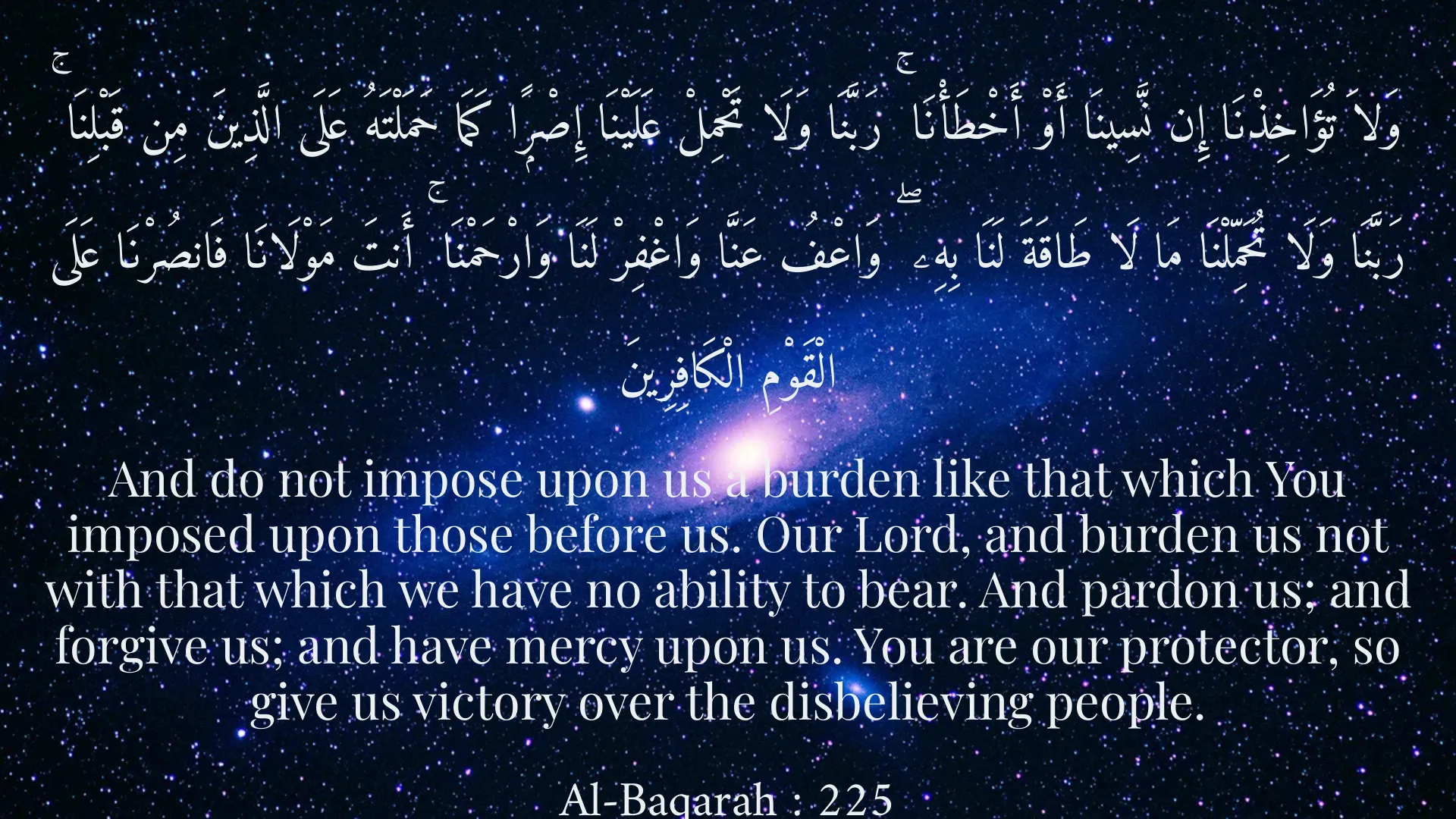
وَلاَ تُؤَاخِذْنَا إِن نَّسِينَا أَوْ أَخْطَأْنَا ۚ رَبَّنَا وَلَا تَحْمِلْ عَلَيْنَا إِصْرًۭا كَمَا حَمَلْتَهُ عَلَى الَّذِينَ مِن قَبْلِنَا ۚ رَبَّنَا وَلَا تُحَمِّلْنَا مَا لَا طَاقَةَ لَنَا بِهِۦ ۖ وَاعْفُ عَنَّا وَاغْفِرْ لَنَا وَارْحَمْنَا ۚ أَنتَ مَوْلَانَا فَانصُرْنَا عَلَى الْقَوْمِ الْكَافِرِينَ
And do not impose upon us a burden like that which You imposed upon those before us. Our Lord, and burden us not with that which we have no ability to bear. And pardon us; and forgive us; and have mercy upon us. You are our protector, so give us victory over the disbelieving people.
Al-Baqarah : 225
يَوْمَ تَجْدُ كُلُّ نَفْسٍ مَّا قَدَّمَتْ وَيُوَفَّى كُلُّ نَفْسٍ مَّا كَانَتْ تَعْمَلُ ۖ وَهُمْ لَا يُظْلَمُونَ
On the Day every soul will be compensated for what it has earned, and they will not be wronged.
Al-Imran : 30
Short Story
One day, Adel was reflecting on the tasks he needed to accomplish. He wanted to do something that pleased Allah. He decided to dedicate a few minutes each day to remember Allah and purify his intentions. After some time, he noticed that his heart felt more at peace, and he experienced progress in his endeavors.