Quranic Answer
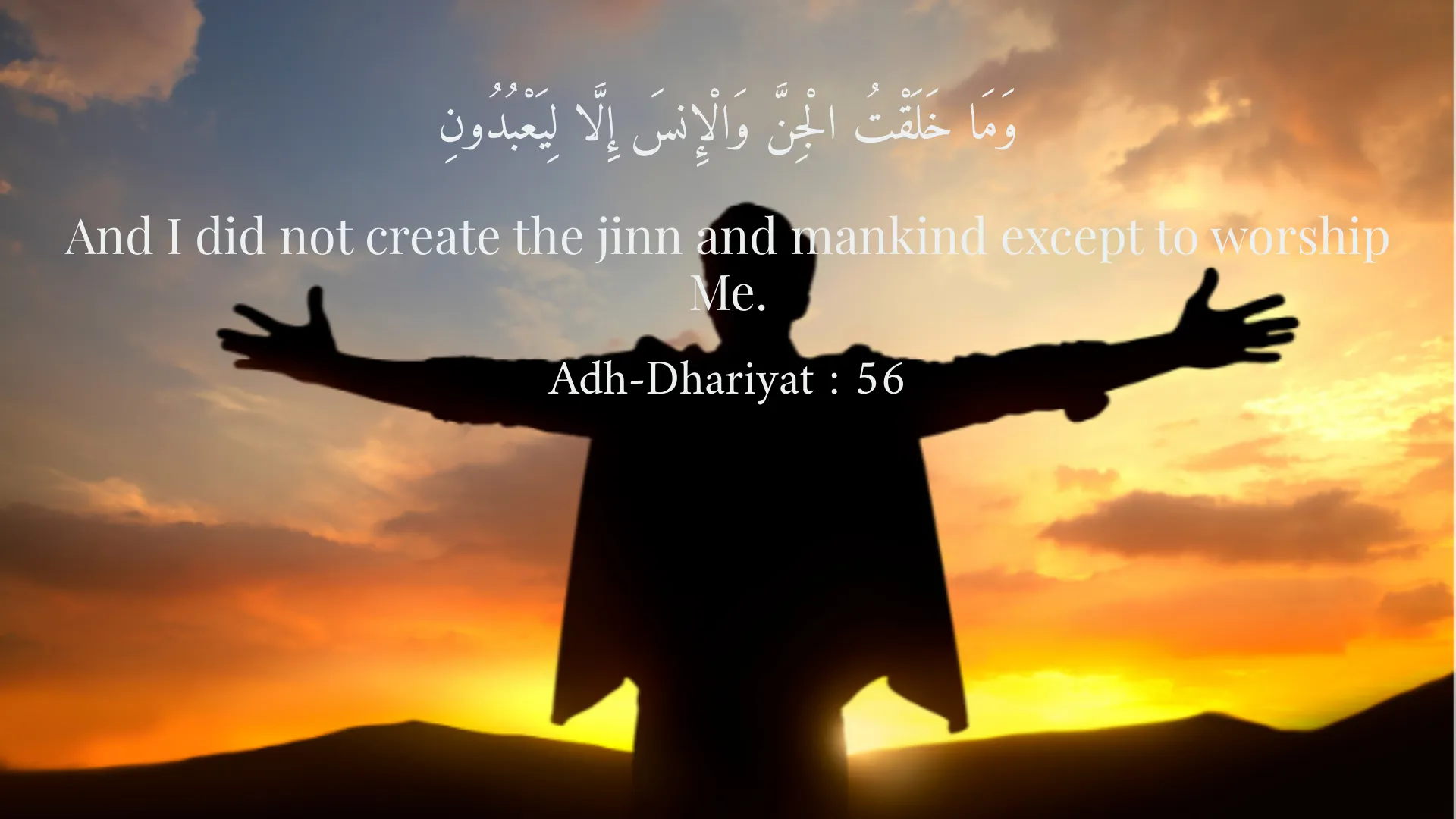
The Holy Quran serves as the central religious text of Islam, offering profound insights and guidance to humanity. Among its many teachings, one of the most pivotal verses is found in Surah Adh-Dhariyat, verse 56, where Allah proclaims, 'And I did not create the jinn and mankind except to worship Me.' This verse explicitly pinpoints the primary goal of human existence—worshiping and serving Allah. At first glance, one may assume that the act of worship is limited merely to religious rituals, prayer, and other forms of devotion. However, the concept of worship in Islam is far more expansive and multifaceted. It encompasses fulfilling obligatory deeds, adhering to ethical standards, and avoiding prohibitions, all of which reinforce the bond between humans and their Creator while fostering spiritual and ethical growth. Worship in Islam is not merely an act of devotion isolated from daily life; rather, it is interwoven into the very fabric of human existence. By practicing worship, believers cultivate a personal relationship with Allah, which, in turn, nurtures a deeper understanding of spirituality and ethics. The Quran underscores the cardinal virtue of being conscious of Allah, known as Taqwa, which encourages individuals to act with integrity, truthfulness, and kindness. This consciousness not only elevates one’s spiritual status but also shapes one’s character and actions in society. The Quran's guidance on morality compels individuals to strive for goodness, justice, and compassion in their dealings with others. Moreover, the Quran emphasizes the importance of social responsibilities, urging individuals to recognize their roles within the community. In Surah An-Nahl, verse 90, Allah commands, 'Indeed, Allah commands you to render trusts to whom they are due and when you judge between people to judge with justice.' This commandment reinforces the concept that worshiping Allah extends beyond individual piety; it requires the establishment of justice and the performance of good deeds toward others. Muslims are thus called to practice not only personal worship but also social justice, which aligns with the tenets of kindness and ethics that permeate Islamic teachings. Justice, as outlined in the Quran, embodies a fundamental principle that extends to all facets of life. It is not just about fair treatment within legal systems; it transcends to heart and mind, manifesting in how individuals engage with one another in their day-to-day interactions. The moral obligations highlighted by these teachings encourage believers to approach their relationships with empathy, fairness, and a profound sense of responsibility. Consequently, Islam does not confine worship to ritualistic practices but encompasses all ethical and moral dimensions of human interaction. In light of this, one can assert that the Quran establishes a holistic view of the purpose of human life—a view that intertwines spiritual fulfillment with social obligations. Worship and good deeds work hand in hand. The Quran encourages believers to commit to personal and social development, fostering an environment of cooperation and teamwork. This collaborative spirit is vital; it reflects a belief that human happiness is not solely an individual pursuit but rather a collective experience that flourishes through mutual support and goodwill. Furthermore, cooperation among individuals forms a foundation for building strong communities. When people engage in acts of righteousness, help one another, and strive for justice, they contribute to a more harmonious society. The Quranic admonition to assist the less fortunate, upholding the rights of others, and speaking out against injustice serves as a reminder of mankind's shared purpose—a purpose that requires commitment and cooperation for the greater good. Life's ultimate aim, as described in the Quran, is thus understood as three interlinked components: worshiping Allah, engaging in good deeds, and pursuing justice in society. Every action rooted in worship, whether it be prayer, charity, or advocacy for justice, amplifies the beauty of human existence. Through worship, individuals come to recognize their place in the universe, a relationship that invites reverence for the Creator and inspires an ethical way of life. The emphasis on collective responsibility highlights another essential aspect of life’s purpose. Individuals are encouraged to partake in community service, volunteerism, and charitable deeds, fully appreciating that their actions contribute to the common good. In this regard, every individual carries the responsibility to promote social justice, uplift those in need, and create an inclusive environment where everyone can thrive. Ultimately, the Quran delineates life as a tapestry where worship, morality, and justice are thread together, forming a complete picture of what it means to be human. By aligning one’s life with these principles, individuals not only fulfill their divine purpose but also pave the way for social and spiritual fulfillment. In doing so, they not only enhance their relationship with Allah but also enrich their relationships with others, cultivating a legacy of goodness, fairness, and compassion that transcends generations. In conclusion, the Quran's teachings profoundly illustrate that the essence of life revolves around worship, ethical living, and social responsibility. Humans are given a clear directive to worship Allah while embodying principles of justice and kindness in their relations with others. Life, therefore, is a sacred journey tasked with the aim of enhancing both spiritual and community well-being—a journey where personal growth and societal advancement go hand in hand, leading to the ultimate fulfillment of happiness and contentment.
Related Verses
وَمَا خَلَقْتُ الْجِنَّ وَالْإِنسَ إِلَّا لِيَعْبُدُونِ
And I did not create the jinn and mankind except to worship Me.
Adh-Dhariyat : 56
إِنَّ اللَّـهَ يَأْمُرُ بِالْعَدْلِ وَالإِحْسَانِ
Indeed, Allah commands you to rend trusts to whom they are due and when you judge between people to judge with justice.
An-Nahl : 90
Short Story
Once upon a time, there lived a man named Sohrab who was always searching for the purpose of his life. One day, he visited a mosque and spoke to a religious scholar there. The scholar reminded him of the verses of the Quran and made him realize that his life’s purpose was to worship God and do good to others. Sohrab recalled the Quranic verses regarding justice and kindness to others and decided to improve his actions in life. From that day on, Sohrab not only immersed himself in worshiping God but also helped his community and offered assistance to those in need.