Quranic Answer
The Holy Quran is regarded as the ultimate guide for Muslims, eloquently describing the purpose of human existence and the nature of life itself. One of the most profound themes woven throughout its verses is the notion that worldly life serves as a test for mankind. This test is not merely a momentary experience but rather a pivotal aspect of our spiritual journey. Indeed, life is filled with challenges and obstacles that serve to measure our character and commitment to our faith. In Surah Al-Mu'minun, verse 115, Allah states: "Did you think that We created you in vain and that you would not be brought back to Us?" This verse eloquently captures the essence of existence, emphasizing that our creation is not in vain and that there lies a purpose behind every facet of our lives. From a broader perspective, the worldly life is seen as an arena for testing and examination of human beings. Each individual is confronted with a variety of challenges, designed to unveil who among us will remain steadfast and resilient in the face of life's trials, and who will falter amid the transitory hardships. In this way, the Quran establishes the idea that life is not a mere coincidence but a reflective journey that leads us back to our Creator. In fact, in Surah Al-Baqarah, verse 155, Allah further elaborates on this notion by affirming, "And We will surely test you with something of fear and hunger and a loss of wealth and lives and fruits, but give good tidings to the patient." This verse emphasizes that trials are an inherent part of human existence. Fear, hunger, loss, and existential challenges are not merely unfortunate events but integral components of life's ultimate trial. The importance of resilience in response to hardship is a recurring theme in the Quran. Patience (Sabr) is frequently highlighted as a virtue, and believers are reminded that enduring life's difficulties is an essential requirement for spiritual elevation. Allah's promise to those who remain patient is also a source of reassurance and motivation. The Quran serves as a reminder of the transient nature of worldly challenges, helping us to shift our perspective from focusing solely on immediate pain to recognizing the eternal rewards that await those who persist. Moreover, the Quran encourages believers to view their lives as a 'grand examination.' This examination, in essence, encourages mindfulness about daily actions, interactions, and decisions. It urges us to cultivate our character and integrity in a manner that aligns with the teachings of Islam. Each daily choice, whether significant or trivial, will contribute to the overall outcome of our examination. In understanding this profound wisdom, it is crucial to recognize that trials are not meant to debilitate us but to strengthen our connection with Allah. Every hardship experienced is an opportunity to turn back to our Creator, increase our reliance upon Him, and nurture our patience. By facing challenges with a mindset rooted in faith, believers can transform potential despair into a fruitful journey of growth and learning. This perspective aligns beautifully with the Quran, which often teaches that every test is accompanied by divine assistance, and it emphasizes that true success comes from unwavering faith in Allah. To further elaborate on the transformative power of viewing life as a test, we must consider the implications of gratitude (Shukr) in our response to trials. The Quran emphasizes that in moments of adversity, while patience is vital, so is maintaining an attitude of gratitude. Allah reminds us that acknowledging His blessings in times of hardship can help maintain our faith and resilience. Additionally, we can draw from the lives of the Prophets and righteous individuals exemplified in the Quran. Their stories inspire believers to navigate through their personal tests with grace and perseverance. Each prophet faced tribulations but demonstrated immense faith and patience in their journey. Their narratives serve as a testament to the enduring belief that life’s challenges are, in truth, stepping stones toward spiritual fulfillment and closeness to Allah. Finally, understanding the concept of accountability plays a significant role in recognizing the purpose of our worldly existence. The Quran assures us that, upon returning to Allah, each individual will be held accountable for their actions and intentions in this life. This realization further reinforces the urgency to approach life as a profound test, where our choices have lasting implications that extend beyond our earthly journey. In conclusion, the Holy Quran offers essential insights into the nature of worldly life as a test designed to cultivate resilience, patience, and ultimately, a deeper connection with Allah. By examining the trials we face through the lens of faith, we can navigate life with purpose and equanimity. Believers must seize the opportunities provided by life's challenges in order to grow spiritually and succeed in the ultimate examination. Embracing this mindset not only enriches our understanding of existence but also aligns our lives with the divine purpose, leading us back to the merciful presence of our Creator.
Related Verses
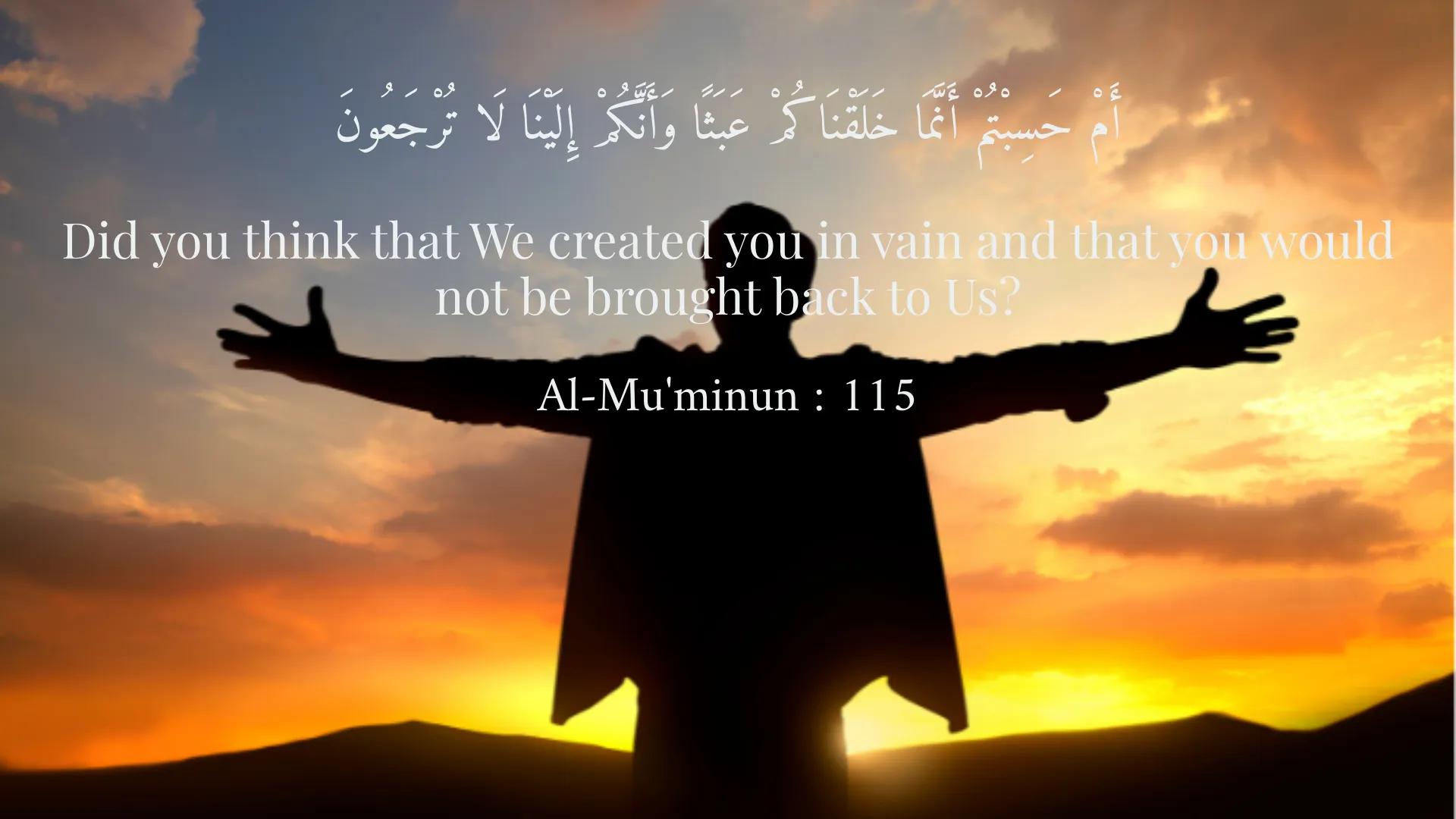
أَمْ حَسِبْتُمْ أَنَّمَا خَلَقْنَاكُمْ عَبَثًا وَأَنَّكُمْ إِلَيْنَا لَا تُرْجَعُونَ
Did you think that We created you in vain and that you would not be brought back to Us?
Al-Mu'minun : 115
وَلَنَبْلُوَنَّكُم بِشَيْءٍ مِّنَ الْخَوْفِ وَالْجُوعِ وَنَقْصٍ مِّنَ الْأَمْوَالِ وَالْأَنفُسِ وَالثَّمَرَاتِ ۗ وَبَشِّرِ الصَّابِرِينَ
And We will surely test you with something of fear and hunger and a loss of wealth and lives and fruits, but give good tidings to the patient.
Al-Baqarah : 155
Short Story
One day, a man named Ahmad was searching for the meaning of life. He read the Quran daily and paid attention to the verses. One day, he came across a verse that stated life is a test from Allah. He concluded that he should act kindly in life and be patient in every hardship. This realization brought Ahmad greater peace and a positive outlook on life's challenges.