Quranic Answer
Hope is a profound and essential element that holds a special place in the Holy Quran, serving as a guiding light for believers navigating through the trials and tribulations of life. This concept is expressed through numerous verses, highlighting various dimensions of hope that resonate deeply with the foundational beliefs in Islam. Central to the Islamic faith is the unwavering hope in God's mercy and forgiveness, which acts as a refuge for individuals who may feel burdened by their shortcomings and sins. In Surah Az-Zumar, verse 53, Allah invites His servants to embrace hope, stating: "O My servants who have believed, do not despair of the mercy of Allah. Indeed, Allah forgives all sins." This verse epitomizes the essence of hope in God's forgiveness, assuring believers that no matter the extent of their transgressions, the door to repentance and mercy remains eternally open. It establishes a comforting notion that individuals are never beyond redemption, and they should always harbor hope in their hearts. The implication of this is profound: even those who have committed major sins are encouraged to seek forgiveness and harbor hope for a fresh start. The Quran, therefore, becomes a nurturing source of hope, fostering Reassurance and the possibility of transformation. In addition to God's infinite mercy, Surah Al-Baqarah, verse 286 reinforces patience in challenging times by asserting that Allah does not burden a soul beyond its capacity. This teaching serves as a vital source of hope when believers face life's numerous challenges and hardships. The awareness that difficulties are imposed with a measure of divine wisdom allows individuals to develop resilience, encouraging them to confront their problems with courage and determination. This notion is liberating; it instills confidence in believers that their struggles are manageable and that they possess the strength to endure adversity. Hope thus transforms into a catalyst for positive action, releasing individuals from the shackles of despair and empowering them to confront life's challenges head-on. The Quran consistently reaffirms the idea that believers should cultivate a mindset imbued with patience and positivity. By emphasizing the importance of hope, believers are encouraged to view hardships through a lens of opportunity rather than defeat. This promotes a culture of resilience, enabling individuals to harness hope as a tool to cope with any life predicament. Through prayers and supplications, believers are reminded of their connection to the Almighty and receive the encouragement needed to withstand the trials of the human experience. Moreover, the concept of hope extends beyond the confines of this earthly existence to the hereafter, where the promise of paradise and divine rewards serves as a paramount motivator for believers. This hope in the afterlife is intricately woven into the fabric of Islamic teachings, wherein believers are encouraged to aspire towards the eternal rewards that await them, provided they follow the straight path prescribed by Allah. In a world fraught with uncertainties and trials, the hope for paradise acts as a beacon, inspiring believers to strive for righteousness and good deeds. This hope is not passive; it demands active participation in fulfilling moral and ethical obligations, thereby reinforcing the significance of living a purposeful life filled with compassion, kindness, and integrity. The belief that one’s efforts in this world can lead to eternal rewards in the hereafter instills a sense of accountability and encourages believers to embody the virtues advocated in the Quran. Hope, therefore, acts as a multifaceted concept in the Quran, intertwining themes of divine mercy, personal resilience, and aspirations for the hereafter. It paints a holistic picture wherein believers are constantly reminded of their worth and potential in the eyes of Allah. In moments of doubt and despair, these teachings serve as a foundational pillar, inviting individuals to cultivate an unshakeable trust in God's plans. The Quran's teachings on hope reinforce the idea that human life is fraught with challenges; yet, the essence of hope remains a guiding force that can illuminate even the darkest paths. By instilling a sense of hope in mercy, resilience in the face of challenges, and aspirations for the afterlife, the Quran profoundly impacts the lives of believers. It empowers them to persevere through life's inevitable trials while ensuring their hearts remain anchored in faith, optimism, and the promise of divine forgiveness. In conclusion, hope in the Quran is not merely a passive feeling but a dynamic state of being that intertwines faith, action, and the pursuit of righteousness. It encourages believers to seek mercy and forgiveness from Allah, to embrace their struggles with fortitude, and to cultivate a hopeful vision for their eternal existence. By embodying these teachings, individuals not only enrich their own spiritual journey but also contribute to a compassionate and supportive community that echoes the profound wisdom of the Holy Quran.
Related Verses
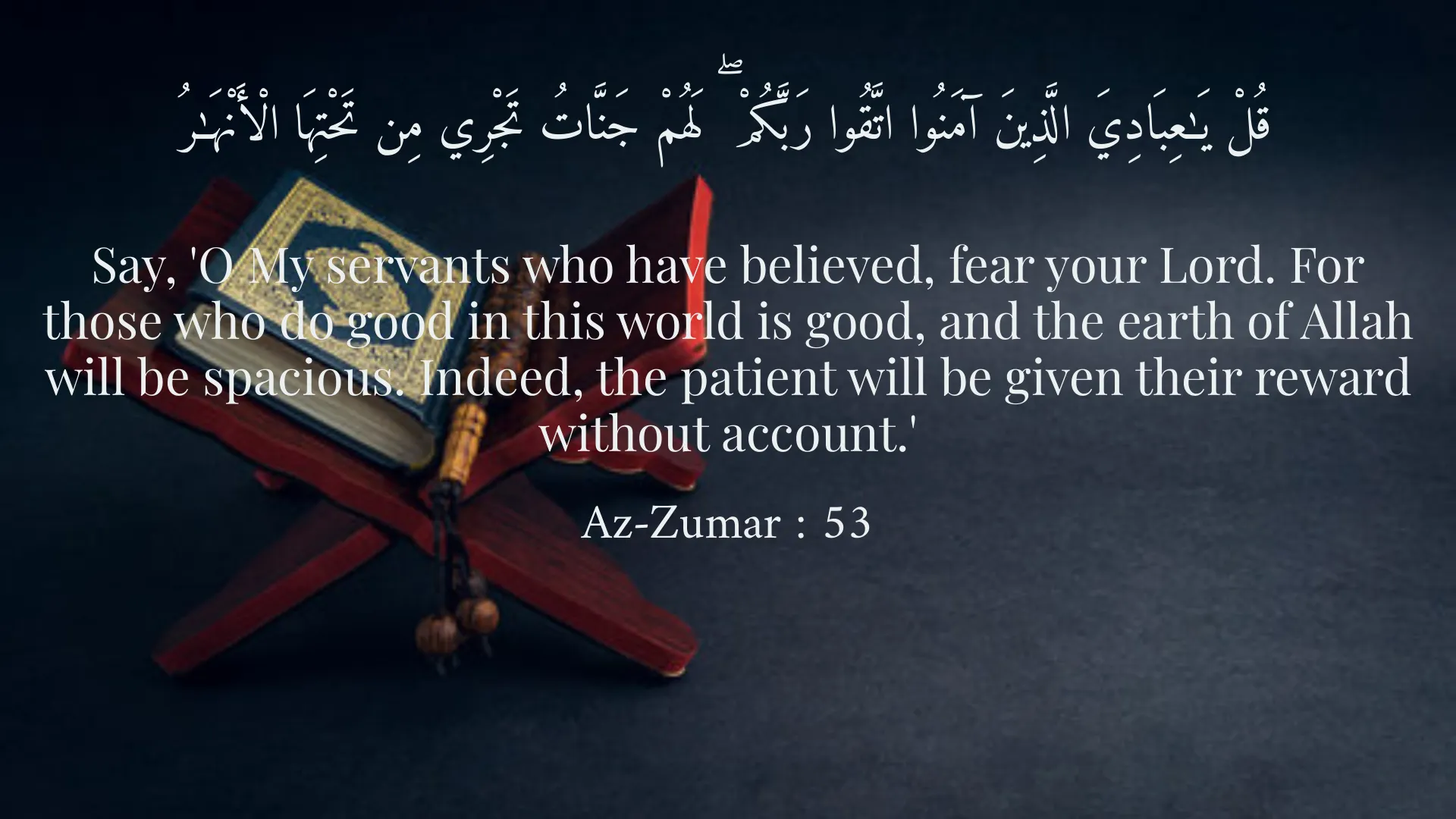
قُلْ يَـٰعِبَادِيَ الَّذِينَ آمَنُوا اتَّقُوا رَبَّكُمْ ۖ لَهُمْ جَنَّاتُ تَجْرِي مِن تَحْتِهَا الْأَنْهَـٰرُ
Say, 'O My servants who have believed, fear your Lord. For those who do good in this world is good, and the earth of Allah will be spacious. Indeed, the patient will be given their reward without account.'
Az-Zumar : 53
لَا يُكَلفُ اللَّهُ نَفْسًا إِلَّا وُسْعَهَا
Allah does not burden a soul beyond that it can bear.
Al-Baqarah : 286
Short Story
One day, a person was going through tough days and felt a deep sense of despair. He remembered the verses of the Quran and decided not to lose hope in God’s mercy. This reminder helped him overcome his problems and return to a positive outlook on life. In this way, he was able to strengthen his spirit with hope and rediscover the beauties of life.