Quranic Answer
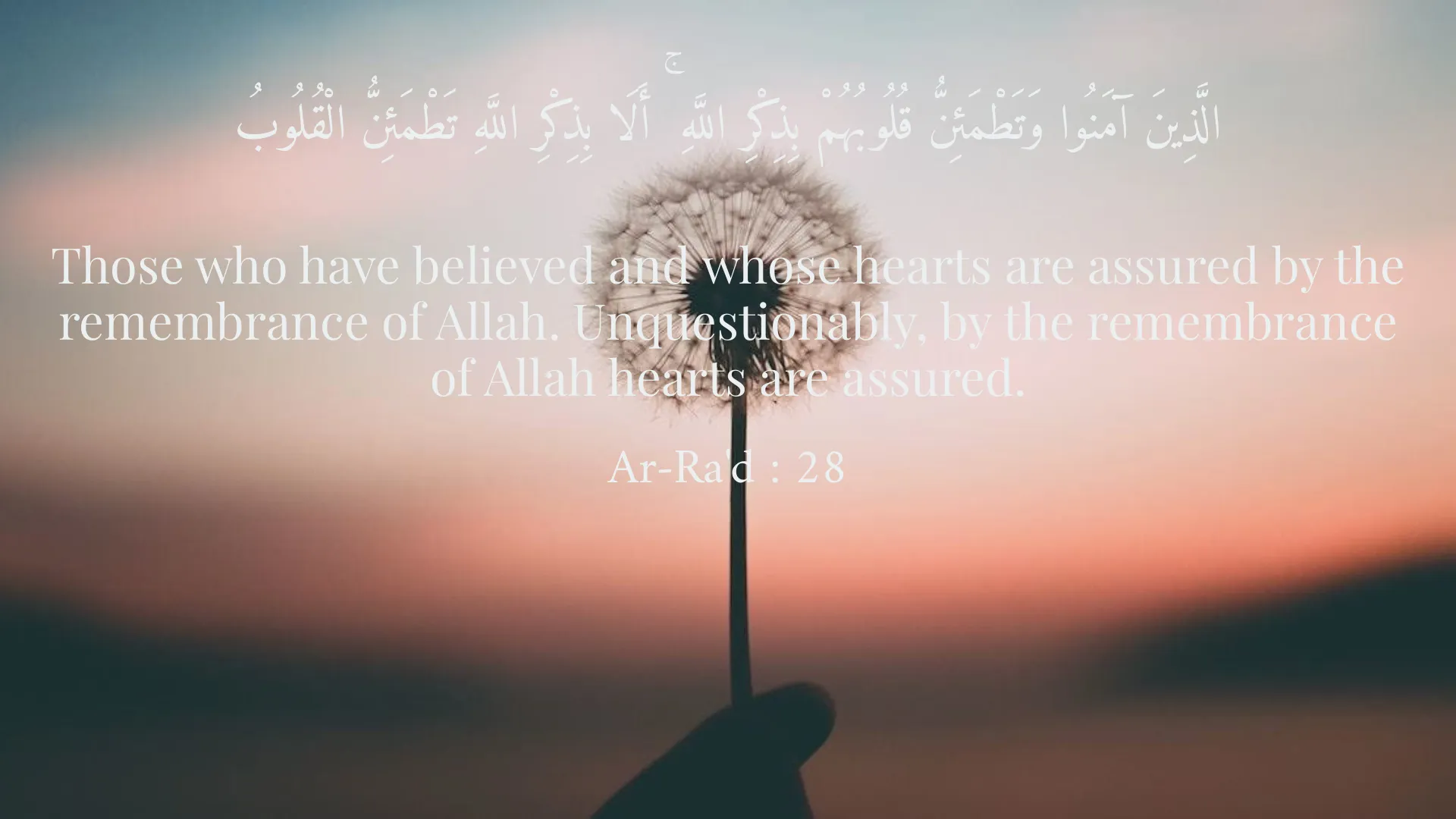
In the Holy Quran, the act of worship and remembrance of Allah is emphasized in many verses. The Quran serves as a divine guide for humanity and emphasizes the importance of faith, worship, and the remembrance of Allah in leading a meaningful life. Within its verses, believers are often reminded of the significance of connecting with their Creator and the solace that it provides. One particularly poignant verse is found in Surah Ar-Ra'd, verse 28, where Allah states: 'Those who have believed and whose hearts are assured by the remembrance of Allah. Unquestionably, by the remembrance of Allah hearts are assured.' This profound verse illustrates that the remembrance of Allah not only fosters a connection between the believer and their Creator but also brings about a sense of tranquility and reassurance to the heart. The act of remembering Allah, or dhikr, transcends mere recitation; it requires the individual to engage their heart and spirit, inviting peace to envelop them. Thinking about God in solitude can therefore be viewed as an essential pathway to serenity and closeness to Allah. In today’s fast-paced and often chaotic world, individuals often find themselves seeking respite from life’s demands. Solitude provides a perfect opportunity for introspection and deep reflection on one’s personal spiritual path. Contemplation in isolation can include various practices such as deeply reflecting upon the Quranic verses, understanding the divine attributes and qualities of Allah, and expressing gratitude and supplication. This space of solitude allows believers to cut through the noise of daily life and truly immerse themselves in divine thoughts, creating a fertile ground for spiritual growth. In addition to Surah Ar-Ra'd, the Quran emphasizes the purpose of human existence in Surah Adh-Dhariyat, verse 51. Here, it is declared: 'And I did not create the jinn and mankind except to worship Me.' This powerful statement underscores the notion that the essence of creation for both humankind and jinn is centered around worshiping Allah. Consequently, any activity performed in remembrance of Allah—be it through prayer, reflection, or engaging in acts of kindness—is considered a form of worship. Even in moments of solitude, when one begins to ponder over the blessings and powers of Allah, they actively participate in a state of worship and reverence towards Him. Moreover, the act of remembrance serves to strengthen one’s faith and commitment to Allah. When individuals dedicate time to think about Allah, whether through silent meditation or verbalized prayers, they reinforce their understanding of His omnipotence and benevolence. This can encourage a more profound sense of gratitude and contentment within them. It is remarkable how time spent in contemplation can lead to an enhanced appreciation of Allah’s blessings—a reminder that even in the smallest aspects of life, His presence is ever influential. A connection with Allah in solitude is not just an individual experience; it resonates deeply with the core of Islamic belief. Allah permits His servants to connect with Him during moments of privacy, allowing an opportunity for sincere communication and reflection. It is often said that Allah is closest to His servants when they are in doubt or distress. This connection becomes a refuge, providing individuals with a sense of assurance that they are never alone. The journey towards Allah through contemplation invites believers to explore their inner selves and grasp the expanse of Allah’s mercy and love. Importantly, it should not be overlooked that the manner in which individuals approach their relationship with Allah varies significantly among believers. For some, solitude may stimulate a desire for deeper connection and enhanced reflection, while others might thrive in communal worship and congregational prayers. Regardless of the approach, what remains paramount is the sincerity of the heart and the genuine intention behind the actions. It is this sincerity that elevates every act of worship, transcending the mere execution of rituals into profound experiences of spirituality. In Islam, while external acts of worship such as prayer, fasting, and almsgiving are pivotal, the internal disposition of the heart plays a key role in enhancing one's relationship with Allah. Activities like remembrance—whether one is alone or in a crowd—function as gateways for individuals to experience divine love and mercy. The heart's tranquility obtained through remembrance fosters resilience against the trials of life, providing strength and insight to navigate challenges. The Quran consistently encourages believers to maintain a conscious, ongoing relationship with Allah. This relationship is underscored by the attitude of gratitude—an acknowledgment of both the blessings received and the trials endured. In solitude, moments of reflection can transform into an avenue for ensuring that gratitude takes a central role in one's life. This profound expression serves as a reminder that everything stems from Allah, and thus reinforces the believer’s dependency and humility before Him. In conclusion, the remembrance of Allah is a vital component of worship that fosters inner peace and resilience in the face of life’s challenges. The Quran, through its divine verses, serves as a constant reminder of the importance of staying connected with Allah and finding moments of solitude for reflection and gratitude. As humans created to worship, our journey toward Allah is inherently tied to both communal and individual acts of devotion. Embracing solitude as a sacred time to think of Allah, to understand His qualities, and to express heartfelt gratitude can lead not only to spiritual elevation but also to the assurance and tranquility promised in the divine words of the Quran. Thus, every moment spent in remembering Allah can be seen as an act of worship that brings the believer closer to eternal peace, love, and mercy.
Related Verses
الَّذِينَ آمَنُوا وَتَطْمَئِنُّ قُلُوبُهُمْ بِذِكْرِ اللَّهِ ۚ أَلَا بِذِكْرِ اللَّهِ تَطْمَئِنُّ الْقُلُوبُ
Those who have believed and whose hearts are assured by the remembrance of Allah. Unquestionably, by the remembrance of Allah hearts are assured.
Ar-Ra'd : 28
وَمَا خَلَقْتُ الْجِنَّ وَالْإِنْسَ إِلَّا لِيَعْبُدُونِ
And I did not create the jinn and mankind except to worship Me.
Adh-Dhariyat : 51
Short Story
One day, a young man named Ali sat alone, deeply thinking about Allah. He recalled the verses of the Quran and realized that remembering Allah is one of the best forms of worship. Ali decided to dedicate some time each day to contemplate on Allah, and this practice helped him find more peace in his life.