Quranic Answer
The concept of remorse and forgiveness is central to many religious teachings, but nowhere is it more profound than in the Holy Quran. The Quran lays out a detailed framework for believers about the nature of sin, remorse, and the boundless mercy of Allah. The theme of repentance is not merely a one-time act; it is a continual process of self-reflection and spiritual growth. In this article, we will explore the significance of remorse and forgiveness in the Quran, focusing on specific verses that highlight their importance and the necessary steps one must take to attain divine mercy. One of the pivotal verses that capture this essence is found in Surah Al-Furqan, verse 82, where Allah states, "And those who do not witness falsehood, and when they pass by ill speech, they pass by with dignity." This verse symbolizes the nature of true believers who strive to avoid sin and wrongdoing. However, the most crucial part comes from the understanding that Allah covers the sins of His servants with His forgiveness and offers them a second chance. This profoundly signifies that people are not bound to their past mistakes; instead, they are afforded the opportunity to repent and start anew. The idea of genuine remorse is a fundamental aspect in the Quranic understanding of repentance. Surah At-Tahreem, verse 8 reinforces this idea by calling out to believers, saying: "O you who have believed, repent to Allah with sincere repentance!" This verse brings to light the necessity of sincerity when seeking forgiveness. The act of repentance must not be superficial; it should come from a place of genuine regret and a longing to amend one’s ways. This sincere intention embodies the true essence of repentance. When individuals acknowledge their sins sincerely, they begin to take the first critical steps toward inner change. To genuinely repent, one must embrace three significant components: acknowledgement, avoidance, and resolution. Acknowledging one’s wrongdoings is crucial; it involves a deep understanding of the actions that led to sin. It means taking responsibility rather than blaming external circumstances. Following this acknowledgment, believers must strive to avoid repeating those sins. This might involve changing one's environment or circle of friends that encourage negative behaviors. The last component, resolution, is perhaps the most challenging. It entails a firm commitment to change, which requires strength, determination, and, most importantly, reliance on Allah's guidance. Moreover, the Quran provides hope for those grappling with regret over their past deeds. In Surah Az-Zumar, verse 53, Allah reassures His believers saying, "O My servants who have believed, do not despair of the mercy of Allah. Indeed, Allah forgives all sins." This verse is a poignant reminder of the all-encompassing mercy of Allah and serves to alleviate the despair that often accompanies feelings of guilt and remorse. No matter how substantial one's sins may be, there is a guarantee of forgiveness if one turns to Allah with a sincere heart. The notion that Allah can forgive all sins, regardless of their gravity, provides a refreshing sense of hope and reaffirms the belief in divine mercy. While the act of remorse is significant, it must be coupled with action to be effective. It is critical to align one's life away from sin and toward acts that please Allah. The doors of repentance and forgiveness remain open as long as one is willing to turn back to Allah with a sincere intention. It is crucial to anchor this action within a supportive community that encourages spiritual growth and accountability. Conversations surrounding remorse and forgiveness must create an environment where individuals feel safe to express their struggles and seek advice without judgment. Additionally, understanding the cycle of remorse and forgiveness deepens one’s relationship with Allah. Engaging in regular prayers, seeking knowledge, and committing to acts of charity can augment the intensity of one’s remorse and enhance feelings of gratitude for Allah’s mercy. Every time believers reflect on their shortcomings, they can renew their commitment to be better, gradually transforming remorse into a yearning for spiritual elevation. As Muslims navigate the complexities of life, the Quran's teachings act as a guiding light, especially in moments of uncertainty and regret. The understanding that Allah is continually forgiving encourages believers to reach out to Him, seek His mercy, and strive for self-improvement. The juxtaposition of human imperfection and divine mercy is a beautiful aspect of faith. It inspires individuals not only to seek forgiveness for themselves but also to embody forgiveness towards others, thus creating a culture of compassion and understanding within communities. Finally, remorse and forgiveness in Islam extend beyond the individual; they are woven into the fabric of social interactions. When a believer actively engages in sincere repentance and embraces Allah’s infinite mercy, they cultivate a spirit of forgiveness towards others. This theme of communal forgiveness is vital; it reflects a healthy society where individuals uplift one another, fostering resilience and unity. In conclusion, the teachings of the Holy Quran regarding remorse and forgiveness provide profound insights into the human experience. The journey towards repentance is an inherently personal one, yet it can also lead to collective healing and growth. The essential understanding that one can always return to Allah, no matter how far they have strayed, highlights the boundless mercy that is available. In a world often clouded by negativity and despair, these teachings serve as a potent reminder of hope, transformation, and the endless capacity for divine forgiveness.
Related Verses
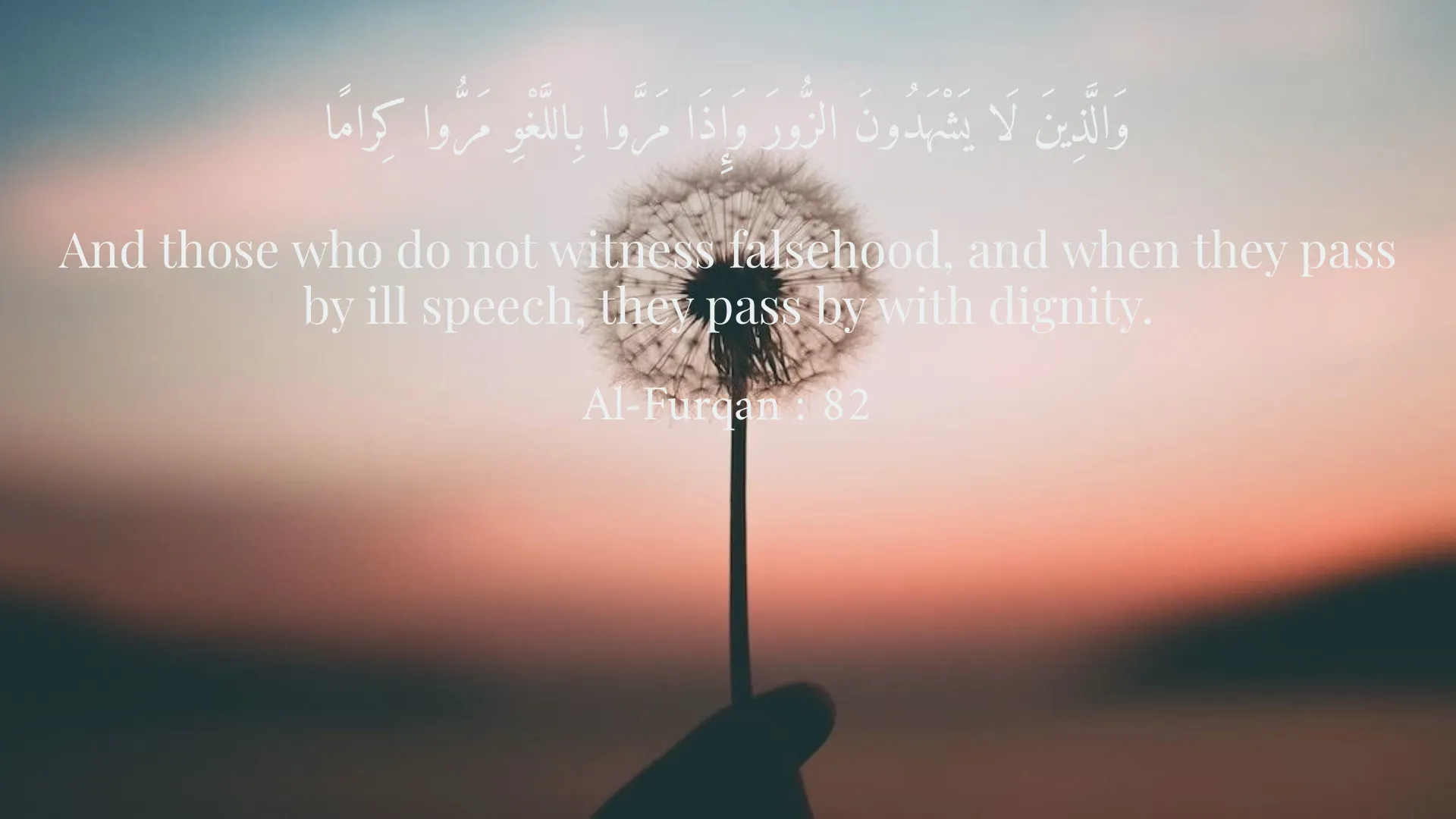
وَالَّذِينَ لَا يَشْهَدُونَ الزُّورَ وَإِذَا مَرَّوا بِاللَّغْوِ مَرُّوا كِرامًا
And those who do not witness falsehood, and when they pass by ill speech, they pass by with dignity.
Al-Furqan : 82
يَا أَيُّهَا الَّذِينَ آمَنُوا توبوا إِلَى اللَّهِ تَوْبَةً نَّصُوحًا
O you who have believed, repent to Allah with sincere repentance!
At-Tahreem : 8
قُلْ يَا عِبَادِي الَّذِينَ آمَنْتُمُ اتَّقُوا رَبَّكُمْ
Say, 'O My servants who have believed, do not despair of the mercy of Allah.'
Az-Zumar : 53
Short Story
One day, a man named Hamid, after years of neglecting worship, decided to change his life. With a heavy heart and sincere intention, he turned to God and said, 'O Lord, I regret my sins, forgive me!' With this love and sincerity, Hamid felt light and at peace. God answered his prayer and opened the path of goodness for him.