Quranic Answer
Wealth is a profound and multifaceted concept that has been explored in various religious and philosophical contexts throughout history. In the Holy Quran, wealth and the manner in which it is handled is addressed in numerous verses, providing insights into its significance not only as a material asset but also as a spiritual test and moral responsibility. The Quran navigates the complexities of wealth, offering guidance on how to accumulate, utilize, and share it in a world where financial disparities can create significant divides among individuals and communities. Through this exploration, we can understand wealth not merely as a symbol of success or prosperity, but as a blessing from God that requires careful stewardship and ethical consideration. One of the key verses that highlights the dual nature of wealth in Islam is found in Surah Al-An'am, verse 165, which states: "And He it is who has made you successors upon the earth and has raised some of you above others in degrees [of rank] that He may try you in what He has given you." This verse explicitly indicates that wealth is not merely a reward or an indication of God's favor, but rather a mechanism through which humans are tested. The idea of being 'successors upon the earth' suggests a stewardship role where one is not the ultimate owner of their wealth but rather a caretaker of the resources entrusted to them by God. The notion of being tested in what one has received raises questions about moral accountability and the manner in which wealth is utilized. Moreover, Surah Al-Baqarah, verse 155 further emphasizes the testing nature of life, including wealth, stating: "And We will surely test you with something of fear and hunger and a loss of wealth and lives and fruits, but give good tidings to the patient." Here, the Quran acknowledges life’s inherent challenges, including the potential loss of wealth. This verse serves as a reminder that wealth can be fleeting and that difficulties in financial circumstances are part of life's trials. The invocation of patience in the face of adversity implies that spiritual resilience is cultivated not only in times of abundance but also in moments of scarcity. Indeed, the relationship individuals have with wealth can serve as a litmus test for their faith. How one handles wealth—whether through generosity, support for the needy, or accumulation for self-interest—reflects their internal values and priorities. Wealth can be a source of pride, but it can also lead to arrogance if one becomes overly engrossed in material pursuits. In light of this, the Quran encourages believers to view wealth not merely as a tool for personal gain but as a means to achieve social justice and support the less fortunate. Islam places a strong emphasis on social responsibility, urging believers to practice charitable acts, known as Zakat and Sadaqah. Zakat, a mandatory form of almsgiving, is seen as a way to cleanse one's wealth and fulfill a religious obligation to aid those in need. In this framework, wealth is not just a personal asset but a communal resource that should contribute to societal welfare and the alleviation of poverty. Through Zakat, individuals cultivate an awareness of the socio-economic realities around them, reinforcing the idea that prosperity should be shared rather than hoarded. Furthermore, the ethical implications of wealth in the Quran extend to the methods of obtaining it. Engaging in fair trade practices and avoiding exploitative behaviors are underscored as pivotal aspects of wealth accumulation. The Quran explicitly warns against practices like usury (Riba) and deception in trade, as these not only undermine personal morality but also disrupt social harmony. The ethical pursuit of wealth ensures that individuals remain accountable not only to God but to their communities as well. In a broader context, wealth can serve as a reflection of one’s faith and dedication to fulfilling God’s commands. Those who use their wealth to benefit others are often portrayed as righteous believers who embody the principles of charity and humility taught by Islam. This perspective encourages individuals to regularly assess their relationship with wealth and confront the temptation to prioritize material possessions over moral obligations. Moreover, the Quran invites readers to contemplate the transient nature of worldly pursuits. Surah Al-Hadid, verse 20 states: "Know that the life of this world is but diversion and amusement and adornment and boasting among yourselves and competition in increase of wealth and children. It is like the example of a rainfall which produces a plant that pleases the tiller, but then it withers and you see it turned yellow; then it becomes scattered pieces. And in the Hereafter is severe punishment and forgiveness from Allah and approval. And what is the worldly life except the enjoyment of delusion." This verse cautions believers against becoming overly attached to worldly possessions, reminding them that true success lies in the hereafter. It highlights the impermanence of wealth and worldly achievements, urging individuals to align their actions with the ultimate pursuit of spiritual fulfillment. In conclusion, the teachings of the Quran surrounding wealth present it as a profound blessing that carries with it an equally profound responsibility. Muslims are called to embrace wealth with gratitude while recognizing it as a means of divine testing. The handling of wealth—whether in moments of abundance or scarcity—reflects one's faith and commitment to ethical practices and social justice. Ultimately, wealth should be viewed as a tool meant for serving humanity; it is a means to solidify relationships, support the vulnerable, and further the collective good. The Quran's guidance advises individuals to cultivate a balanced perspective on wealth—one that recognizes its temporary nature and prioritizes spiritual growth and altruism over mere material gain. Through this lens, wealth can become not only a means of sustenance but also a pathway to serving God and humanity.
Related Verses
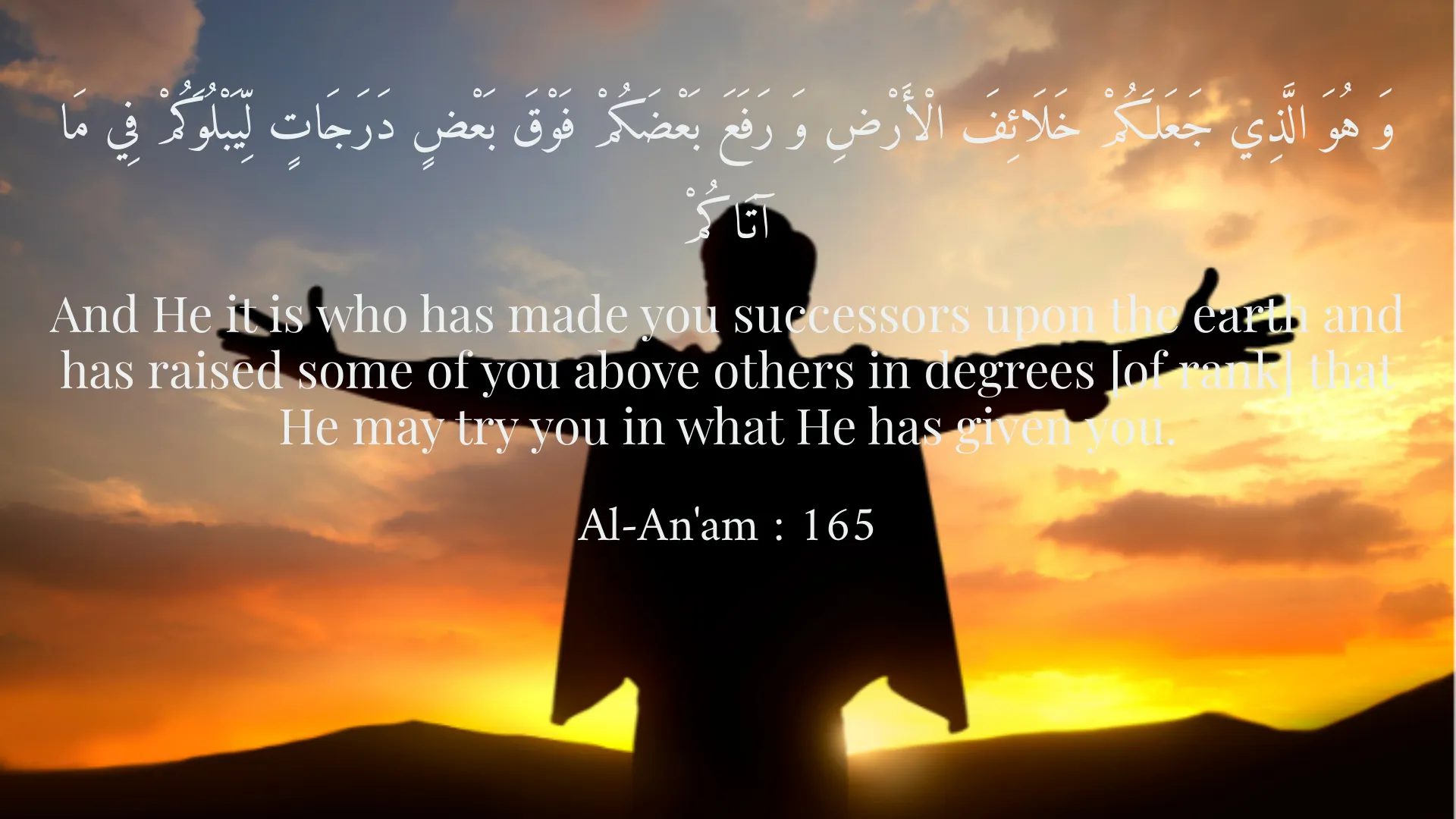
وَ هُوَ الَّذِي جَعَلَكُمْ خَلَائِفَ الْأَرْضِ وَ رَفَعَ بَعْضَكُمْ فَوْقَ بَعْضٍ دَرَجَاتٍ لِّيَبْلُوَكُمْ فِي مَا آتَاكُمْ
And He it is who has made you successors upon the earth and has raised some of you above others in degrees [of rank] that He may try you in what He has given you.
Al-An'am : 165
وَلَنَبْلُوَنَّكُم بِشَيْءٍ مِّنَ الْخَوْفِ وَالْجُوعِ وَنَقْصٍ مِّنَ الْأَمْوَالِ وَالْأَنفُسِ وَالثَّمَرَاتِ ۗ وَبَشِّرِ الصَّابِرِينَ
And We will surely test you with something of fear and hunger and a loss of wealth and lives and fruits, but give good tidings to the patient.
Al-Baqarah : 155
Short Story
One day, a young man named Hasan pondered whether wealth was a sign of God's kindness. He recalled the verses of the Quran and decided to help the elders and the needy. Over time, Hasan realized that sharing wealth and helping others transformed his life, bringing him greater joy and satisfaction.