Quranic Answer
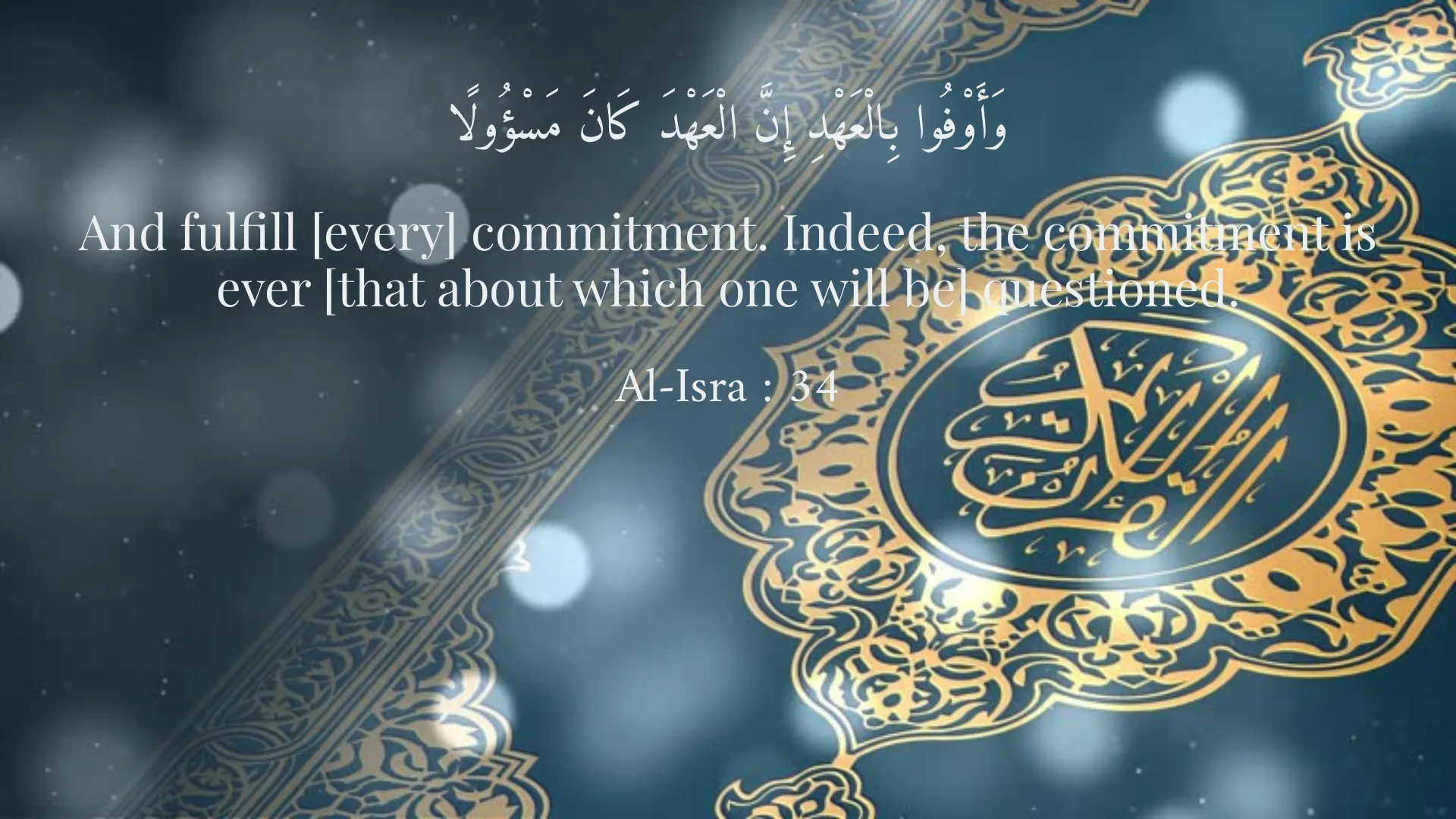
In the Holy Quran, the concept of vows and fulfilling them is a significant and often reiterated theme that underscores the importance of accountability and integrity in one's commitments. This notion is not merely a theological principle but is deeply interwoven into the very fabric of Islamic practice and belief. The Quran addresses this concept in several verses, highlighting both the divine expectation and moral responsibility that comes with making vows. One of the key references to vows in the Quran can be found in Surah Al-Isra, verse 34, where Allah Almighty commands: 'And fulfill [every] commitment. Indeed, the commitment is ever [that about which one will be] questioned.' This verse serves as a reminder of the weight that a commitment carries, indicating that individuals will be held accountable for their promises. The Arabic term used here for 'commitment' encompasses a broad array of obligations, including those made to Allah, to other people, and to oneself. By emphasizing that one will be questioned about their commitments, the verse instills a deep sense of responsibility and seriousness regarding vows. Vows in Islam are considered a sacred covenant, a bond that signifies a promise made with solemn intent to uphold certain duties or fulfill particular acts of worship. The act of making a vow signifies a deliberate intention, and according to Islamic teachings, fulfilling these vows is a moral obligation. The significance of this obligation can be observed in the life of the Prophet Muhammad (Peace be upon him), who exemplified the highest standards of integrity in keeping his promises. His commitment to fulfilling vows not only reinforced his credibility as a leader but also served as a powerful example for his followers. Moreover, in Surah Al-Ma'idah, verse 89, Allah outlines a nuanced understanding of oaths and commitments. The verse states: 'Allah does not impose blame upon you for what is unintentional in your oaths, but He imposes blame upon you for what your hearts have earned. And Allah is Forgiving and Forbearing.' This distinction highlights that Allah recognizes the complexities of human intention and the difference between serious oaths taken with foresight and those made without deliberate consideration. Vows made impulsively or without sincere intention may not incur divine reproach, thus providing a compassionate perspective on human fallibility. However, for those vows made with genuine intention, the obligation to fulfill them remains paramount. The implications of this teaching extend beyond personal spirituality; they resonate within the broader Islamic community and emphasize the importance of trust and reliability in social interactions. A society in which individuals honor their vows fosters goodwill and strengthens communal bonds. Conversely, neglecting commitments can lead to distrust and discord, highlighting the crucial role that vows play not only in individual piety but also in societal harmony. In addition to Quranic verses, the Prophetic traditions further reinforce the importance of keeping one's vows. Multiple Hadith records demonstrate the Prophet's strict adherence to his word and his insistence on others doing the same. For instance, it has been narrated that he stated: 'The signs of a hypocrite are three: when he speaks, he lies; when he makes a promise, he breaks it; and when he is entrusted, he betrays.' This strong language emphasizes the moral decay that results from failing to uphold one's commitments, framing such behavior as a characteristic of hypocrisy. Furthermore, the Prophet Muhammad (Peace be upon him) encouraged his followers to be mindful of their words and the promises they make, illustrating that vows are an expression of one's integrity and faithfulness. The ethical dimensions of fulfilling promises are essential for developing a community that upholds justice, trustworthiness, and respect. In contemporary society, the lessons derived from the Quranic understanding of vows and their fulfillment remain profoundly relevant. In a fast-paced world where promises are often made and broken with little thought, revisiting the Islamic perspective on vows calls attention to the need for greater accountability and conscientiousness in our dealings. The principles rooted in the Quran guide us to consider the implications of our words and commitments, urging us to be diligent in fulfilling our obligations. The moral obligation to fulfill vows is especially pertinent in areas such as family relationships, business dealings, and social commitments. Upholding one's word in these contexts not only reflects personal integrity but also contributes positively to the societal fabric. It fosters an environment of mutual respect and reinforcement of ethical principles that benefit everyone involved. To this end, fulfilling vows transcends the mere act of completion; it is an embodiment of ethical behavior, a testament to one's character, and a reflection of one's relationship with God. When individuals approach their vows with sincerity and commitment, they not only fulfill a religious obligation but also cultivate an atmosphere of trust and reliability within their communities. In conclusion, the Quran and the teachings of the Prophet Muhammad (Peace be upon him) collectively emphasize that vows must be fulfilled and that doing so is a commendable and virtuous act. The significance of promises extends beyond personal accountability; they are essential for fostering trust, integrity, and social cohesion in a community. As believers, it is incumbent upon us to honor our commitments, reflect on the weight of our words, and embody the ethical principles that ensure a prosperous and harmonious society. In doing so, we can aspire to emulate the profound teachings of Islam that highlight the virtue of keeping one’s promises and fulfilling one’s vows.
Related Verses
وَأَوْفُوا بِالْعَهْدِ إِنَّ الْعَهْدَ كَانَ مَسْؤُولًا
And fulfill [every] commitment. Indeed, the commitment is ever [that about which one will be] questioned.
Al-Isra : 34
لَا يُؤَاخِذُكُمُ اللَّهُ بِاللَّغْوِ فِي أَيْمَانِكُمْ وَلَكِن يُؤَاخِذُكُم بِمَا عَقَّدتُّمُ الْأَيْمَانَ
Allah does not impose blame upon you for what is unintentional in your oaths, but He imposes blame upon you for what your hearts have earned.
Al-Ma'idah : 89
Short Story
One day, a man was sitting in a mosque pondering over a vow he had made. He thought whether he could skip fulfilling it. He remembered the verses of the Quran and decided to fulfill his vow. After he fulfilled his vow, he felt a sense of peace and satisfaction, realizing how much happiness lies in keeping one's promises.