Quranic Answer
### The Characteristics of the God-Fearing According to the Holy Quran The Quran, a holy text for Muslims, serves not only as a spiritual guide but also as a comprehensive manual for ethical and moral conduct. Through its verses, it delineates the principles that shape the lives of those who embody the term "muttaqin," or the God-fearing. This essay seeks to elaborate upon the Quranic characterization of the God-fearing as outlined in various Surahs, highlighting the balance between internal faith and external actions that define true piety. #### The Importance of Striving for Obedience In Surah Al-Imran (3:133-134), Allah emphasizes that the God-fearing are distinguished by their relentless efforts in obedience and their conscious avoidance of sin. These verses underscore the idea that piety extends beyond mere abstention from wrongdoing; it also involves active engagement in righteous deeds. This principle urges followers to cultivate a continuous state of self-improvement where they are not just passive believers but rather active participants in their spiritual journey. Additionally, striving for obedience in the face of temptation and wrongdoing is essential in developing a close relationship with Allah. This commitment to faith reinforces the idea that true believers are those who not only have faith but also act upon it by striving to live up to their spiritual ideals through daily practices and good deeds. The Quran makes it clear that piety demands more than just inner conviction—it calls for outward manifestation through conscientious effort. #### The Essence of Righteousness In Surah Al-Baqarah (2:177), Allah presents a profound definition of righteousness: "Righteousness is not that you turn your faces toward the East or the West, but (true) righteousness is in one who believes in Allah, the Last Day, the Angels, the Book, and the Prophets, and gives his wealth, in spite of love for it…" This verse powerfully articulates that the essence of righteousness does not lie in mere ritualistic practices or outward appearances but rather in deep-rooted faith and a commitment to a life of charity and love. The verse continues by illustrating that one who is truly righteous is characterized by a deep belief in the fundamental tenets of Islam, alongside a commitment to social justice and benevolence. The act of giving wealth to relatives, orphans, and those in need, even when one cherishes that wealth, illustrates a selflessness that is pivotal for a God-fearing person. This notion urges believers to prioritize the welfare of others over personal gain, reminding them that true piety requires genuine concern and empathy for the community around them. #### Service to Humanity The Quran emphasizes that external actions are paramount in manifesting one’s internal faith. The God-fearing are called to actively engage in acts of service and kindness towards others. In today's society, where individualism often overshadows community welfare, the lessons from the Quran serve as a timely reminder. Helping others—be it through financial support, counseling, or simply offering assistance—should be integral to the God-fearing lifestyle. By acknowledging those who ask for help and assisting travelers, the Quran pushes believers to extend their compassion beyond their immediate circles. This fosters a sense of communal responsibility and cultivates an environment where kindness and support flourish. The significance of serving humanity holds historical precedence in Islam, where various examples from the life of the Prophet Muhammad (peace be upon him) exemplify how acts of service form the core of a faith-driven life. #### Genuine Consciousness of Allah Furthermore, in Surah Al-Ma'idah (5:93), Allah articulates, "Allah only wishes for you to be conscious (of Him)," which sheds light on the necessity of heartfelt piety. This statement emphasizes that true fear of God is not merely about following rules or avoiding sins out of fear of punishment; it is about developing a deep, sincere relationship with Allah. The God-fearing person always seeks to please Allah, viewing their actions through the lens of divine approval. This results in a transformative journey that inspires them to continuously evaluate their intentions and behavior, encouraging an authentic pursuit of goodness. The need for sincerity in worship underscores that piety is synonymous with awareness and mindfulness of Allah in every aspect of life, from thoughts and intentions to actions and interactions. #### The Lifestyle of the God-Fearing In essence, the lifestyle of the God-fearing is orchestrated by a commitment to goodness, an avoidance of sins, and unwavering service to humanity. The interplay of these elements creates a holistic framework for spiritual development that is rooted deeply in the teachings of the Quran. It establishes a model where faith is not static but dynamic, continuously evolving through good deeds and acts of compassion. Living such a lifestyle not only brings personal fulfillment and peace but also contributes positively to the wider community. It invites others to foster similar values of kindness, compassion, and mutual respect, thereby upholding the teachings of the Quran beyond the individual level. Thus, being God-fearing—muttaqin—creates ripples of change that can help cultivate better societies, rooted in ethical principles guided by divine wisdom. #### Conclusion In conclusion, the characteristics of the God-fearing, as outlined in the Quran, serve as guiding principles for those seeking to navigate their spiritual journey. Through heartfelt devotion, diligent efforts in obeying Allah, and active engagement in good deeds, individuals can embody true piety. Ultimately, the Quran’s teachings emphasize that being God-fearing is not a mere title; it is an ongoing process that shapes one’s entire lifestyle, extending love, compassion, and righteousness to all those in need.
Related Verses
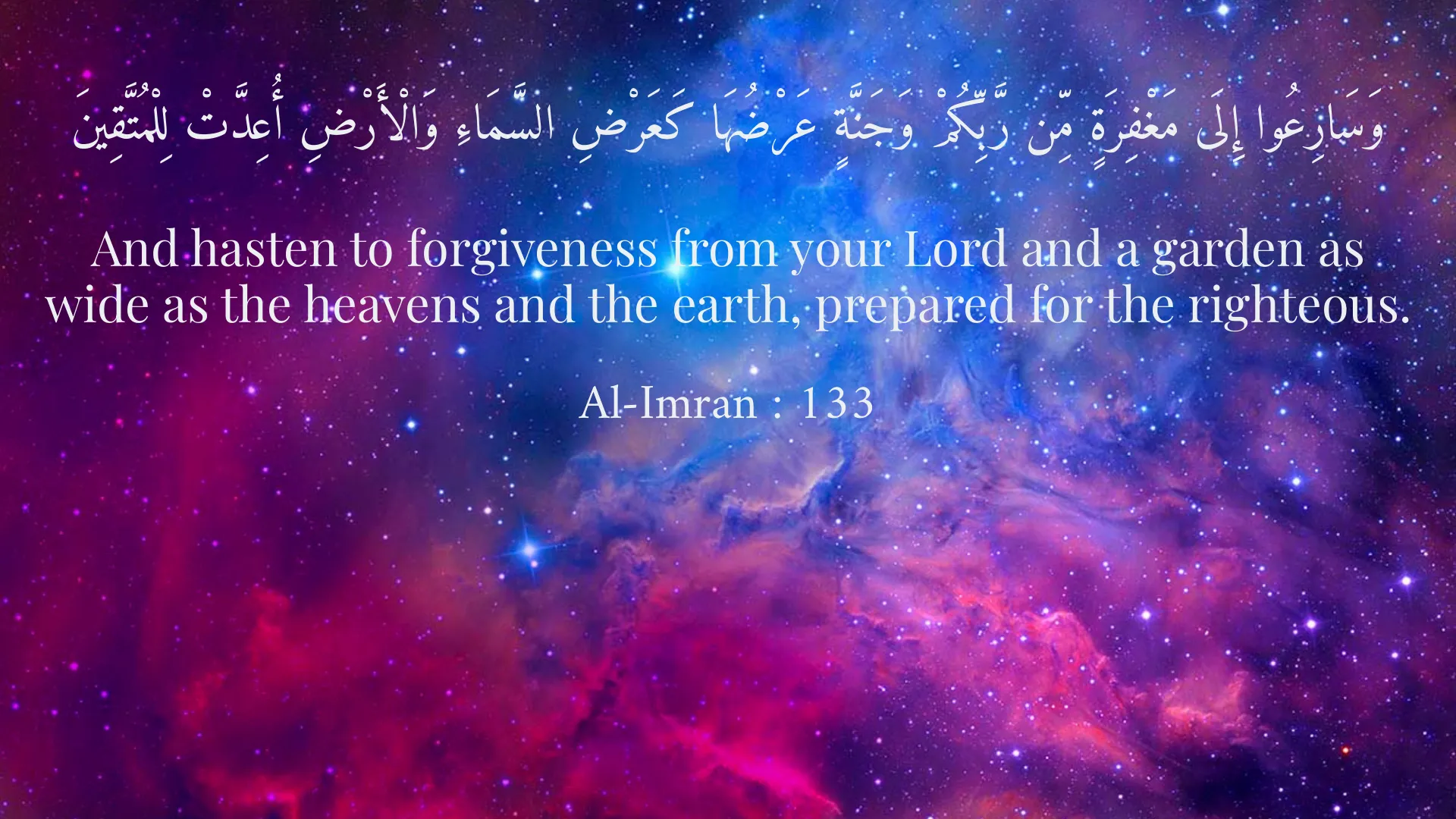
وَسَارِعُوا إِلَى مَغْفِرَةٍ مِّن رَّبِّكُمْ وَجَنَّةٍ عَرْضُهَا كَعَرْضِ السَّمَاءِ وَالْأَرْضِ أُعِدَّتْ لِلْمُتَّقِينَ
And hasten to forgiveness from your Lord and a garden as wide as the heavens and the earth, prepared for the righteous.
Al-Imran : 133
لَيْسَ الْبِرَّ أَن تُوَلُّوا وُجُوهَكُمْ قِبَلَ الْمَشْرِقِ وَالْمَغْرِبِ وَلَكِنَّ الْبِرَّ مَن آمَنَ بِاللَّهِ وَالْيَوْمِ الْآخِرِ وَالْمَلَائِكَةِ وَالْكِتَابِ وَالْأَنْبِيَاءِ وَأَعْطَى مَالَهُ حُبًّا لِّأَقْرَبَائِهِ وَالْيَتَامَى وَالْمَسَاكِينِ وَابْنَ السَّبِيلِ وَالسَّائِلِينَ وَفِي الرِّقَابِ
Righteousness is not that you turn your faces toward the East or the West, but (true) righteousness is in one who believes in Allah, the Last Day, the Angels, the Book, and the Prophets, and gives his wealth, in spite of love for it, to relatives, orphans, the needy, the traveler, those who ask [for help], and for freeing slaves.
Al-Baqarah : 177
Short Story
One day, Adel was reflecting on his life and wondered if he truly embodied the characteristics of the God-fearing. He decided to open the Quran and read its verses. As he read, he realized that the God-fearing are those who help others and strive for self-improvement. From that day forward, Adel began to help those in need and give charity, and this change in his life brought him greater happiness and peace.