Quranic Answer
Life after death is one of the most significant themes in the Holy Quran, and it serves as a cornerstone not only in Islamic theology but also in the broader understanding of human existence from a spiritual and ethical perspective. The concept of an afterlife strongly emphasizes moral accountability and serves as a powerful motivator for moral behavior during one's earthly life. The Quran elaborates extensively on the realities of death and the subsequent life that follows, using various verses to highlight the importance of human actions and their consequences in both worlds. From the very onset of the Quranic revelation, the inevitability of death is made clear. The phrase 'Every soul will taste death' found in Surah Al-Imran, verse 185, unequivocally establishes death as an inescapable fact of life. This verse goes further to explain that while death is a certainty, the outcomes associated with it hinge upon one’s deeds. The promise of full compensation on the Day of Resurrection implies that nothing is overlooked; every action has a corresponding effect that will be accounted for. In a world filled with distractions and desires, the Quran reminds us of the transient nature of life, categorizing worldly enjoyment as 'delusion.' This stark reminder establishes a motivator for individuals to pursue righteous deeds, rather than getting lost in the material aspects of life, which, although captivating, are fleeting in nature. Surah Yasin, verse 12, presents another illuminating aspect of the afterlife. "Indeed, it is We who will bring the dead to life and We record what they have brought and their footprints, and all things We have enumerated in a clear register." Here, the Quran emphasizes not only resurrection but also divine accountability. The concept that God 'records' human deeds portrays a level of scrutiny that encourages individuals to live purposefully. Each person’s actions leave footprints—in essence, a metaphor for the impact of one’s life choices on the world and on themselves. On the Day of Judgment, every individual will stand before God, facing the entirety of their life's work, further cementing the importance of righteous conduct during one's lifetime. The dual themes of Heaven and Hell are paramount in understanding life after death in the Quran. In Surah Al-Baqarah, verse 25, the Quran paints a vivid picture of Paradise as a reward for believers: "And give good tidings to those who have believed and done righteous deeds that they will have gardens in Paradise beneath which rivers flow." This visual imagery not only depicts a place of eternal peace and bliss but also reinforces the spiritual aspirations of the faithful. The gardens of Paradise illustrate not just tranquility but also abundance—providing a powerful contrast to the potential of suffering in Hell for those who stray from the path of righteousness. On the flip side, Quranic descriptions of Hell serve as a cautionary tale. They aim to instill a sense of fear and awareness regarding actions that deviate from divine commandments. The Quran details various levels and aspects of punishment in Hell, elucidating a stark reality for those who choose to live a life of disbelief and immorality. This powerful juxtaposition between the eternal joys of Paradise and the agonizing torments of Hell serves to emphasize the importance of faith and good deeds in guiding human behavior. Life after death in the Quran is not simply about rewards and punishments; it is integrally connected to the concept of justice. The idea that every soul will be judged fairly underscores the essential nature of God as just and merciful. This belief promotes a sense of responsibility, urging individuals to act ethically and justly in their interactions with others, as they ultimately will bear the consequences of their choices. It promotes a collective consciousness, motivating individuals to engage in community service, help the needy, and act in ways that foster communal harmony and well-being. Moreover, the knowledge of an afterlife profoundly shapes the way Muslims conduct their daily lives, instilling a sense of purpose and direction in their actions. It encourages them to seek knowledge, engage in worship, and fulfill their social responsibilities, confident that life does not merely end at death but continues in a more pronounced form that reflects their earthly conduct. This belief gives strength and resilience in the face of adversity, as individuals find solace in the hope of divine justice and mercy beyond this life. In the contemporary world, where skepticism and doubt prevail regarding spiritual matters, the Quran's teachings on life after death challenge believers to embrace their faith fervently. In an era that often prioritizes material success over moral accountability, the Quran stands as a guide, urging believers to remain steadfast in their commitments to their faith and to each other. It calls for a profound reflection on one’s life choices and the ultimate goal of human existence, which transcends the material world and extends into eternity. Ultimately, the teachings of the Quran about life after death serve as a clarion call for self-discipline, ethical behavior, and community service. It provides a framework within which believers can navigate their lives purposefully, ensuring that their actions are aligned with a higher moral standard. By embracing the teachings regarding death and the afterlife, Muslims are encouraged not only to prepare for their own eventuality but to actively contribute to the spiritual well-being of their communities. This holistic approach to life, grounded in faith and acknowledgment of the afterlife, breeds a generation that is conscious of its impact—in this world, as well as the next.
Related Verses
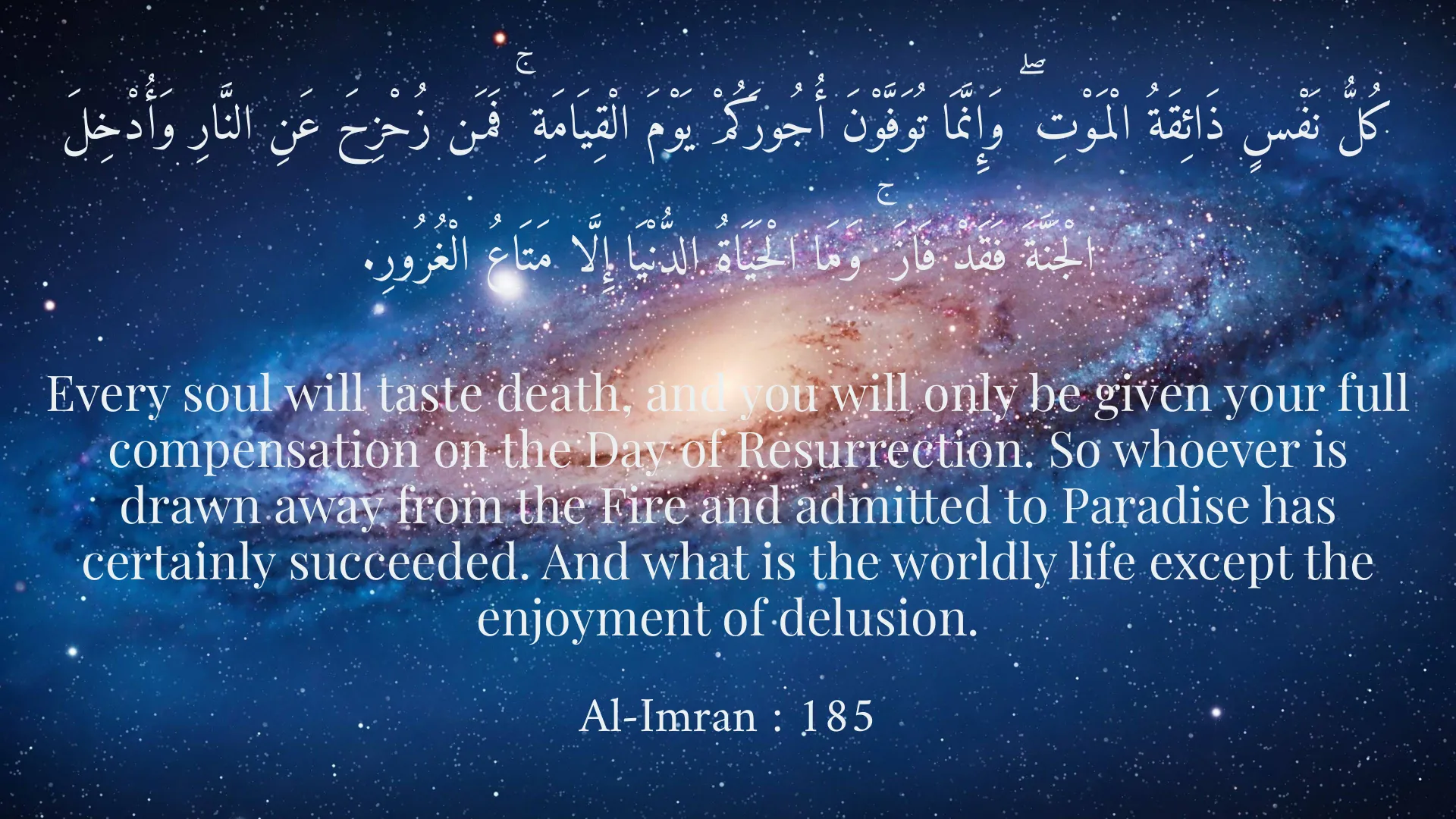
كُلُّ نَفْسٍ ذَائِقَةُ الْمَوْتِ ۖ وَإِنَّمَا تُوَفَّوْنَ أُجُورَكُمْ يَوْمَ الْقِيَامَةِ ۚ فَمَن زُحْزِحَ عَنِ النَّارِ وَأُدْخِلَ الْجَنَّةَ فَقَدْ فَازَ ۚ وَمَا الْحَيَاةُ الدُّنْيَا إِلَّا مَتَاعُ الْغُرُورِ.
Every soul will taste death, and you will only be given your full compensation on the Day of Resurrection. So whoever is drawn away from the Fire and admitted to Paradise has certainly succeeded. And what is the worldly life except the enjoyment of delusion.
Al-Imran : 185
إِنَّا نَحْنُ نُحْيِ الْمَوْتَىٰ وَنَكْتُبُ مَا قَدَّمُوا وَآثَارَهُمْ ۚ وَكُلَّ شَيْءٍ أَحْصَيْنَاهُ كِتَابًا.
Indeed, it is We who will bring the dead to life and We record what they have brought and their footprints, and all things We have enumerated in a clear register.
Yasin : 12
وَبَشِّرِ الَّذِينَ آمَنُوا وَعَمِلُوا الصَّالِحَاتِ أَنَّ لَهُمْ جَنَّاتٍ تَجْرِي مِن تَحْتِهَا الْأَنْهَارُ.
And give good tidings to those who have believed and done righteous deeds that they will have gardens in Paradise beneath which rivers flow.
Al-Baqarah : 25
Short Story
One day, a friend asked me what life after death would be like. I pointed to the Quranic verse that states, 'Every soul will taste death.' I heard a story about a man who was deeply saddened after the death of his wife. He remembered these verses, finding solace in realizing that the afterlife was a continuation for pure souls. Now, he finds more importance in prayer and supplication, hoping to meet his wife again in Paradise one day.