Quranic Answer
The Concept of Love in the Quran: A Profound Exploration The concept of love in the Quran is profoundly intricate and multifaceted, revealing layers that reflect not only divine affection but also the essential human connections that bind people together. The Quran, the holy book of Islam, addresses love with a focus on its importance as a fundamental tenet of faith, shaping the way individuals interact with Allah and each other. This article aims to explore the various dimensions of love as presented in the Quran, examining its significance in our relationship with God, how it defines our treatment of others, and the broader implications for our behavior and morality. The Love for Allah At the core of the Quranic understanding of love is the profound love for Allah. This sentiment is emphasized in numerous verses that encourage believers to cultivate a deep and abiding love for their Creator. One of the pivotal verses related to this is found in Surah Al-Imran (3:54), which states: 'And love them as Allah loves them, and love Allah and call to Him with what they love.' This verse encapsulates the essence of divine love, inviting Muslims to reflect on their emotional and spiritual connection to Allah. The love for Allah is not merely a passive feeling; rather, it demands active engagement. It requires believers to cultivate their hearts and minds to embrace the divine qualities of forgiveness, mercy, and guidance. This love for Allah serves as the foundation for a believer's actions and decisions in the world. In Surah Al-Imran (3:31), we find a profound statement that further illustrates the relationship between love and obedience: 'Say, if you love Allah, then follow me, and Allah will love you and forgive your sins, for Allah is Forgiving and Merciful.' In this verse, the Quran reinforces the idea that true love for Allah necessitates following the teachings and example of the Prophet Muhammad (peace be upon him). This obedience to divine guidance reflects a reciprocal relationship; through genuine adherence to Allah's commands, believers earn Allah's love and mercy. The Role of Love in Human Connection While the Quran places paramount importance on the love for Allah, it extends this concept into the domain of human relationships as well. The Quran asserts that love should manifest not only in our feelings but also through our actions towards others, fostering a community of compassion and support. Surah Al-Ma'idah (5:54) emphasizes that true believers have love and friendship toward one another, an expression that must be tangible through both actionable help and kind speech. This notion of mutual love and support transcends mere acquaintanceship, promoting a sense of kinship among humanity that is rooted in the teachings of the faith. The Quran further advocates for family love and relationships, underscoring the significance of honoring parents, caring for children, and maintaining strong family bonds. For instance, the verses highlight the responsibility of family members to support each other emotionally, spiritually, and materially, promoting a culture of love and care that can significantly strengthen societal bonds. The importance of family is often reiterated in the Quran, urging believers to commit themselves to nurturing these relationships, as they significantly impact one's faith and behavior. Another dimension of love explored in the Quran is the notion of altruism and charity. Believers are encouraged to aid those in need, showing love through acts of kindness, whether through giving to charity or simply offering a helping hand. The practice of giving, known as Zakat, is not only an obligation but a demonstration of love for one's fellow human beings. It serves to alleviate suffering and bring communities together, creating a network of mutual support and solidarity. Love as a Moral Compass The extensive discourse on love in the Quran also serves as a moral compass for humanity, guiding believers toward becoming more compassionate individuals. The overarching message is clear: love—divine and human—plays a pivotal role in fostering a moral society. By promoting love as a guiding principle, the Quran encourages individuals to aspire to higher ethical standards. Each interaction becomes an opportunity to spread love and kindness, whether within the family unit, among friends, or in the wider community. In this context, the Quran challenges a narrow view of love that might solely focus on romantic or familial bonds. Instead, it calls for an expansive understanding that includes love for all creation. This leads to respect for differences and an appreciation for diversity, highlighting that all humans, regardless of their background or beliefs, are part of a larger family of humanity. Through this lens, love becomes a unifying force that bridges divides, encourages tolerance, and fosters peaceful coexistence among varying groups and cultures. Conclusion In conclusion, the concept of love in the Quran is an expansive and deeply rooted principle that influences every aspect of a believer’s life. It is a dynamic force that begins with loving Allah and cascades into loving relationships with others. From the love for family to the compassion extended towards strangers, the Quran illustrates that love is not just an emotional state but a call to action—requiring both intention and effort. Through understanding and embodying the lessons of love in the Quran, believers can transform their lives and communities into reflections of divine mercy and compassion. In a world often fraught with division and hardship, returning to this core tenet of love offers a pathway toward greater understanding, solidarity, and peace among all of humanity. Thus, love in the Quran serves not only as a spiritual guide but also as a vital ingredient in the quest for a just and harmonious society.
Related Verses
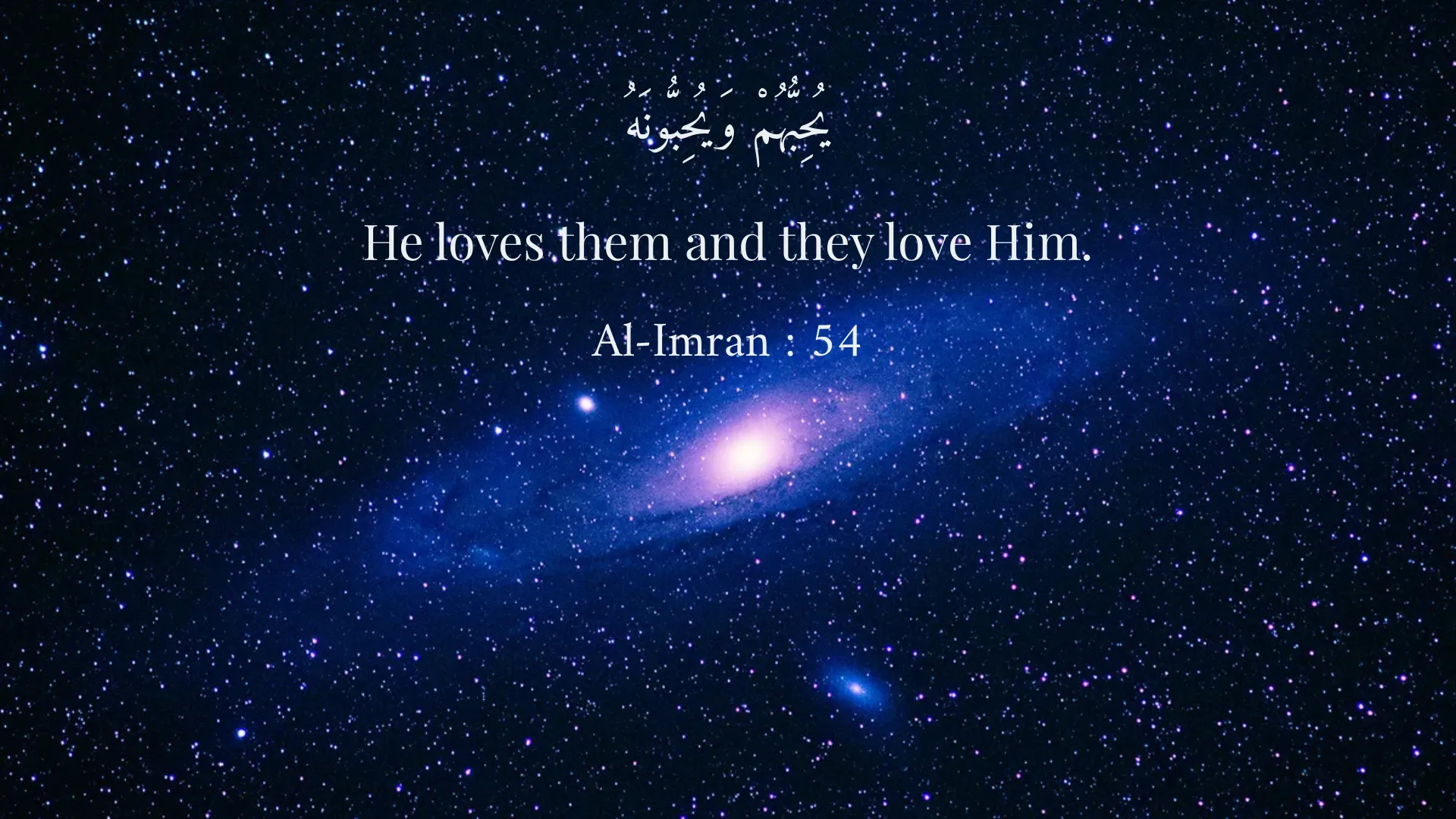
يُحِبُّهُمْ وَيُحِبُّونَهُ
He loves them and they love Him.
Al-Imran : 54
إِن كُنتُم تُحِبُّونَ اللَّهَ فَاتَّبِعُونِي يُحْبِبْكُمُ اللَّهُ وَيَغْفِرْ لَكُمْ ذُنُوبَكُمْ ۗ وَاللَّهُ غَفُورٌ رَّحِيمٌ
If you love Allah, then follow me, so Allah will love you and forgive your sins, and Allah is Forgiving and Merciful.
Al-Imran : 31
إِنَّ الَّذِينَ آمَنُوا وَعَمِلُوا الصَّـالِحَـاتِ سَيَجْعَلُ لَهُمُ الرَّحْمَـٰنُ وُدًّا
Indeed, those who have believed and done righteous deeds will receive from the Most Merciful love.
Al-Ma'idah : 54
Short Story
Once in a small town, a man named Ali was sitting beside a tree, pondering the hardships of his life. He always talked about love for God and others but often forgot to practice it. One day, he decided to show his love through actions. He began helping the needy in his neighborhood and expressed more affection to his family. Over time, Ali noticed greater peace and joy in his life. His love for others transformed into love for God, and everything changed in his life.