Quranic Answer
In the Holy Quran, the concept of God's forgiveness is portrayed as a profound and transformative aspect of divine mercy that far surpasses the capability of human forgiveness. Throughout the sacred text, the theme of forgiveness is intricately woven into the narrative of faith, redemption, and hope for humanity. This exploration reveals not only the nature of Allah's mercy but also provides insights into the limitations and challenges that humans face when it comes to forgiving one another. Forgiveness is a central tenet of Islam, and the Quran contains numerous verses that emphasize Allah's boundless capacity for forgiveness. In Surah Az-Zumar, verse 53, Allah addresses His servants with an open invitation, saying, 'Inform My servants that I am the Forgiving and Merciful.' This profound proclamation not only highlights Allah's ability to forgive but also underscores His compassion towards His creation. Unlike human beings, whose ability to forgive can be impacted by emotions, personal grievances, and societal standards, Allah’s forgiveness is universal and unconditional. It emphasizes His awareness of our flaws and His readiness to embrace us despite our shortcomings. The Quran makes it abundantly clear that God's knowledge encompasses everything. He knows the secrets of our hearts, the struggles we face, and the sins we commit. This infinite understanding lays the groundwork for His forgiveness. Allah's readiness to forgive is not merely a passive aspect of His nature; rather, it is an active and dynamic force that seeks the repentance of His servants. The relationship between Allah and His creation is characterized by love, mercy, and forgiveness, inviting individuals to turn back to Him in repentance and seek redemption. Contrasting the divine form of forgiveness, the human experience of forgiving one another is often complicated and fraught with challenges. In our daily lives, while we may carry a desire to forgive those who have wronged us, our capacity to do so tends to be constrained by a variety of factors, including emotional turmoil, societal expectations, and a tendency to harbor resentment. Humans are prone to retaining memories of the hurts inflicted upon them, which can foster division, hostility, and bitterness. Often, our forgiveness may depend on conditions or the behaviors of others, and we may find it difficult to fully release ourselves from the grip of anger or sadness. The conditional nature of human forgiveness stands in stark contrast to Allah's approach, where no sin is too great to be forgiven if true repentance is sought. In Surah Al-Furqan, verse 70, Allah elucidates this truth: 'Except for those who repent, believe and do righteous work. For them Allah will replace their evil deeds with good. And ever is Allah Forgiving and Merciful.' This verse encapsulates the essence of hope and redemption, emphasizing that sincere repentance coupled with the intention to engage in positive and righteous actions can transform even the gravest sins into opportunities for divine grace. Moreover, the Quran consistently reassures believers that Allah’s mercy is accessible to all, regardless of the magnitude of their transgressions. For instance, the Quran reassures us that Allah does not burden a soul beyond its capacity to bear. This compassionate principle invites humans to acknowledge their imperfections and strive towards improvement without falling into despair. It is in the recognition of our fallibility that we find the strength to repent and seek Allah's forgiveness, which is readily granted to those who turn to Him with sincerity. The notion of receiving forgiveness from Allah carries significant implications for the human experience. It encourages an understanding of our shared humanity, where each individual embodies flaws and imperfections. Consequently, this understanding should inspire compassion and leniency in our interactions with others. While we may grapple with forgiving others for their misdeeds, it serves as a reminder that Allah continuously forgives us, making it imperative for us to extend that same grace to others whenever possible. In embracing the principles of forgiveness and compassion, we foster a sense of unity and understanding within our communities, which is essential for societal harmony. Furthermore, the emphasis on forgiveness in the Quran is not only about personal relationships but also reflects broader communal and social responsibilities. It serves as a foundation for justice, reconciliation, and peace within society. Forgiveness encourages individuals to let go of grievances and tensions, paving the way for healing and collaboration amongst people. By modeling Allah’s merciful attributes, communities can work towards building stronger, more resilient connections, which are crucial for overcoming conflicts. In conclusion, the concept of God's forgiveness as presented in the Quran offers profound insights into the dynamics of mercy, compassion, and human relationships. While Allah's forgiveness is infinite, unconditional, and readily available to all who sincerely repent, human forgiveness remains a complex and often conditional endeavor. This exploration seeks to underscore the importance of recognizing our inherent flaws, embracing the opportunity for divine mercy, and striving to embody that same spirit of forgiveness in our dealings with one another. Ultimately, the teachings of the Quran encourage individuals and communities to foster a culture of empathy, understanding, and unwavering hope in the face of adversity, reinforcing that the path of forgiveness not only leads to personal liberation but enriches the spiritual fabric of our societal interactions.
Related Verses
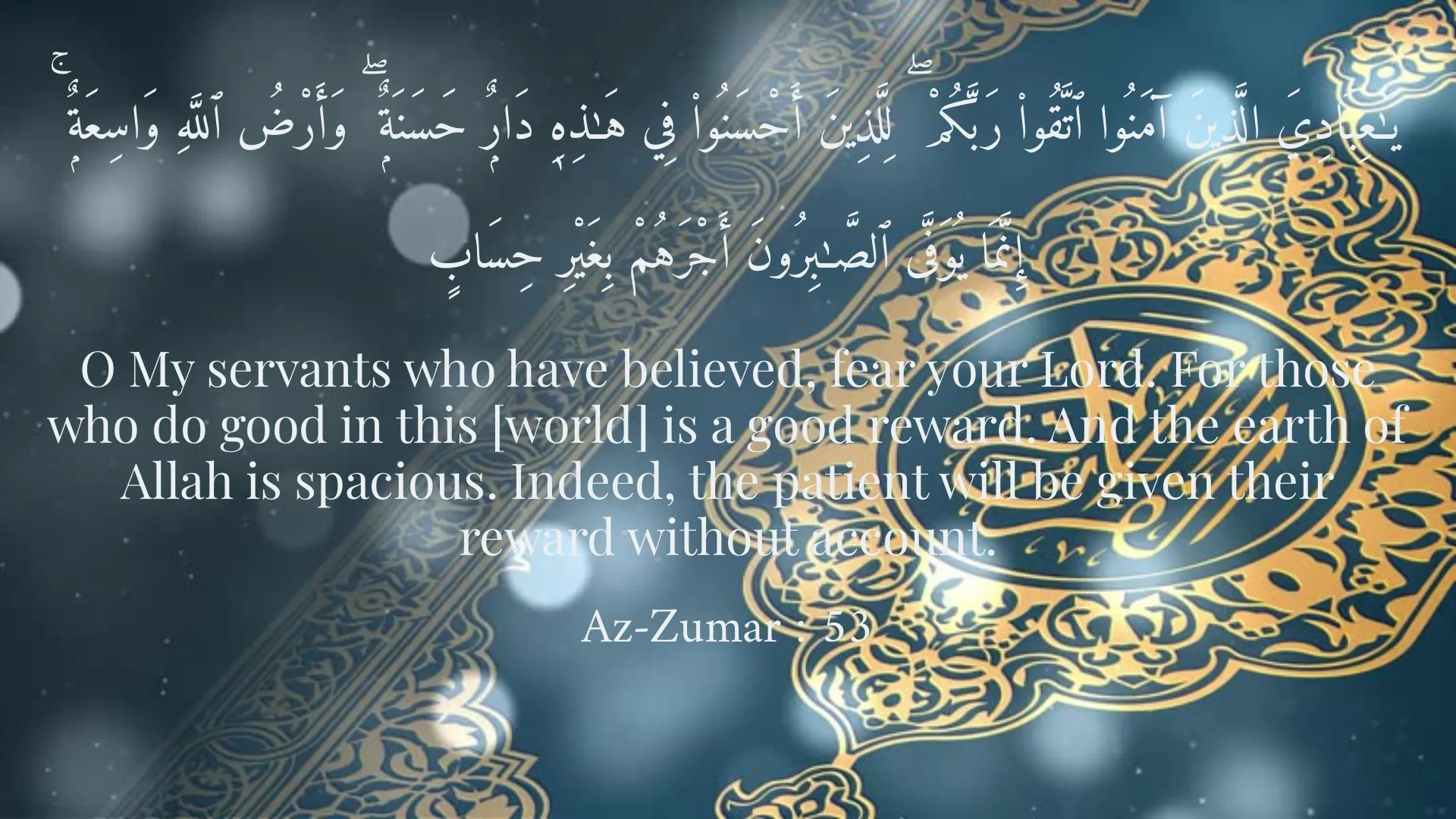
يَٰعِبَادِيَ الَّذِينَ آمَنُوا ٱتَّقُوا۟ رَبَّكُمْ ۖ لِلَّذِينَ أَحْسَنُوا۟ فِي هَـٰذِهِٖ دَارٌۭ حَسَنَةٌۭ ۖ وَأَرْضُ ٱللَّهِ وَاسِعَةٌۭ ۚ إِنَّمَا يُوَفَّى ٱلصَّـٰبِرُونَ أَجْرَهُمْ بِغَيْرِ حِسَابٍ
O My servants who have believed, fear your Lord. For those who do good in this [world] is a good reward. And the earth of Allah is spacious. Indeed, the patient will be given their reward without account.
Az-Zumar : 53
إِلَّا مَن تَابَ وَءَامَنَ وَعَمِلَ صَالِحًۭا ۖ فَأُو۟لَـٰئِكَ يُبَدَّلُ ٱللَّهُ سَيِّئَـٰتِهِمْ حَسَنَـٰتٍ ۖ وَكَانَ ٱللَّهُ غَفُورًۭا رَّحِيمًۭا
Except for those who repent, believe and do righteous work. For them Allah will replace their evil deeds with good. And ever is Allah Forgiving and Merciful.
Al-Furqan : 70
Short Story
One day, Jesus saw a man who was very upset about his mistakes and could not forgive himself. Jesus said to him, 'Do you know that Allah says in the Quran: I am the Forgiving and Merciful?' The man suddenly felt a sense of relief and decided to forgive himself. He realized that God's forgiveness is greater than anything else and can change his life.