Quranic Answer
Knowledge and faith are two fundamental concepts in human life that significantly influence individual growth and development. Both elements help shape a person's worldview, values, and ultimate purpose. In the context of spirituality and morality, knowledge and faith hold crucial importance, guiding one on the path toward understanding the self and the universe. In exploring the intricate relationships between knowledge and faith, especially through the lens of religious texts like the Holy Quran, we begin to gain insights into how these concepts can work synergistically to enhance human experience. To begin with, it is essential to define what we mean by knowledge and faith. Knowledge can be understood as the accumulation of information, insights, and experiences. It is the intellectual pursuit that leads to a better understanding of various aspects of life and existence. Faith, on the other hand, often relates to belief in something greater than oneself. In many religious contexts, faith represents the trust and conviction in a divine being, a spiritual doctrine, or the moral principles that guide human behavior. In the Holy Quran, the significance of knowledge is undeniably emphasized. Knowledge is recognized as a great blessing and source of security for humankind. In Surah Al-Mu’minun, verse 14, Allah speaks of the creation of a human being from clay and breathing into him from His spirit. This divine act not only signifies the origins of human life but also signifies the potential for growth, enlightenment, and understanding that exists within every person. Through the pursuit of knowledge, individuals can develop an identity that connects them to God and the greater universe. This underlying connection is further manifested in Surah Al-Anbiya, verse 30, where Allah invites His creation to reflect upon the creation of the heavens and the earth. Such encouragement to contemplate the world around us suggests a divine intention behind the search for knowledge. When individuals engage with their surroundings and reflect on the intricacies of life, they come closer to understanding the existence of a higher power. It is crucial to recognize that knowledge and faith are interlinked processes that can enhance each other. Knowledge provides individuals with the tools to uncover truths and divine signs throughout the universe. With empirical evidence and logical reasoning, individuals can witness the complexities of creation, which inherently leads them to acknowledge the existence of a creator. In essence, knowledge illuminates the path toward faith. Conversely, faith plays an equally vital role in the pursuit of knowledge. It provides believers with the strength and motivation to seek understanding of the world and their place within it. Faith may act as a compass, directing one's inquiries and studies towards meaningful and fulfilling pursuits. It fosters resilience in the face of challenges and uncertainties that one encounters on the journey toward discovering knowledge. A balanced relationship between knowledge and faith is necessary for well-rounded development. Knowledge without faith can potentially lead to destruction and misguidance. When individuals become overly reliant on intellectual reasoning devoid of spiritual guidance, they may lose sight of the ethical implications of their discoveries. This intellectual arrogance or nihilism can lead to a disconnect from their moral foundations, which may render them vulnerable to making choices that lack compassion and understanding. The totality of human experience cannot be boiled down to mere facts and figures; a deeper moral meaning guides actions, which often arises from faith. On the other hand, faith without knowledge may culminate in rigidity and an inaccurate understanding of the world. Blind beliefs that lack grounding in evidence and understanding can lead to fanaticism or dogmatism. Individuals may cling to misguided ideologies and traditions without questioning their validity, resulting in intolerance and conflict. To embrace faith in a way that nurtures personal well-being and societal harmony, individuals must continuously seek knowledge that challenges their perceptions and fosters growth. Throughout the Quran, numerous verses resonate with the theme that the pursuit of knowledge is an essential component of attaining human perfection. In Surah Al-Mujadila, verse 11, for instance, Allah declares that the elevation of believers is facilitated through knowledge. "Allah will rise those who have believed among you and those who were given knowledge, by degrees." This verse highlights the transformative power of knowledge in shaping both individual character and destiny. In summary, knowledge and faith coexist as interconnected forces that propel individuals toward personal and spiritual development. While knowledge grants individuals insights into the world around them, faith instills the motivation and moral framework needed to navigate life. The interplay of these two concepts, as emphasized in the Holy Quran, guides humanity toward their ultimate purpose, which is to seek truth, understand creation, and forge a relationship with the divine. In conclusion, to achieve human perfection, the integration of knowledge and faith is indispensable. A holistic approach that values both intellectual pursuits and spiritual beliefs creates a comprehensive understanding of existence. By embracing this synergy, individuals are better equipped to lead lives characterized by wisdom, compassion, and purpose. The Quran serves as an enduring source of inspiration, reminding humanity of the essential journey toward enlightenment—an endeavor that ultimately brings us closer to the divine.
Related Verses
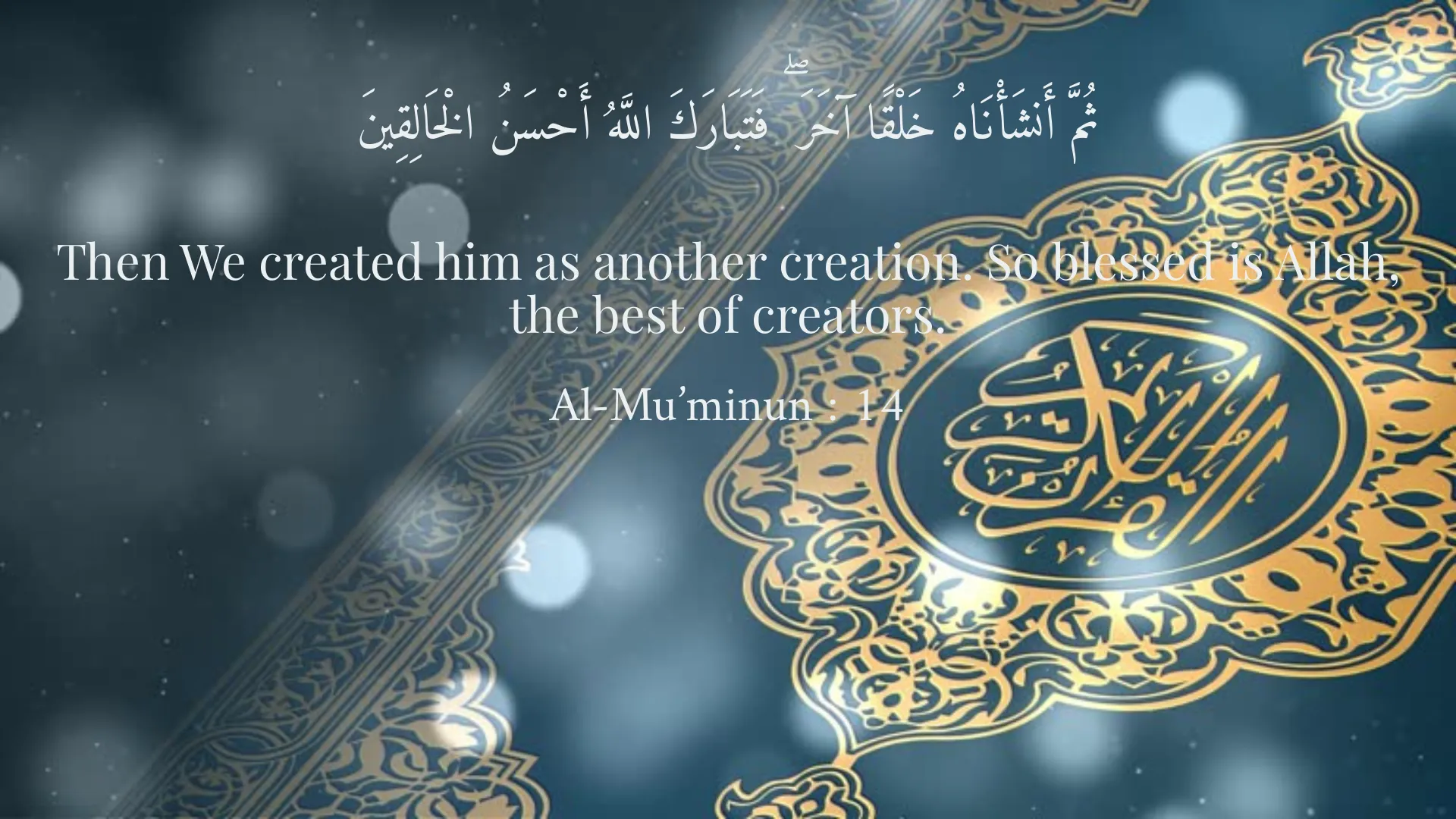
ثُمَّ أَنشَأْنَاهُ خَلْقًا آخَرَ ۖ فَتَبَارَكَ اللَّهُ أَحْسَنُ الْخَالِقِينَ
Then We created him as another creation. So blessed is Allah, the best of creators.
Al-Mu’minun : 14
أَوَلَمْ يَرَ الَّذِينَ كَفَرُوا أَنَّ السَّماواتِ وَالْأَرْضَ كَانَتَا رَتْقًا فَفَتَقْنَاهُمَا ۖ وَجَعَلْنَا مِنَ الْمَاء كُلَّ شَيْءٍ حَيٍّ ۗ أَفَلَا يُؤْمِنُونَ
Do those who have disbelieved not see that the heavens and the earth were a closed-up mass, then We opened them out? And We made from water every living thing. Will they not then believe?
Al-Anbiya : 30
Short Story
Once upon a time, there was a young man named Sam who was in search of truth and faith. He decided to delve into the library in pursuit of knowledge and learning. The more he read, the more he became acquainted with the beauty of creation, and his faith in God grew stronger. He realized that knowledge could help him attain a deeper understanding of his faith. Sam concluded that both were essential in his life and in drawing closer to his Creator.