Quranic Answer
Piety is a fundamental concept within the religious and spiritual life of a believer, embodying a deep-rooted fear of God as well as a committed adherence to His directives. This ideal is not merely a passive sentiment; it actively shapes the character and lifestyle of those who embrace it. Emphasizing its importance, the Quran notably identifies piety as a key attribute of the faithful, intertwining it with the principles of righteousness and ethical conduct. Through various verses, believers are invited to understand the profound depth of this concept, far beyond mere external actions or rituals. One of the Quranic verses that underscores this notion is found in Surah Al-Baqarah, verse 177, which states: "Righteousness is not that you turn your faces toward the east or the west, but [true] righteousness is in one who believes in Allah, the Last Day..." This verse distinctly clarifies that piety goes beyond the superficial acts of worship or the physical orientation of prayer. It delineates that true righteousness encompasses a belief in God, the Last Day, angels, scriptures, and the prophets, among others. It illuminates a vital element of faith, emphasizing that a believer's piety must be grounded in sincere beliefs and devotion. Moreover, this verse signifies that piety is more than an expression of religious duty; it is an internal state that reflects one's relationship with the Divine. Believers are compelled to engage with their faith authentically, fostering beliefs that guide their actions towards compassion, honesty, and justice. In essence, true piety entails a holistic belief system that impacts one's character and deeds. Salvation, an equally essential aspect of belief, is fundamentally connected to piety but focuses on the outcome of faith rather than the nature of the practice. In Surah Al-Imran, verse 185, Allah reminds us, "Every soul will taste death, and only can you fully receive your compensation on the Day of Judgment." This verse serves as a reminder of the transitory nature of life and encourages individuals to prepare for their ultimate fate, emphasizing the need for piety as a pathway to earn divine mercy and secure salvation. The intrinsic link between piety and salvation is woven throughout the Quran. It articulates a belief that living a pious life not only protects one from the pitfalls of sin but also opens the doors to divine favor and ultimate redemption. By cultivating fear of God and aligning one's life with His commandments, believers can aspire towards righteousness that leads to salvation. In a world fraught with temptation and moral ambiguity, piety serves as a guiding light, enabling individuals to navigate their spiritual journey with the purpose of achieving divine grace. Furthermore, Surah Al-Mu’minun, verses 1 to 11, portray the identity of believers, declaring: "Certainly will the believers have succeeded." These verses elucidate the characteristics of the pious, presenting a favorable outcome for those who possess the traits of steadfastness, humility, moderation, and care for one's community. This idea brings forth the notion that believers are not isolated individuals driven solely by personal aspirations; rather, piety commands a sense of responsibility toward fellow beings. Piety manifests in numerous forms—prayer, charity, truthful speech, forgiveness, and unwavering faith. Each facet reinforces the importance of interpersonal relationships and community welfare, which are quintessential components of a pious life. The believer's duty extends to actions that ensure social justice and support the needs of the underprivileged, highlighting that true faith is evidenced through action and community involvement. Moreover, piety can be seen as both a protective measure against spiritual degradation and a means of fostering a relationship with God. A pious life, concomitant with a recognition of divine majesty, can help stave off moral decline. It calls believers to establish boundaries between piety and temptation, steering clear of sinfulness while encouraging virtuous behaviors. Therefore, through compassion and kindness, a believer strengthens their relation with God while simultaneously making a positive impact on the lives of others. It is essential to recognize that the relationship between piety and salvation is not merely transactional, implying that salvation is awarded to those who meet a certain threshold of piety. Instead, true piety emanates from a genuine desire to please God, which eventually leads to attaining salvation. In the judgment of the believer's ultimate fate, only God knows the sincerity of one's heart and the depth of their faith. Thus, it is the pursuit of piety that elevates one’s spiritual state and secures divine mercy. To cultivate and enhance one’s piety, believers may adopt various practical approaches, including engaging with the Quran, partaking in community services, performing regular prayers, and seeking knowledge. These actions allow believers to understand the underpinnings of their faith while simultaneously solidifying their resolve to live righteously. Furthermore, the journey of nurturing piety necessitates reflection, repentance, and humility—a conscious acknowledgment of human fallibility and a willingness to improve one's character. Those who strive for piety often cultivate deep bonds with others who share their aspirations, fostering communities rooted in solidarity, compassion, and collective growth. In conclusion, piety and salvation are intimately intertwined in the spiritual journey of a believer. The Quran emphasizes that authentic piety not only entails obedience to God’s commandments but also encompasses a deeper understanding of faith that reflects sincerity, compassion, and community involvement. In seeking piety, believers actively prepare for their ultimate fate and divine mercy, thus invigorating their spiritual lives and aligning with God’s will. Therefore, navigating the path of piety remains an essential endeavor for every believer as it nurtures faith, strengthens moral character, and ultimately guides individuals toward salvation.
Related Verses
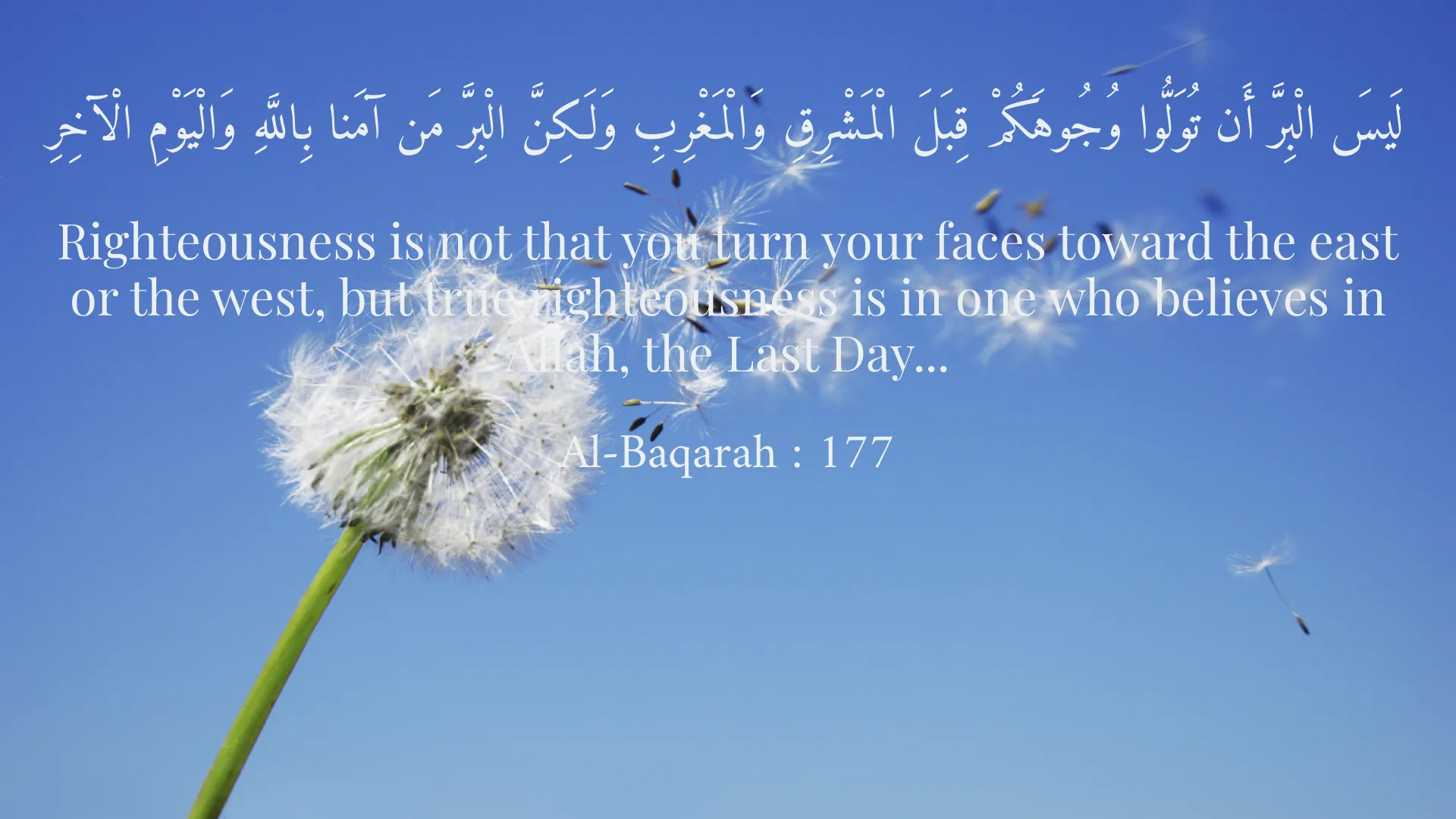
لَيسَ الْبِرَّ أَن تُوَلُّوا وُجُوهَكُمْ قِبَلَ الْمَشْرِقِ وَالْمَغْرِبِ وَلَـكِنَّ الْبِرَّ مَن آمَنا بِاللَّهِ وَالْيَوْمِ الْآخِرِ
Righteousness is not that you turn your faces toward the east or the west, but true righteousness is in one who believes in Allah, the Last Day...
Al-Baqarah : 177
كُلُّ نَفْسٍ ذَائِقَةُ الْمَوْتِ ۖ وَإِنَّمَا تُوَفَّوْنَ أُجُورَكُمْ يَوْمَ الْقِيَامَةِ
Every soul will taste death, and only can you fully receive your compensation on the Day of Judgment.
Al-Imran : 185
قَدْ أَفْلَحَ الْمُؤْمِنُونَ
Certainly will the believers have succeeded.
Al-Mu'minun : 1
Short Story
One day, a young man named Hossein was searching for the deeper meaning of piety and salvation. He recalled the verses of the Quran and decided to fill his days with good deeds and staying away from sins. Over time, Hossein realized that his life became filled with wonders and peace. He knew that by adhering to piety, he could attain salvation and secure a better fate in the afterlife.