Quranic Answer
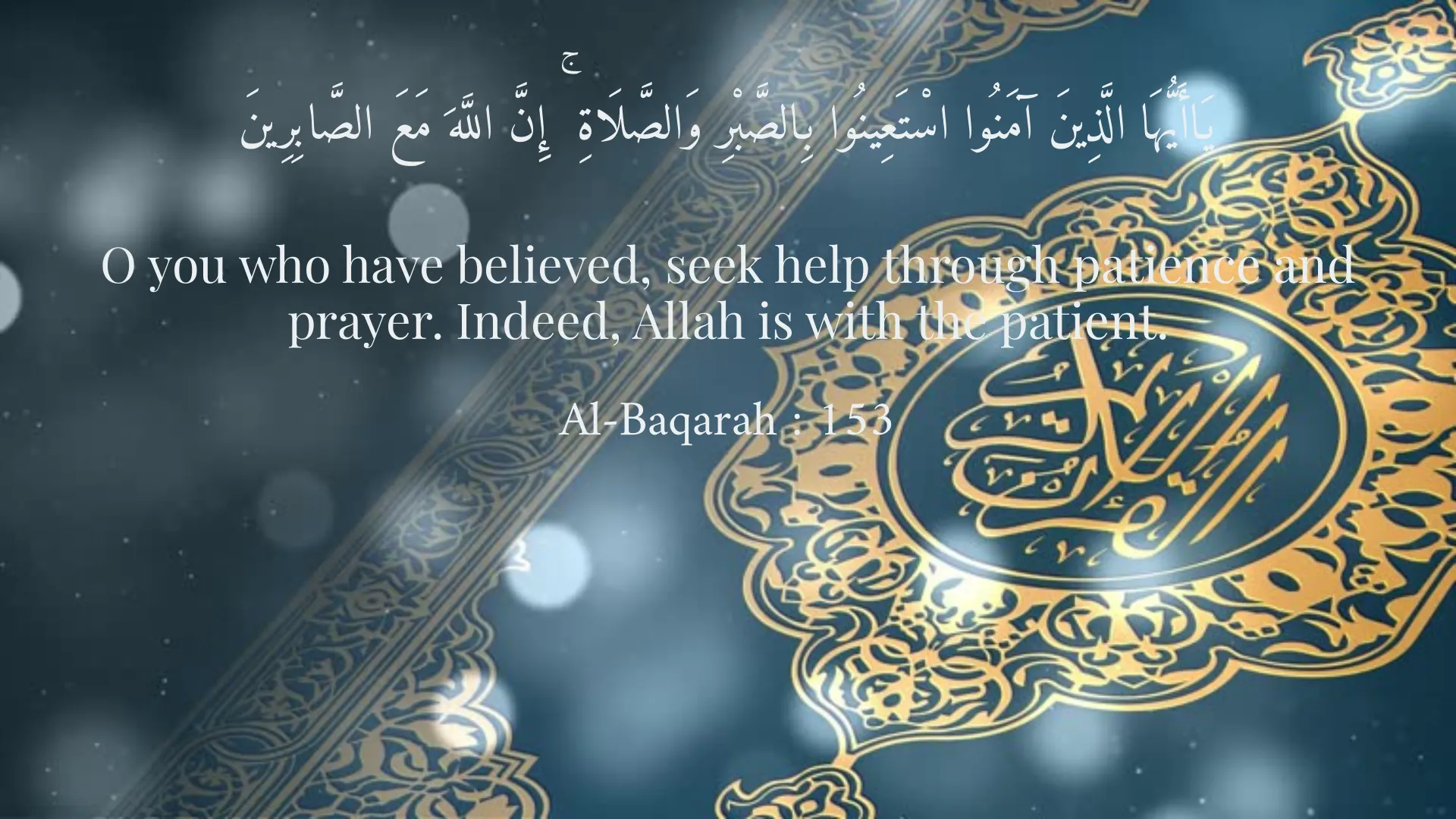
The concept of patience and perseverance, especially during times of trials and tribulations, holds significant importance in the teachings of Islam as depicted in the Holy Quran. Among the many virtues that are emphasized within the Quran, patience (Sabr) stands out as a pivotal quality defined for the believers. The significance of patience is interwoven with the essence of faith itself, where Allah consistently reassures believers that with patience comes divine assistance. In Surah Al-Baqarah, verse 153, Allah speaks directly to the believers, saying: 'O you who have believed, seek help through patience and prayer. Indeed, Allah is with the patient.' This profound verse signifies that patience is more than a moral quality; it is deeply tied to the spiritual relationship between humans and their Creator. The act of seeking help through patience and prayer underlines the necessity of faith in overcoming life's challenges. It frames patience as a spiritual practice that fosters a deeper connection with Allah, suggesting that during times of distress, individuals are urged to turn to their faith and prayers for support. Furthermore, the Quran does not shy away from truthfully presenting the hardships that every believer will inevitably face. Surah Al-Imran, verse 186 states: 'You will surely be tested in your possessions and in your souls, and you will surely hear from those who were given the Scripture before you and from those who associate others with Allah much abuse. But if you are patient and fear Allah - indeed, that is of the matters [worthy] of determination.' This verse not only acknowledges the trials that would be encountered by believers but also provides a clear directive on how to respond to them: with patience and by upholding the consciousness of Allah (Taqwa). Here, the emphasis is placed on the quality of patience as an act of steadfastness and determination, which is pivotal in navigating through life’s tumultuous period. Moreover, the Quran assures believers that patience brings not just endurance, but also incredible rewards. In Surah Az-Zumar, verse 10, Allah proclaims: 'Indeed, the patient will be given their reward without account.' This verse encapsulates the vastness and boundlessness of the rewards that await those who manifest patience in their lives. In essence, it portrays patience as a golden key to unlock abundant blessings and divine mercy. Believers are thus encouraged to embody patience in their daily lives, knowing that it not only fortifies faith but also leads to unparalleled spiritual rewards. The cultivation of patience in the contemporary world is particularly vital due to the increasing complexities faced by individuals. Modern society often presents unsolicited challenges not only in personal lives but also in social and economic contexts. The fast-paced nature of life frequently breeds impatience, as people tend to seek immediate results and instant gratifications. However, the teachings of the Quran remind us that delay and hardship are essential in the path of development and growth. Through the lens of patience, trials become opportunities for self-improvement, self-reflection, and a chance to grow closer to God. The remembrance of Allah during difficult times elevates one’s spirit and instills a sense of peace amidst chaos. Patience nurtures resilience, ultimately shaping character and fortifying one’s faith. Moreover, the communal aspect of patience is noteworthy. When one practices patience, they often inspire others within their community. A patient individual can serve as a beacon of hope and a source of encouragement for those around them. Just as the Quran highlights positive models for believers, the display of patience can create a ripple effect, reinforcing communal bonds and solidarity. It is vital to articulate the importance of teaching patience to younger generations. As role models and mentors, parents and educators can instill this fundamental value by encouraging patience in day-to-day interactions. It is essential to engage children in understanding that life's challenges are inevitable, yet they bear the potential to yield significant rewards when met with a patient and resilient attitude. In practical terms, cultivating patience can involve various forms of mindfulness and reflection exercises. Regular prayers serve as a cornerstone for many, providing a structured space to seek solace and strength. Additionally, practicing gratitude can aid in recognizing the positive facets of challenging situations, which can lead to a more patient mindset. In conclusion, patience and perseverance during challenges stand as essential characteristics of chosen believers as depicted in the Holy Quran. The verses from Surah Al-Baqarah, Surah Al-Imran, and Surah Az-Zumar collectively communicate that trials are part of the human experience and patience is a requisite response that strengthens faith. Ultimately, the act of being patient propels individuals toward spiritual elevation, allowing them to embrace life’s adversities not with fear, but with strength and steadfastness. Enabling ourselves and future generations to internalize these teachings is critical, for patience is not merely a response to discomfort but an avenue for growth that enhances our relationship with Allah and enriches our experience in life.
Related Verses
يَاأَيُّهَا الَّذِينَ آمَنُوا اسْتَعِينُوا بِالصَّبْرِ وَالصَّلَاةِ ۚ إِنَّ اللَّهَ مَعَ الصَّابِرِينَ
O you who have believed, seek help through patience and prayer. Indeed, Allah is with the patient.
Al-Baqarah : 153
لَتُبْلَوُنَّ فِي أَمْوَالِكُمْ وَأَنفُسِكُمْ ۖ وَ لَتَسْمَعُنَّ مِنَ الَّذِينَ أُوتُوا الْكِتَابَ مِن قَبْلِكُمْ وَمِنَ الَّذِينَ أَشْرَكُوا أَذًى كَثِيرًا ۚ وَإِن تَصْبِرُوا وَتَتَّقُوا فَإِنَّ ذَٰلِكَ مِنْ عَزْمِ الْأُمُورِ
You will surely be tested in your possessions and in your souls, and you will surely hear from those who were given the Scripture before you and from those who associate others with Allah much abuse. But if you are patient and fear Allah - indeed, that is of the matters [worthy] of determination.
Al-Imran : 186
إِنَّمَا يُوَفَّى الصَّابِرُونَ أَجْرَهُمْ بِغَيْرِ حِسَابٍ
Indeed, the patient will be given their reward without account.
Az-Zumar : 10
Short Story
One day, Adel was feeling troubled in his heart. He recalled the Quranic verses that promised a great reward for patience during hardships. He said to himself, 'If I am patient, God will help me.' He decided to endure through the challenges, and after some time, he noticed blessings and peace in his life. This was a sweet experience that reminded Adel of the verses and promises of God.