Quranic Answer
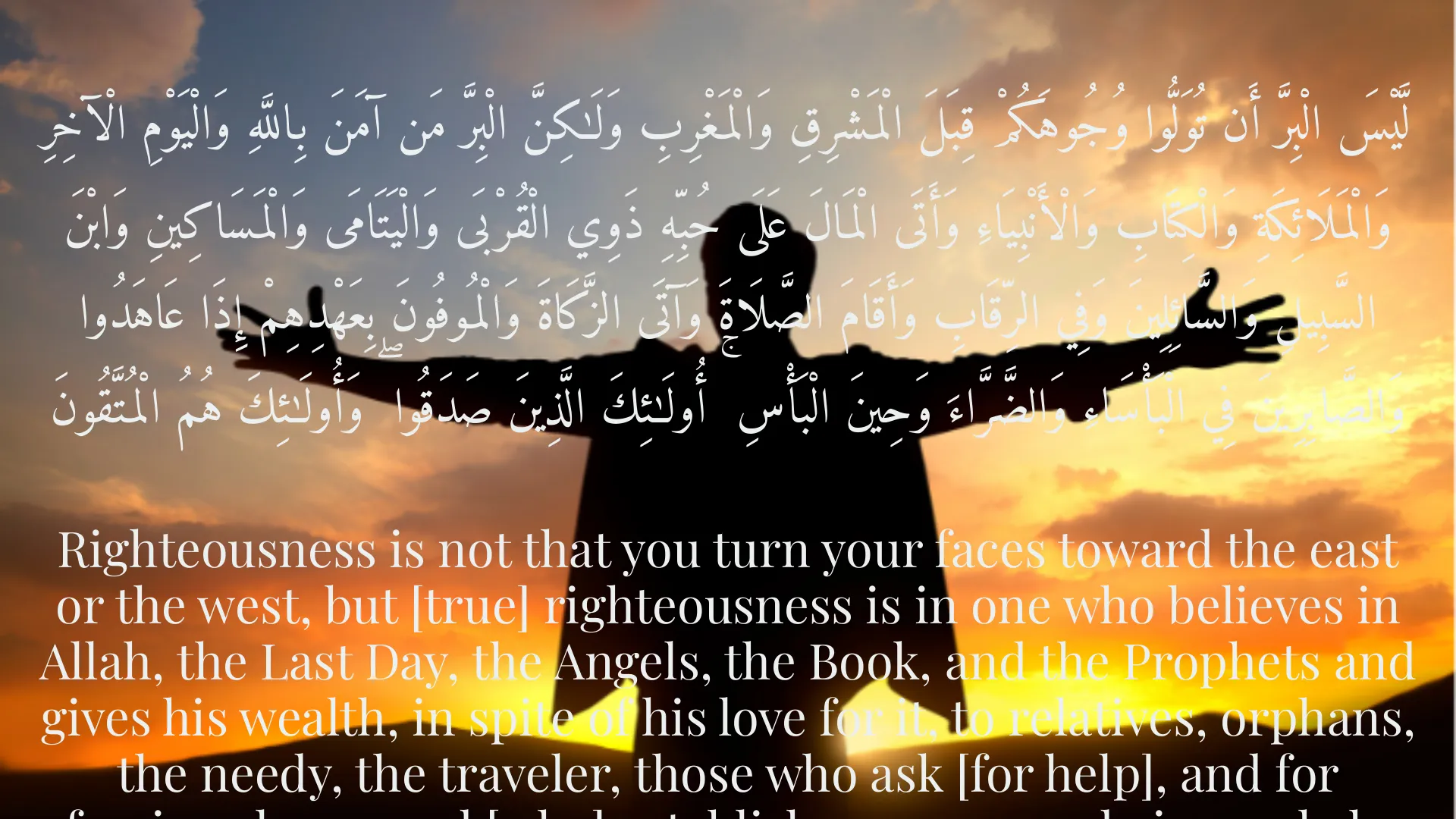
In the Islamic tradition, the intention (niyyah) behind actions plays an essential role in determining both their worth and acceptance in the eyes of Allah. The Holy Quran unequivocally emphasizes the significance of intention, highlighting that it is the driving force that determines the quality and value of our deeds. Surah Al-Baqarah, verse 177, states, 'Having faith in Allah, the Last Day, the Angels, the Book, and the Prophets, and spending one's wealth for the love of Him, and the belief in all other sacred matters, along with righteous deeds and sincere intention in all matters, are fundamental pillars of faith.' This verse articulates not only the elements that constitute a sincere belief but also acknowledges that purpose and intention underpin every good action. The essence of this teaching is clear: good deeds performed without the purity of intention lack divine acceptance and reward. Moreover, the Quran further reinforces this notion in Surah Al-Anbiya, verse 94, where Allah states: 'And whoever does a good deed while believing, there will be no disbelief for them.' This declaration communicates that faith is intrinsically linked to the intention behind one's actions. A mere act, devoid of sincere belief and intention, cannot yield the spiritual rewards that one seeks. This connection between belief and action is crucial; it illustrates that engaging in righteous acts must be accompanied by the right mindset to ensure a favorable outcome in the afterlife. The importance of intention in Islam is further elaborated by the teachings of the Prophet Muhammad (PBUH), who remarked in a well-known hadith, 'Actions are judged by intentions, and for every person is what they intended.' This profound statement encapsulates the essence of how actions are evaluated in Islam. It emphasizes that the value of deeds transcends their superficial appearance; what truly matters is the underlying motivation driving them. This hadith indicates that even the simplest of actions can attain a high status if they are performed with a sincere heart, whereas more elaborate actions can be rendered null if they are performed with insincerity or impure motives. Additionally, the notion that actions are rewarded based on intention sets a transformative standard for believers. It encourages individuals to cultivate and nurture their inner selves consistently. Maintaining pure intentions, focusing solely on Allah's pleasure, and avoiding the temptations of worldly gains become vital tasks for Muslims. The journey toward purifying one’s intentions cannot be overlooked, as it requires self-reflection, honesty, and a conscious effort to align our motivations with the principles of faith. The role of intention transforms our everyday actions into acts of worship. For instance, mundane tasks such as eating, working, or socializing can become opportunities for gaining Allah's pleasure if approached with the right mindset. A person who goes to work with the intention of providing for their family, supporting their community, or serving society embarks on a significant journey that intertwines their daily life with their faith. In these moments, intention becomes a tool that elevates our routine activities to acts of devotion, illustrating the beauty of integrating faith into every aspect of life. However, the challenge of maintaining a pure intention frequently arises, especially in a world filled with distractions and competing desires. The pursuit of fame, recognition, and worldly success can tempt even the devoutly inclined individuals to deviate from their initial intentions. To combat this, one must engage in regular self-reflection and seek Allah's guidance. Supplications (duas) play a vital role in this process; they serve as a means of seeking divine support to maintain sincerity in our actions. By constantly inviting Allah into our hearts, we can foster a more profound connection to our intentions. Moreover, the discussion on intention is not limited to individual acts; it extends to the community as well. When engaging in collective responsibilities or social projects, the intention behind the community's involvement must align with serving Allah and helping others rather than seeking worldly accolades. For instance, charitable organizations emphasize the necessity of ensuring their objectives resonate with divine purposes to facilitate higher moral standards within society. They strive to see their contributions as a means to earn Allah's love and blessings, which in turn reinstates the community's faith and unity. In conclusion, the principle of intention holds paramount importance in Islam, as established through the Holy Quran and the teachings of the Prophet Muhammad (PBUH). Our actions are not merely evaluated by their external appearances but also by the sincere intention that accompanies them. Therefore, it is the duty of every believer to continually purify their intentions and ensure that all deeds are conducted with a primary goal—to seek the pleasure of Allah. Only then can individuals hope to gain divine rewards, spiritual fulfillment, and a successful outcome in both this life and the hereafter. The legacy of maintaining pure intentions acts not just as a guideline for personal conduct but also as a guiding light for collective humanity toward a more purpose-driven, ethical existence. The path to spiritual elevation, thus, emanates from the purity of our hearts and the sincerity of our intentions.
Related Verses
لَّيْسَ الْبِرَّ أَن تُوَلُّوا وُجُوهَكُمْ قِبَلَ الْمَشْرِقِ وَالْمَغْرِبِ وَلَـٰكِنَّ الْبِرَّ مَن آمَنَ بِاللَّهِ وَالْيَوْمِ الْآخِرِ وَالْمَلَائِكَةِ وَالْكِتَابِ وَالْأَنْبِيَاءِ وَأَتَى الْمَالَ عَلَى حُبِّهِ ذَوِي الْقُرْبَى وَالْيَتَامَى وَالْمَسَاكِينِ وَابْنَ السَّبِيلِ وَالسَّائِلِينَ وَفِي الرِّقَابِ وَأَقَامَ الصَّلَاةَ وَآتَى الزَّكَاةَ وَالْمُوفُونَ بِعَهْدِهِمْ إِذَا عَاهَدُوا وَالصَّابِرِينَ فِي الْبَأْسَاءِ وَالضَّرَّاءَ وَحِينَ الْبَأْسِ ۚ أُولَـٰئِكَ الَّذِينَ صَدَقُوا ۖ وَأُولَـٰئِكَ هُمُ الْمُتَّقُونَ
Righteousness is not that you turn your faces toward the east or the west, but [true] righteousness is in one who believes in Allah, the Last Day, the Angels, the Book, and the Prophets and gives his wealth, in spite of his love for it, to relatives, orphans, the needy, the traveler, those who ask [for help], and for freeing slaves; and [who] establishes prayer and gives zakah; [those who] fulfill their promise when they promise; and [those who] are patient in poverty and hardship and during battle. Those are the ones who have been true, and it is those who are the righteous.
Al-Baqarah : 177
فَمَن جَاءَهُ مُؤْمِنًا فَلَا يَخَافُ ظُلْمًا وَلَا هَضْمًا.
And whoever does a good deed while believing, there will be no injustice upon them.
Al-Anbiya : 94
Short Story
One day, Adel was reflecting on his actions, recalling the Prophet’s saying: 'Actions are judged by intentions.' He decided to purify his intentions in everything he did. With this decision, he felt better and sensed that his life became more meaningful, and he would soon witness the rewards of his deeds.