Quranic Answer
Faith is not merely an internal or abstract concept; it is a profound and existential aspect of human life that forms the foundation of individual identity and societal structure. In the context of the Holy Quran, faith is elaborated upon with intricacy, emphasizing the interconnectedness of belief, action, and divine commandments. This article aims to explore the multifaceted nature of faith as depicted in the Quran, highlighting its significance in the lives of believers and its implications for their actions and relationships with others. Faith, or ‘Iman’ in Arabic, is defined in the Quran as a comprehensive acknowledgment and acceptance of God’s existence and authority, accompanied by adherence to His commandments. Unlike many interpretations of faith that restrict it to a mere internal belief, the Quran illustrates a broader perspective, where faith manifests itself in actions and behaviors. In Surah Al-Baqarah, verse 285, it states: "The Messenger has believed in what was revealed to him from his Lord, and [so have] the believers. All of them have believed in Allah and His Angels and His Books and His Messengers, [saying], 'We make no distinction between any of His messengers.'" This verse signifies that faith is more than just acknowledging the existence of a higher power; it necessitates a belief in all components of the Islamic faith, including the Angels, the Books, and the Prophets. Moreover, this teaching reinforces the idea that faith is comprehensive; it requires a believer to accept the entirety of divine revelations. This acceptance includes a profound belief in the Day of Judgment, which is central to Islamic theology, as it shapes a believer’s worldview and moral compass. The anticipation of divine accountability in the hereafter inspires a heightened sense of responsibility and ethical conduct in followers. Faith, in the Quranic view, is intrinsically linked to behavioral change. Surah Al-Anfal, verse 2 states: "The believers are only those who, when Allah is mentioned, their hearts tremble." This verse indicates that genuine faith is not merely about intellectual acknowledgment but involves an emotional and spiritual reaction in the presence of the divine. The trembling heart symbolizes a believer’s awe and respect for God, encapsulating the atmosphere of reverence that ought to define a believer’s life. When believers internalize the understanding of God’s greatness, their actions are influenced significantly, instilling them with humility and a sense of purpose. It is important to note that faith is a dynamic and evolving process. It is not static or confined to a single moment of belief but is continuously nurtured through learning, reflection, and practice. In Islam, the nurturing of faith is encouraged through regular prayer, reading the Quran, and engaging in acts that enhance one’s spiritual connection with God. The Quran repeatedly reminds us of the importance of actions in demonstrating one’s faith. In Surah Al-Baqarah, verse 177, it emphasizes that true piety is not solely about facing a particular direction in prayer; rather, it is about believing in God, the Afterlife, Angels, Scriptures, and Prophets, and translating that belief into righteous actions such as charity, integrity, and justice. Thus, belief transforms into a guiding principle for a believer’s life, directing their choices and behaviors. Furthermore, the Quran suggests that faith is deeply relational. It is not only a personal journey but also affects relationships with others. The believer is encouraged to be compassionate, just, and merciful, creating a harmonious society. The Quran urges believers to be mindful of their interactions with family, friends, and the community, expecting them to uphold justice and equity as expressions of their faith. Such principles are clearly embodied in Surah An-Nisa, verse 135, where it implores believers to stand firm in justice, even if it is against themselves or their kin. This highlights that genuine faith compels individuals to act not only in their own interest but in a manner that reflects justice and compassion for all. In essence, the Quran places faith at the very core of a believer's journey through life. It illustrates that true faith is not merely an abstract belief but rather a lived experience that permeates every aspect of one's existence. A believer’s faith is continuously tested and reinforced through everyday challenges and interactions, shaping their character and destiny. It implicates them in a larger moral framework where kindness, patience, and justice are not just encouraged but are mandatory expressions of their belief in God and His commandments. The implications of this understanding of faith extend beyond personal spirituality. They resonate within communities, promoting societal values based on mutual respect, cooperation, and harmony. A community grounded in genuine faith is better equipped to foster environments of peace and constructive dialogue. The Quranic vision encourages believers to strive for social justice and the welfare of their community, emphasizing a collective responsibility to uplift those in need, promote equity, and establish a just society. In conclusion, faith, as portrayed in the Holy Quran, transcends mere belief. It embodies a holistic approach to life, weaving together theoretical knowledge about God, practical adherence to His commands, and ethical conduct towards humanity. It urges believers to internalize divine teachings and reflect these in their actions, relationships, and societal contributions. Understanding faith in this comprehensive manner serves as a guiding light through the complexities of life, reinforcing the notion that true belief involves a commitment to both personal growth and collective well-being.
Related Verses
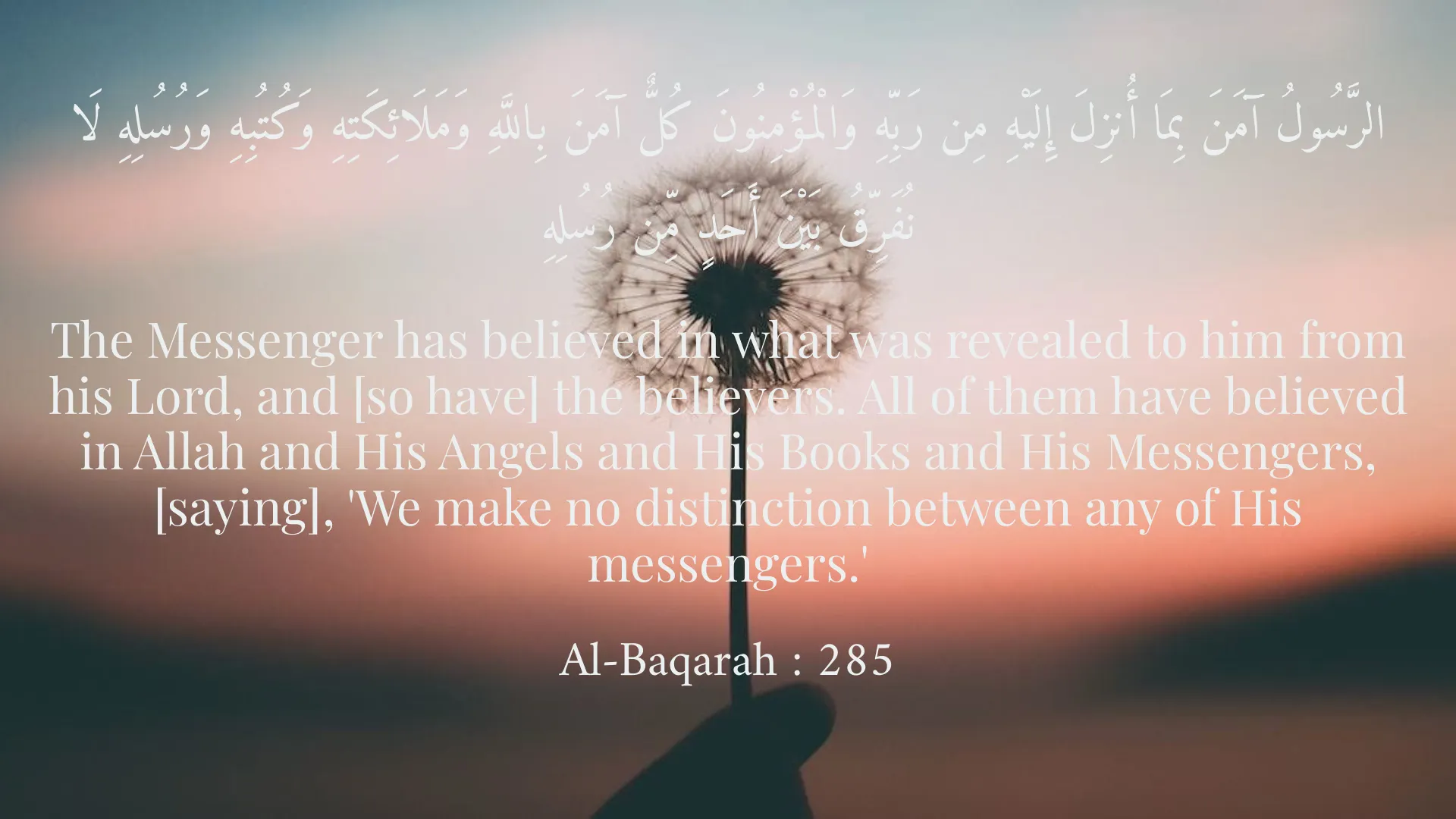
الرَّسُولُ آمَنَ بِمَا أُنزِلَ إِلَيْهِ مِن رَبِّهِ وَالْمُؤْمِنُونَ كُلٌّ آمَنَ بِاللَّهِ وَمَلَائِكَتِهِ وَكُتُبِهِ وَرُسُلِهِ لَا نُفَرِّقُ بَيْنَ أَحَدٍ مِّن رُسُلِهِ
The Messenger has believed in what was revealed to him from his Lord, and [so have] the believers. All of them have believed in Allah and His Angels and His Books and His Messengers, [saying], 'We make no distinction between any of His messengers.'
Al-Baqarah : 285
إنما المؤمنون الذين إذا ذكر الله وجلت قلوبهم
The believers are only those who, when Allah is mentioned, their hearts tremble.
Al-Anfal : 2
Short Story
One day, a dear friend was reflecting on his faith. He realized it was time to strengthen his belief. He recalled the verses of the Quran that said, "Faith isn't just about believing; it must reflect in our actions." He made an effort to always remember God and align his life according to religious teachings. This act led him to feel greater peace and connection to God, which became evident in his daily life.