Quranic Answer
In the Holy Quran, the concept of love transcends simple affection and emerges as a fundamental pillar that governs both the divine and human relationships. Love is depicted as a profound and sincere bond that connects individuals with their Creator and with one another. This exploration of love seeks to unravel its significance in the spiritual journey of believers, as well as in their interpersonal connections, thereby illuminating the essential nature of love as articulated in Islamic teachings. The Quran frequently mentions love as an essential characteristic of true believers. For instance, in Surah Al-Imran, verse 31 states, 'Say, if you love Allah, then follow me, so Allah will love you and forgive your sins.' This verse establishes a clear connection between love for God and obedience to His commands. It underlines the notion that genuine love for Allah necessitates a commitment to following His guidance. This intertwining of love and adherence to divine commandments reveals that love in the Quran is not merely an emotional experience; it is also an active pursuit of righteousness and virtue. Moreover, the love of Allah must manifest in tangible acts of worship and daily actions. The followers of Islam are encouraged to display their love for God not only in prayer and rituals but through their conduct in everyday life. This embodiment of love signifies that it must reflect in ethics, character, and interactions with others. Such a dimension of love indicates an innate responsibility of believers to nurture their faith through consistent actions, which ultimately leads to a stronger connection with their Creator. Conversely, love that is directed towards entities other than Allah is critiqued in the Quran. In Surah Al-Baqarah, verse 165 describes those who take others as equals to Allah in their affections. These verses remind believers that true love must be pure and directed towards seeking pleasure in Allah. The implication here is profound: any love that distracts from devotion to God is deemed insincere; hence, believers are encouraged to reorient their affections predominantly towards their Creator. The Quran does not limit the notion of love solely to the divine relationship; it also extends its significance to human relationships. In Surah Ar-Rum, verse 21, Allah states, 'And among His signs is that He created for you mates from among yourselves, that you may find tranquility in them, and He placed love and mercy between your hearts.' This verse emphasizes the sanctity of marital relationships and familial bonds. It indicates that love and compassion are divine gifts intended to foster harmony and tranquility within families. In this context, love acts as a unifying force, anchoring relationships in mercy and understanding. Additionally, the concept of love in the Quran extends beyond romantic connections; it encompasses all forms of relationships—friends, colleagues, and communities. The Quran promotes the idea of community and mutual support, where love is a central theme in holding society together. Believers are urged to love and support one another, reflecting the mercy and compassion found in the divine relationship. The emphasis on love in the Quran can also be seen as a counterbalance to negativity, hatred, and discord. In a world where conflicts and divisions can arise, the Quran calls for believers to embody love as a response to adversity. It acts as a moral compass, guiding individuals towards forgiveness, peace, and collaboration, fostering an environment where the essence of humanity can flourish. The significance of love, as portrayed in the Quran, is foundational to the practice of Islam, infusing life with meaning and purpose. Love acts as the bridge that connects believers to their Creator and each other, fostering a sense of community and belonging. The divine love serves as a model for human relationships, inspiring individuals to cultivate love that is sincere, compassionate, and nurturing. Ultimately, love emerges as a great and fundamental virtue within the Islamic faith. As believers strive to love Allah fully, they become conduits of that love in their interactions with others. The Quran illustrates that without love—be it for God or fellow beings—human relationships suffer and the spiritual connection falters. Love enriches the soul and invigorates existence, prompting individuals to seek higher purposes and profound experiences. In conclusion, love, as depicted in the Quran, transcends the boundaries of mere emotion and becomes a transformative force that shapes believers' lives. It fosters connections with the divine and nurtures the sacred bonds between individuals, creating a harmonious coexistence based on mutual respect and understanding. In a world seeking connections, love remains the ultimate guiding principle that beautifies human existence and illuminates the path toward God.
Related Verses
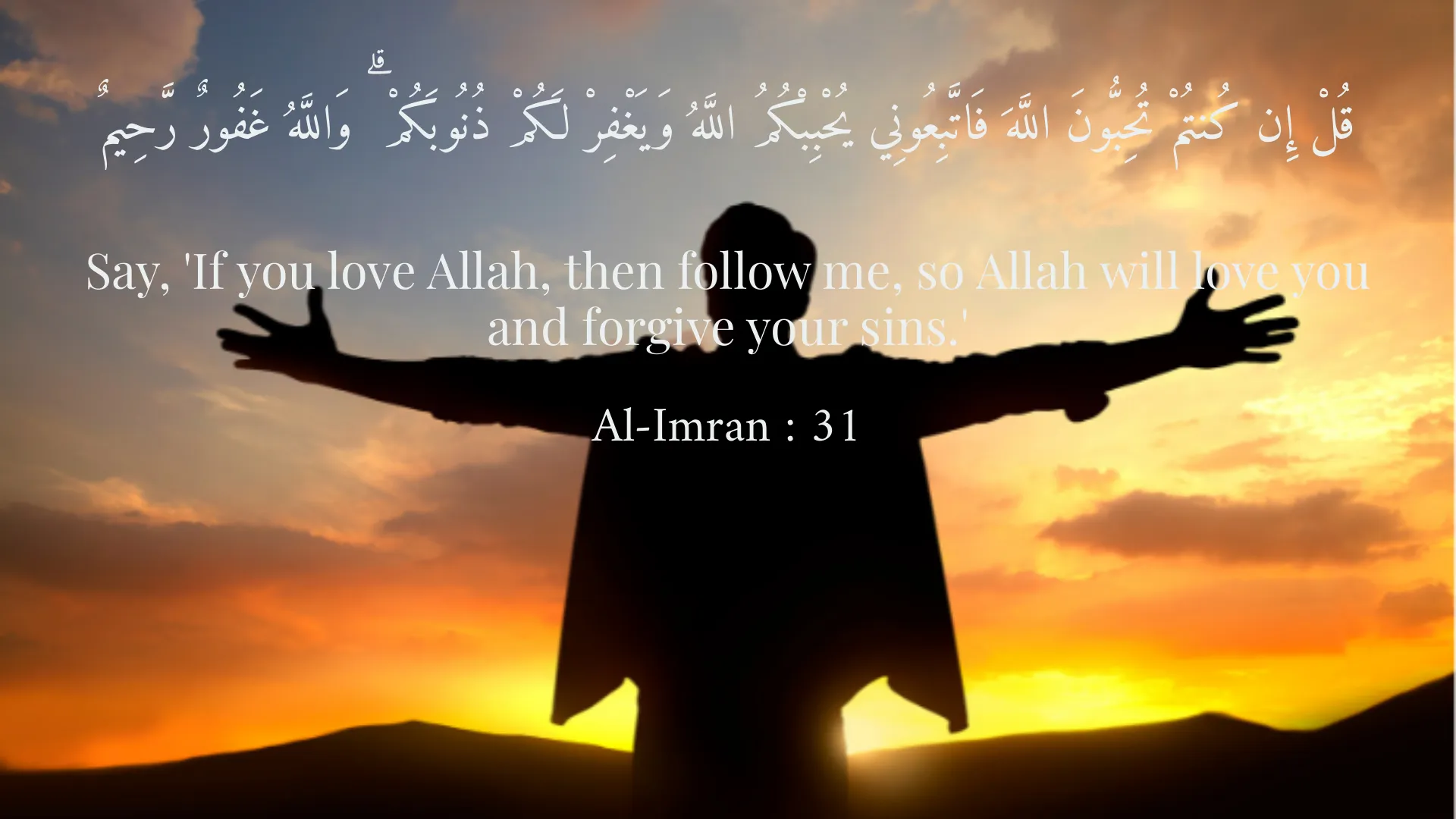
قُلْ إِن كُنتُمْ تُحِبُّونَ اللَّهَ فَاتَّبِعُونِي يُحْبِبْكُمُ اللَّهُ وَيَغْفِرْ لَكُمْ ذُنُوبَكُمْ ۗ وَاللَّهُ غَفُورٌ رَّحِيمٌ
Say, 'If you love Allah, then follow me, so Allah will love you and forgive your sins.'
Al-Imran : 31
وَمِنَ النَّاسِ مَن يَتَّخِذُ مِن دُونِ اللَّهِ أَندَادًا يُحِبُّونَهُمْ كَحُبِّ اللَّهِ ۚ وَالَّذِينَ آمَنُوا أَشَدُّ حُبًّا لِّلَّهِ ۗ وَلَوْ يَرَى الَّذِينَ ظَلَمُوا إِذْ يَرَوْنَ الْعَذَابَ أَنَّ الْقُوَّةَ لِلَّهِ جَمِيعًا وَأَنَّ اللَّهَ شَدِيدُ الْعَذَابِ
And of the people are some who take other than Allah as equals [to Him]. They love them as they should love Allah. But those who believe are stronger in love for Allah.
Al-Baqarah : 165
وَمِنْ آيَاتِهِ أَنْ خَلَقَ لَكُم مِّنْ أَنفُسِكُمْ أَزْوَاجًا لِّتَسْكُنُوا إِلَيْهَا وَجَعَلَ بَيْنَكُمْ مَّوَدَّةً وَرَحْمَةً ۚ إِنَّ فِي ذَٰلِكَ لَآيَاتٍ لِّقَوْمٍ يَتَفَكَّرُونَ
And among His signs is that He created for you wives from among yourselves, that you may find tranquility in them, and He placed love and mercy between your hearts.
Ar-Rum : 21
Short Story
Once upon a time, there was a man living in a village who was searching for true love. He remembered that the Quran stated: 'Love is one of Allah's signs.' He decided to find true love in his life by helping others and showing kindness toward his family. Over time, he felt a deeper sense of peace and happiness within himself, and his life became filled with love and mercy.