Quranic Answer
God's mercy is one of the cornerstones of understanding the nature of the Divine and the relationship between humanity and the Creator. In various religious traditions, mercy is viewed as a trait that embodies compassion, forgiveness, and love. However, from an Islamic perspective, God's mercy is among the greatest attributes of the Divine, actualized in the lives of His servants in an encompassing and profound manner. According to the verses of the Quran, God bestows His mercy upon His servants through several means, including the forgiveness of sins, guidance towards the right path, and providing ease in life's myriad challenges. The primary source of these insights can be found in the Holy Quran. For example, in Surah Az-Zumar, verse 53, Allah explicitly invites His servants to recognize His boundless mercy when He states: "Say, O My servants who have believed, fear your Lord. For those who do good in this world is good, and the earth of Allah is spacious. Indeed, the patient will be given their reward without account." This verse carries profound implications, signifying not only the acceptance and forgiveness of God towards all of His servants but also emphasizes the concept of divine reward, which is often beyond what any human can quantify. Herein lies an invitation to the believers to partake in goodness and to remain patient amidst adversities, knowing that their efforts will not go unnoticed by their Creator. Furthermore, in Surah Al-Baqarah, verse 7, Allah further affirms His nature: "And your Lord is the Forgiving, Full of Mercy." This assertion is foundational to the understanding of God's relationship with humanity. The verse serves as a reassurance that God's mercy encompasses everyone—people of faith and even those who falter in their commitments. This underscores a universal law of divine compassion, where God's mercy is not reserved solely for the righteous but is open to all, including sinners who seek redemption. Individual humility before God and a sincere longing for forgiveness become the gateway to experiencing this mercy in profound ways. In addition to this mercy, Surah Al-Imran, verse 135 steers us towards the pivotal role of repentance in receiving God's mercy. The verse states: "And those who, when they commit an immorality or wrong themselves by sin, remember Allah and seek forgiveness for their sins – and who can forgive sins except Allah?" Here, Allah not only acknowledges human fallibility but also establishes a constructive response to sinning—remembrance of Allah and seeking forgiveness. This divine framework invites all individuals to reflect on their actions, recognize their errors, and turn back sincerely to their Creator with remorse and a commitment to improve. Repentance (Tawbah) in Islam is not merely about verbal acknowledgment but involves a conscious effort to retract oneself from wrongdoing and consistently strive towards a virtuous path. It's an active process that requires introspection, regret over past misdeeds, and an earnest plan to move forward in a manner that aligns with divine expectations. This multifaceted practice emphasizes accountability and morality, further deepening the believers' connection with their Creator. In greater detail, the Quran provides numerous narratives and insights into the nature of mercy that Allah extends to His servants. The story of Prophet Jonah (Yunus) is a prime example. When he found himself in the belly of the whale, his heart was filled with remorse. Upon his plea for forgiveness, Allah extended mercy, saving him from despair. This account encourages believers to recognize that no matter the gravity of their missteps, turning to God with true sincerity can lead to dramatic transformations in their situations. Moreover, this divine mercy is evident in the establishment of pathways for guidance. Allah’s commitment to guide His servants towards the right path is a substantial demonstration of His mercy. In Surah Al-Fatihah, which is recited in every unit of prayer, believers ask Allah for guidance: "Guide us to the Straight Path." The seeking of guidance emphasizes that God’s mercy is not merely about forgiveness but also about leading humanity toward righteousness and wisdom. Another quintessential aspect of divine mercy is its manifestation in the trials and tribulations that humans face. While hardships may appear daunting and insurmountable, they can often lead to greater realizations and closeness to God. This is reflected in the patience that Allah enjoins upon believers. In Surah Az-Zumar, Allah states that those who exhibit patience will receive their reward without account. Such assurances elevate human spirit, encouraging individuals to foster resilience and faith in divine aid during challenging times. Thus, one can deduce that God's mercy not only encompasses acceptance and forgiveness but also the provision of guidance and resilience in challenges. It shapes a comprehensive framework for living that inspires hope and dedication among believers while urging them to actively participate in fostering compassion towards others as an extension of God's mercy. In conclusion, God's mercy is an intricate tapestry of forgiveness, guidance, acceptance, and resilience. It encompasses all who seek it and emphasizes the importance of sincere repentance and moral accountability. The Quran illustrates that mercy is not a one-dimensional attribute but a multifaceted gift that invites humanity to aspire for goodness, remain patient through adversities, and cultivate a profound relationship with the Divine. For those who endeavor to understand and embrace these teachings, the path to experiencing God's abundant mercy unfolds into one of profound love, spiritual growth, and relentless hope.
Related Verses
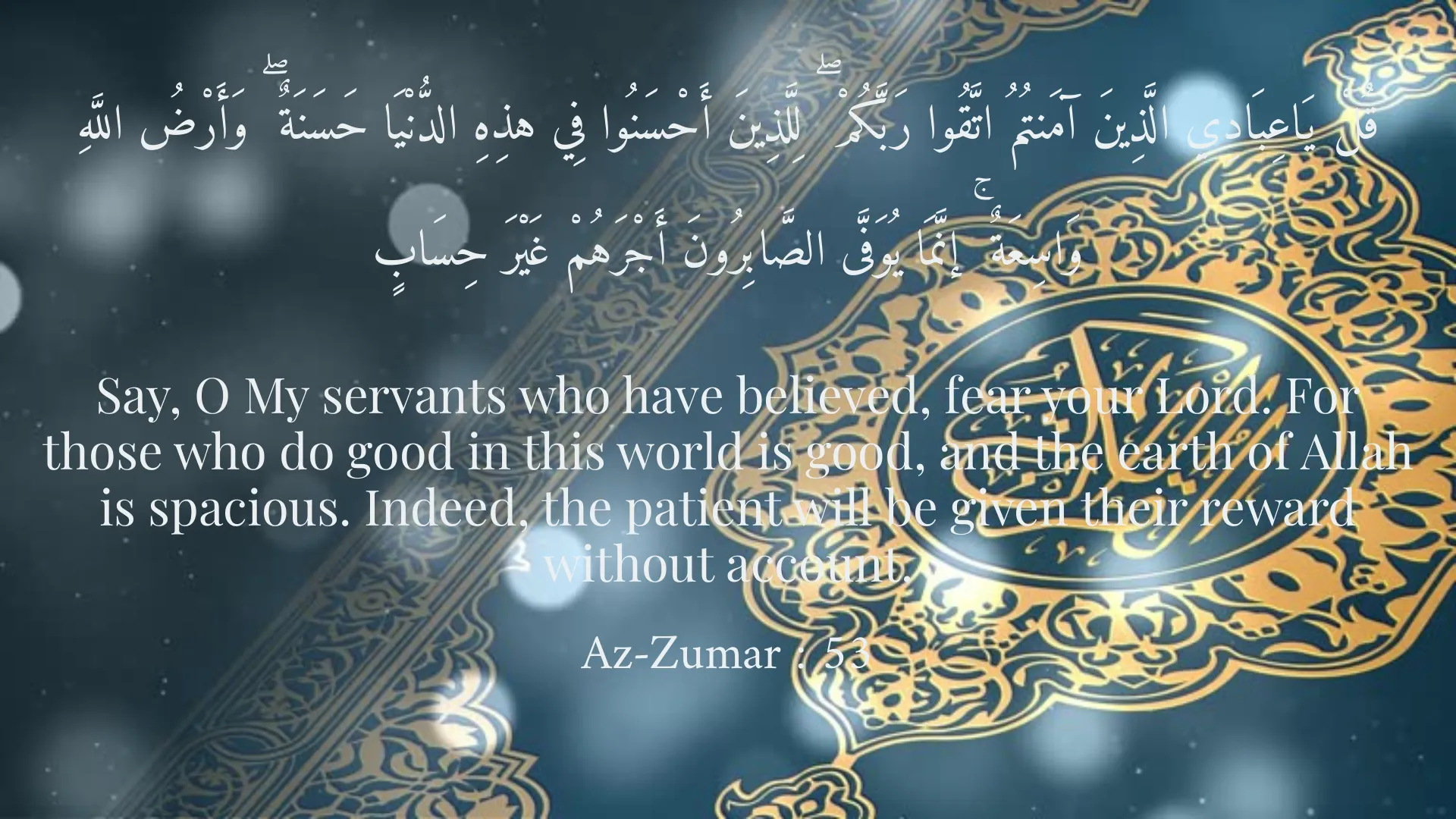
قُلْ يَاعِبَادِي الَّذِينَ آمَنتُمُ اتَّقُوا رَبَّكُمْ ۖ لِلَّذِينَ أَحْسَنُوا فِي هذِهِ الدُّنْيَا حَسَنَةٌ ۖ وَأَرْضُ اللَّهِ وَاسِعَةٌ ۚ إنَّمَا يُوَفَّى الصَّابِرُونَ أَجْرَهُمْ غَيْرَ حِسَابٍ
Say, O My servants who have believed, fear your Lord. For those who do good in this world is good, and the earth of Allah is spacious. Indeed, the patient will be given their reward without account.
Az-Zumar : 53
إنَّ رَبَّكَ لَغَفُورٌ رَحِيمٌ
Indeed, your Lord is the Forgiving, Full of Mercy.
Al-Baqarah : 7
وَالَّذِينَ إِذَا فَعَلُوا فَاحِشَةً أَوْ ظَلَمُوا أَنفُسَهُمْ ذَكَرُوا اللَّهَ فَاسْتَغْفَرُوا لِذُنُوبِهِمْ ۖ وَمَن يَغْفِرُ الذُّنُوبَ إِلَّا اللَّهُ
And those who, when they commit an immorality or wrong themselves by sin, remember Allah and seek forgiveness for their sins – and who can forgive sins except Allah?
Al-Imran : 135
Short Story
One day, a man contemplated the mercy of God. He recalled the verses of the Quran and realized that God's mercy extends to His servants, even those who sin. He decided to return to God and repent. Days passed, and with sincerity and a pure heart, he prayed at God's doorstep. Soon, the troubles in his life were resolved one by one, and he felt a greater sense of peace. He shared with others that no one should despair of God's mercy.