Quranic Answer
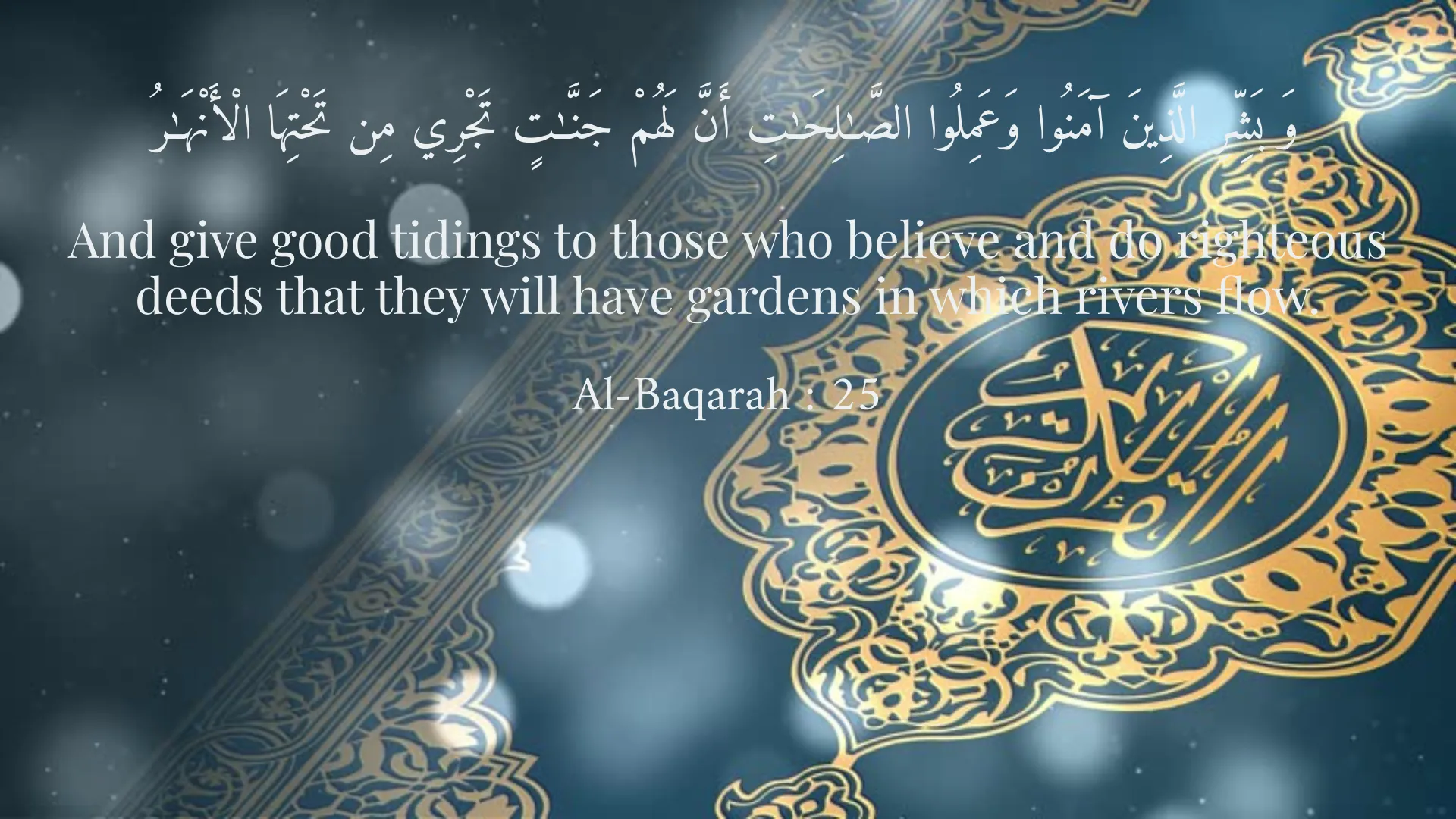
The Holy Quran, revered by millions around the world, serves as a guide for spiritual and moral conduct, intricately detailing the expectations and rewards of believers. Among the myriad of topics depicted in this holy text, the concept of salvation on the Day of Resurrection stands out as a central theme with profound implications for believers. The Quran articulates a clear message regarding the criteria for salvation, emphasizing the importance of unwavering faith and the performance of righteous deeds. In Surah Al-Baqarah, verse 25, the Quran provides a vivid illustration of what awaits those who uphold their faith and engage in good acts. It states: 'And give good tidings to those who believe and do righteous deeds that they will have gardens in which rivers flow.' This verse is not merely a promise; it is a source of hope and encouragement for believers. It indicates that consistent belief coupled with righteous actions is integral to earning salvation, painting a picture of paradise as the ultimate reward for the faithful. The emphasis on salvation is further augmented in Surah Ghafir, verse 40, which proclaims: 'Indeed, the patient will be given their reward without account.' Here, the Quran extols the virtues of patience and resilience when faced with trials. The patient individuals, who endure hardships while maintaining their faith and performing good deeds, are particularly favored in the eyes of God. This verse highlights a critical aspect of the believer’s journey—perseverance in the face of adversity as a pathway to divine rewards. Surah Al-Mu'minun, verses 1 to 11, offers a comprehensive outline of the qualities that define true believers. These verses illuminate the traits that characterize those destined for salvation. Among the qualities emphasized are devotion to prayer, abstaining from frivolous activities, and fulfilling the obligation of zakat (charity). Each of these attributes plays a pivotal role in the believer's spiritual journey. Devotion to prayer is highlighted as a cornerstone of faith. It establishes a direct connection between the believer and God, acting as a form of spiritual nourishment. Prayer not only serves as a reminder of divine presence but also acts as an anchor in turbulent times. Through regular prayer, believers cultivate a strong relationship with their Creator, which is vital for their spiritual well-being. Furthermore, the Quran admonishes the avoidance of triviality. Engaging in unnecessary distractions can detract from one’s spiritual focus and commitment to righteousness. This call for mindfulness encourages believers to prioritize meaningful actions that contribute toward their development, both spiritually and morally. The act of paying zakat is also emphasized, serving as a instrumental in shaping a just and equitable society. By giving to those in need, believers not only purify their wealth but also foster a sense of community and solidarity among their fellow human beings. Such actions exemplify genuine faith, reinforcing the idea that salvation is intertwined with social responsibility and charitable deeds. In conclusion, the theme of salvation on the Day of Resurrection is intricately woven into the fabric of the Quran, presenting essential guidance for believers. The Quran asserts that salvation is not an arbitrary reward but a consequence of one's faith, righteous actions, and enduring patience in the face of challenges. True believers, as outlined in the aforementioned verses, manifest a deep devotion to God through prayer, engagement in good deeds, and active participation in societal welfare. These principles not only serve as a roadmap for spiritual salvation but also enhance the quality of life on earth, fostering a community bound by faith, compassion, and mutual support. Ultimately, the promise of salvation brings hope and purpose to the believers, urging them to uphold their faith amidst the trials of life, with the ultimate aspiration of securing a place in the eternal gardens promised by God.
Related Verses
وَ بَشِّرِ الَّذِينَ آمَنُوا وَعَمِلُوا الصَّـٰلِحَـٰتِ أَنَّ لَهُمْ جَنَّـٰتٍ تَجْرِي مِن تَحْتِهَا الْأَنْهَـٰرُ
And give good tidings to those who believe and do righteous deeds that they will have gardens in which rivers flow.
Al-Baqarah : 25
إِنَّمَا يُوَفَّى الصَّـٰبِرُونَ أَجْرَهُمْ بِغَيْرِ حِسَابٍ
Indeed, the patient will be given their reward without account.
Ghafir : 40
قَدْ أَفْلَحَ الْمُؤْمِنُونَ
Certainly will the believers have succeeded.
Al-Mu'minun : 1
Short Story
One day, a young man named Youssef decided to seek salvation on the Day of Resurrection through faith and righteous deeds. Every day, he read the Quran and tried to help those in need. After some time, he realized that through these actions, his soul and heart had found peace and he was more satisfied with his life. He said to himself, 'This is the salvation I have always been seeking.'