Quranic Answer
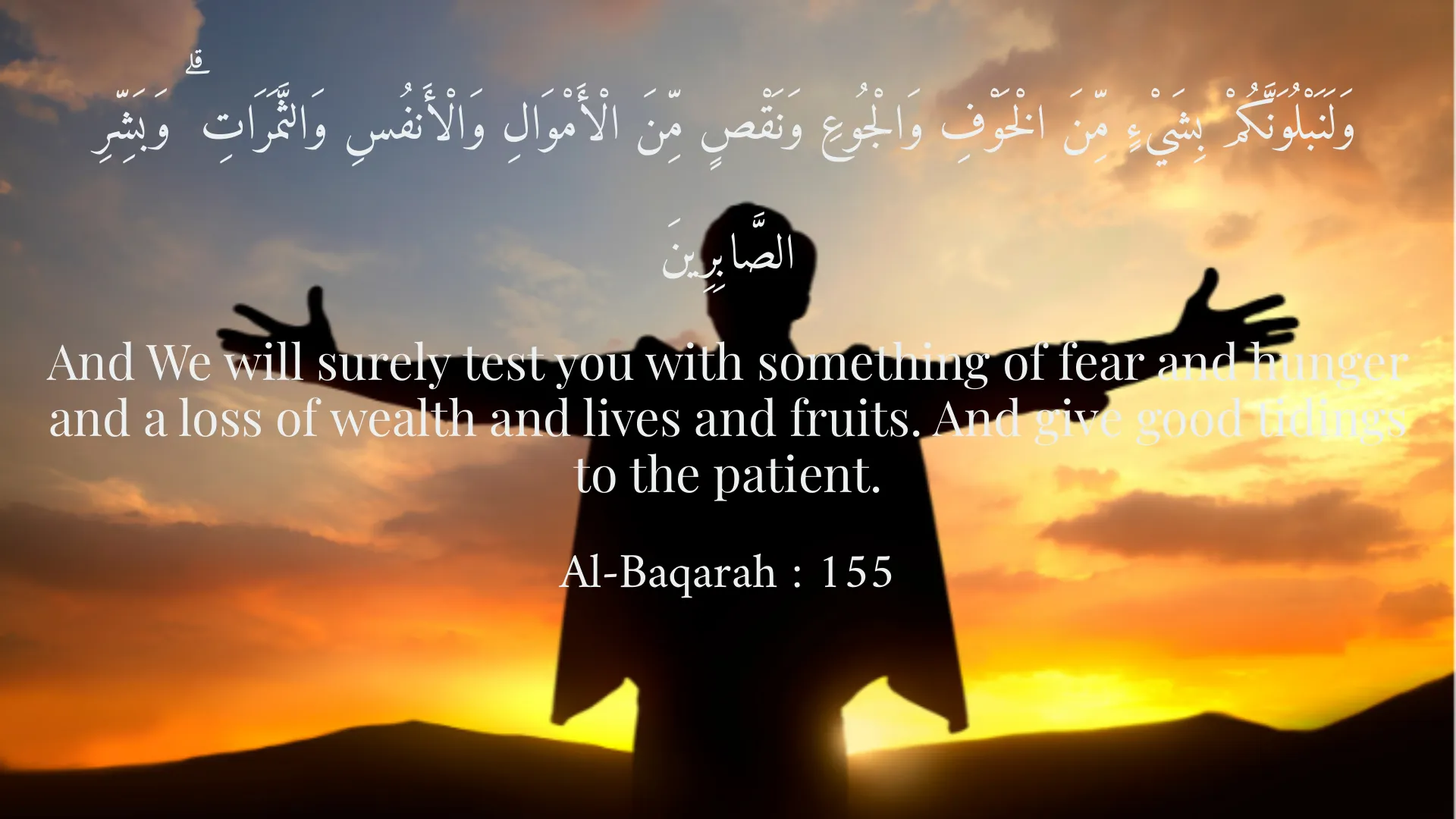
In the Holy Quran, profound insights into the nature and purpose of human testing are elucidated, emphasizing that such trials are an integral part of the human experience. One of the most significant verses addressing this theme is found in Surah Al-Baqarah (2:155), which states: 'And We will surely test you with something of fear and hunger and a loss of wealth and lives and fruits, and give good tidings to the patient.' This verse serves as a foundational element in understanding the Islamic perspective on trials and tribulations, revealing that tests, both major and minor, are inevitable parts of life. The reality of life is inherently tied to its challenges; fear, hunger, financial loss, and the passing of loved ones are experiences that resonate deeply with human nature. These struggles serve multiple purposes, primarily to evaluate one's faith and resilience. Faith in God is not merely about belief; it is deeply intertwined with action, perseverance, and patience. Through these experiences, Allah provides a means to gauge the depth of an individual's faith and commitment to their beliefs. It becomes evident that trials are not intended as mere punishments but rather as mechanisms through which individuals can grow spiritually and emotionally. Furthermore, the Quran emphasizes that patience is a virtuous quality cultivated during moments of distress. In many instances, it is through hardship that one learns the true value of resilience and fortitude. The encouragement to 'give good tidings to the patient' suggests that there is divine reward and recognition for those who endure hardships gracefully and maintain their faith amidst difficulties. In Islamic teachings, patience is often regarded as a sign of strength, not weakness, and it is cultivated in the face of adversity. In Surah Al-Mu'minun (23:115), Allah further articulates this sentiment: 'Did you think that you would enter Paradise while Allah has not yet made evident those who strive among you and made evident the patient?' This verse illustrates the necessity of striving and displaying patience for believers seeking entry into Paradise. It creates an understanding that one cannot simply expect to enjoy the rewards of the afterlife without enduring trials in this world. Hence, tests are depicted not only as challenges to endure but also as essential steps on the path toward spiritual elevation and eventual reward. In addition to serving as a measure of individual faith, tests and trials also play a crucial role in fostering a closer relationship with the Creator. Struggles can function as a reminder of one's reliance on Allah, prompting individuals to seek guidance and support through prayer and reflection. During difficult times, many often turn to God in humility and supplication, which can lead to a deepening of one's spirituality. As such, hardships can be perceived as divine blessings in disguise, as they cement the bond between the believer and their Lord, keeping them anchored in faith and away from sin. Another important aspect of trials is their purpose in shaping character and instilling virtues such as empathy and compassion. When individuals face adversity, they gain insights into the struggles of others experiencing similar challenges. This shared sense of suffering fosters a sense of community and solidarity among believers, encouraging them to extend kindness and assistance to one another. A community that supports one another through their trials exemplifies the Islamic principles of brotherhood and unity. Moreover, the process of overcoming challenges and tests can lead to personal development, allowing individuals to emerge stronger and more equipped to face future difficulties. These learning moments instill a sense of gratitude for blessings that are often taken for granted during times of ease. The realization that trials also come with rewards—be it wisdom, maturity, or a deeper understanding of life's impermanence—affirms the notion that every aspect of life is part of a greater divine plan. It is also essential to acknowledge that not all individuals experience tests in the same manner. While some may face extreme hardship, others may undergo subtler forms of testing that are equally significant. The diversity of human experiences establishes a nuanced understanding of life's trials, thus encouraging individuals to approach their challenges with humility and compassion for others. In summary, the Holy Quran's teachings on tests and trials articulate a profound understanding of the complexities of human existence. From the encouragement to be patient in adversity to the realization that such tests strengthen one’s faith, the divine narrative echoes that life’s challenges are not only inevitable but also necessary for genuine growth and spiritual development. Every trial, whether it be fear, hunger, loss of wealth, or the departures of loved ones, serves as a reminder of the transient nature of this world and the eternal rewards that await those who remain steadfast and patient. Thus, while tests may present formidable challenges, they also impart invaluable lessons and bring believers closer to their Creator, offering boundless opportunities for personal and spiritual growth.
Related Verses
وَلَنَبْلُوَنَّكُمْ بِشَيْءٍ مِّنَ الْخَوْفِ وَالْجُوعِ وَنَقْصٍ مِّنَ الْأَمْوَالِ وَالْأَنفُسِ وَالثَّمَرَاتِ ۗ وَبَشِّرِ الصَّابِرِينَ
And We will surely test you with something of fear and hunger and a loss of wealth and lives and fruits. And give good tidings to the patient.
Al-Baqarah : 155
أَحَسِبْتُمْ أَن تَدْخُلُوا الْجَنَّةَ وَلَمَّا يَعْلَمِ اللَّهُ الَّذِينَ جَاهَدُوا مِنكُمْ وَيَعْلَمَ الصَّابِرِينَ
Did you think that you would enter Paradise while Allah has not yet made evident those who strive among you and made evident the patient?
Al-Mu'minun : 115
Short Story
Once upon a time, there was a man named Hasan who often faced challenges and difficulties in his life. He often wondered why these problems occurred to him. One day, while reading the Quran, he came across the verse 'And We will surely test you.' Hasan realized that everything in his life was a divine test. He decided to respond to these challenges with patience and gratitude, and he found that he gained a deeper sense of peace in his heart.