Quranic Answer
Religion has been an integral part of human existence for centuries, offering guidance, purpose, and a sense of community to millions of individuals across the globe. Despite its importance, there exists a growing phenomenon where a significant number of people choose to distance themselves from religion and its practices. The reasons behind this distancing are multifaceted, ranging from personal experiences and societal influences to a profound lack of understanding of the fundamental principles that underpin various religious teachings. This article seeks to explore these factors in depth, shedding light on the pivotal role that knowledge and understanding play in shaping people's relationships with faith. To begin with, it is essential to recognize that one of the central reasons individuals may shy away from religion is the lack of a proper understanding of religious concepts. Knowledge serves as a foundation for faith; without it, many adhere to misconceptions or stereotypes that can lead to feelings of disconnection or disdain towards religion. As stated in the Quran, Allah makes it clear that ignorance and a failure to grasp the essence of His teachings can lead many astray. In Surah Al-Baqarah, verse 25, Allah lays bare the consequence of self-deception brought about by ignorance. It states that individuals who do not believe in His verses will distance themselves from His mercy. This highlights a critical notion: a lack of awareness regarding religious concepts can easily foster a sense of alienation from faith. Moreover, the modern era has introduced complexities that further exacerbate this issue. Rapid technological advancements and global connectivity have resulted in the proliferation of information, making it both a blessing and a curse. While easy access to various religious texts, doctrines, and philosophical discussions offers an opportunity to learn, it also breeds confusion when individuals are unable to discern which sources are credible or aligned with true teachings. As a result, a misguided interpretation of religious tenets can easily foster skepticism or disengagement. In addition to a lack of knowledge, social and cultural influences play a significant role in shaping individuals' perceptions of religion. In today's fast-paced world, many find themselves grappling with social pressures that lead them toward secular lifestyles, often at odds with their religious principles. The pervasiveness of secularism and materialism can create an environment where individuals feel compelled to abandon or compromise their faith to fit societal norms. This phenomenon can create a divide where the perceived benefits of adopting a secular lifestyle outweigh the perceived burdens of adhering to religious teachings. Anecdotal evidence often highlights how a person's experiences with religion or religious institutions can also significantly influence their perspective. For some, negative encounters, such as experiences of discrimination or hypocritical behavior among religious leaders, may foster a distrust of organized religion. In Surah Al-Imran, verse 19, Allah emphasizes that 'Indeed, the religion in the sight of Allah is Islam.' This verse serves a dual purpose: it affirms the concept of unity in true faith while simultaneously drawing attention to the fragmentation often seen in contemporary religious practices. The challenge arises when an individual's unfamiliarity with authentic teachings leads them to reject all forms of faith, opting instead for a secular worldview devoid of spiritual guidance. Given this complex backdrop, it becomes increasingly evident that the primary reason for distancing from religion arises from the lack of knowledge and proper understanding of religious teachings. This underscores the imperative need for both religious leaders and communities to take a proactive approach in presenting religious teachings clearly and coherently. Education should be prioritized, focusing not only on the core tenets of faith but also on addressing common misconceptions that breed skepticism. By doing so, faith becomes not a burden but a source of empowerment and understanding in a world filled with uncertainties. Moreover, engaging the younger generation in dialogues surrounding faith can significantly influence their perspective. Many young individuals possess the capacity for critical thinking and analytical reasoning, yet they often feel unfulfilled by traditional religious explanations. Thus, it is crucial for religious educators to adapt their approaches, utilizing modern methods of engagement such as social media, educational programs, and community events to foster a deeper understanding of religious tenets. Lastly, it is vital to build a diverse and inclusive community where individuals from different backgrounds, beliefs, and experiences can come together to discuss and share their perspectives. Such platforms can serve as a breeding ground for mutual respect and understanding of faith in its many forms. Through dialogue, individuals may discover a shared humanity that transcends religious boundaries, allowing a more profound realization of what faith can offer. In conclusion, the phenomenon of distancing oneself from religion can be traced back to several core factors, primarily the lack of knowledge and understanding of religious teachings. The burden lies with the community of believers to present religion in a coherent light, effectively combating misinformation and illustrating the benefits of spiritual engagement. By fostering an inclusive atmosphere that values open dialogue and education, it is possible to guide individuals back towards a deeper comprehension of faith. Ultimately, revitalizing one’s relationship with religion requires consistent effort from both religious institutions and individuals, paving the way for a holistic understanding of themselves and their place within a greater spiritual context.
Related Verses
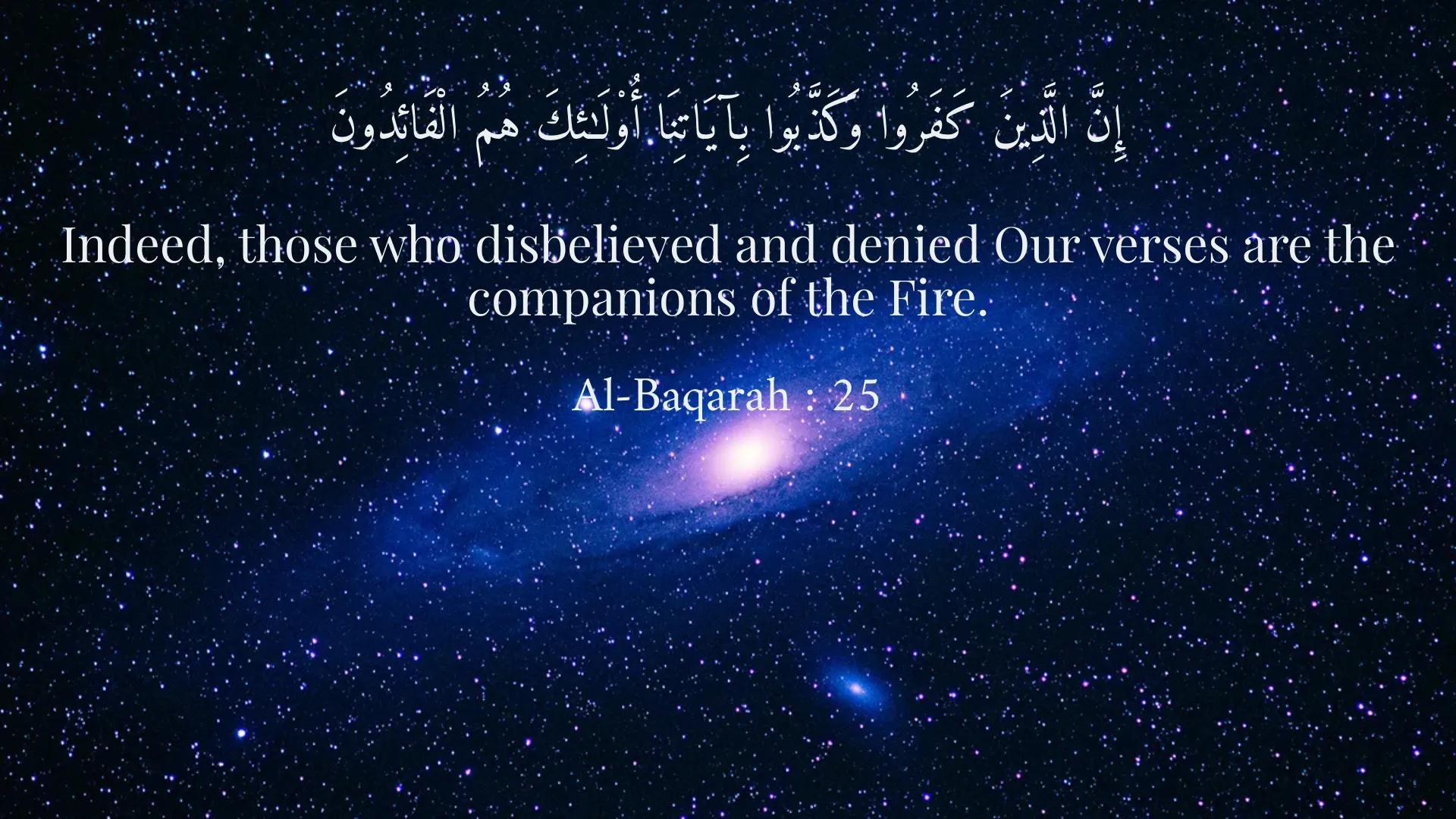
إِنَّ الَّذِينَ كَفَرُوا وَكَذَّبُوا بِآيَاتِنَا أُو۟لَـٰئِكَ هُمُ الْفَائِدُونَ
Indeed, those who disbelieved and denied Our verses are the companions of the Fire.
Al-Baqarah : 25
إن الدين عند الله الإسلام
Indeed, the religion in the sight of Allah is Islam.
Al-Imran : 19
Short Story
One day, Sepideh heard from her friends that some people were estranged from religion. She thought that perhaps these individuals had moved away from faith due to ignorance or negative experiences. Therefore, Sepideh decided to talk about her positive religious experiences and create more awareness in this regard. After some time, a few of her friends were influenced and concluded that reviving their connection with religion could positively impact their lives.