Quranic Answer
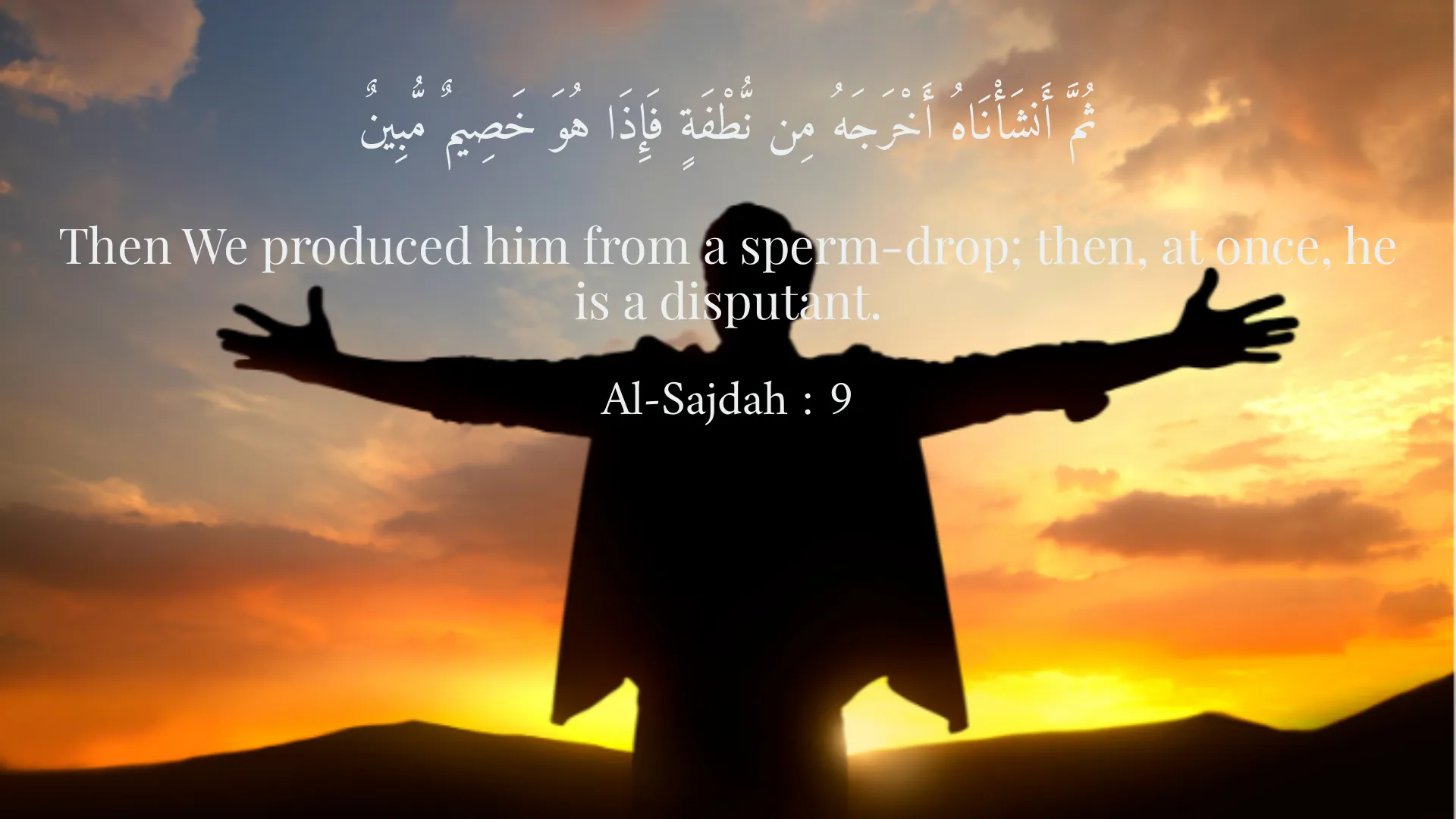
In the Holy Quran, Allah clearly states the purpose of creating humans. This divine scripture serves not only as a spiritual guide for Muslims but also as a profound reflection on the nature of existence, the intention behind creation, and the role humans play within the universe. One of the most compelling verses addressing this theme is found in Surah Al-Sajdah, verse 9, which states, 'Then We produced him from a sperm-drop; then, at once, he is a disputant.' This passage encapsulates a fundamental idea—that humans are originated from something seemingly insignificant, a mere sperm drop, yet they enter life with a pivotal role that often seems paradoxically grand; they become engaged in disputes and challenges. This duality reflects both the fragile and resilient nature of humanity, illustrating that while our beginnings are humble, we quickly grow into beings that navigate complex moral and existential debates. The mention of being a 'disputant' serves to highlight the multifaceted challenges humans confront as they mature and engage with the world around them. From childhood through adulthood, individuals face dilemmas ranging from ethical quandaries to personal conflicts. These obstacles serve a larger purpose—they are not merely obstacles but rather opportunities for growth, understanding, and introspection. This perspective is crucial in understanding the broader vision of human creation. Moreover, the Quran further elucidates the purpose of humanity in Surah Adh-Dhariyat, verse 56, declaring, 'And I did not create the jinn and mankind except to worship Me.' This proclamation crystallizes the idea that the ultimate reason for our existence lies in the worship and devotion to Allah. It's a reminder that life is not a mere happenstance but a deliberate creation with a significant purpose. The act of worship, however, is not limited to ritualistic practices. It encompasses every action and intention that aligns with divine will. Thus, human creation is entwined with worship, reflecting a relationship grounded in love, reverence, and submission. As such, the very fabric of human existence is intertwined with the need to draw closer to our Creator. This relationship necessitates a constant engagement with both the divine and the self. To worship is to recognize one's place in the universe, to understand the gravity of one's actions, and to aspire for a higher moral and spiritual calling. It is through this devotion that humans cultivate a connection with Allah, allowing for a continuous journey of spiritual development and enlightenment. Furthermore, Surah Al-Imran, verse 186 states, 'You will surely be tested in your properties and your selves.' Here, Allah explicitly mentions the trials and tribulations that each individual is destined to encounter. This testing is intrinsic to the human experience, acting as a mechanism for the development of faith and character. These trials may take the form of personal loss, financial hardship, or moral dilemmas, compelling individuals to confront their beliefs. The Quran teaches that these tests are not punitive but rather transformative; they are opportunities to refine one's character, to demonstrate endurance, patience, and gratitude. Reflecting upon this verse is essential in understanding the holistic view presented by the Quran about existence and purpose. It emphasizes that the purpose of human life extends beyond mere worship; it encompasses searching for meaning, understanding oneself, and growing through experiences. In navigating life's myriad challenges, humans gain insights that lead to inner strength and a deeper comprehension of their existence. Thus, confronting these adversities fosters resilience, a trait highly esteemed in Islamic teachings. The journey of life, through its ups and downs, offers an educational framework for humans. Through every challenge faced, be it loss, inequality, or injustice, individuals are prompted to engage with profound questions about their purpose and existence. These experiences encourage personal reflection, prompting individuals to seek solace in their faith, to grow spiritually, and to enhance their understanding of life's purpose. In conclusion, the creation of humans, as articulated in the Holy Quran, serves as a reminder that we are here for a significant reason. Our existence is rooted in a dual purpose: to engage in worship directed towards Allah and to navigate the complexities of life that challenge our faith and character. The Quran does not merely aim to govern our religious practices; it provides a comprehensive roadmap for understanding our existence, illuminating the pathway toward personal and spiritual growth. The interplay between worship, challenges, and personal development fosters a dynamic experience of life, one that calls for resilience, introspection, and an enduring connection with the Creator. Therefore, the essence of being human transcends the physical realm, inviting us to embrace our role as stewards of existence, seekers of truth, and participants in the grand design of creation.
Related Verses
ثُمَّ أَنشَأْنَاهُ أَخْرَجَهُ مِن نُّطْفَةٍ فَإِذَا هُوَ خَصِيمٌ مُّبِينٌ
Then We produced him from a sperm-drop; then, at once, he is a disputant.
Al-Sajdah : 9
وَمَا خَلَقْتُ الْجِنَّ وَالْإِنْسَ إِلَّا لِيَعْبُدُونِ
And I did not create the jinn and mankind except to worship Me.
Adh-Dhariyat : 56
لَتُبْلَوُنَّ فِي أَمْوَالِكُمْ وَأَنْفُسِكُمْ
You will surely be tested in your properties and your selves.
Al-Imran : 186
Short Story
Once, there was a young man named Amir who was searching for the purpose of his life. He would spend his days in nature, pondering why God created humans. One day, sitting by the sea, he opened a Quran and came across the verse: 'And I did not create the jinn and mankind except to worship Me.' This verse made him realize that the main purpose of life is worship and drawing closer to Allah. Amir decided to dedicate more time to worship and remembering God, and in this pursuit, he found profound peace and contentment.