Quranic Answer
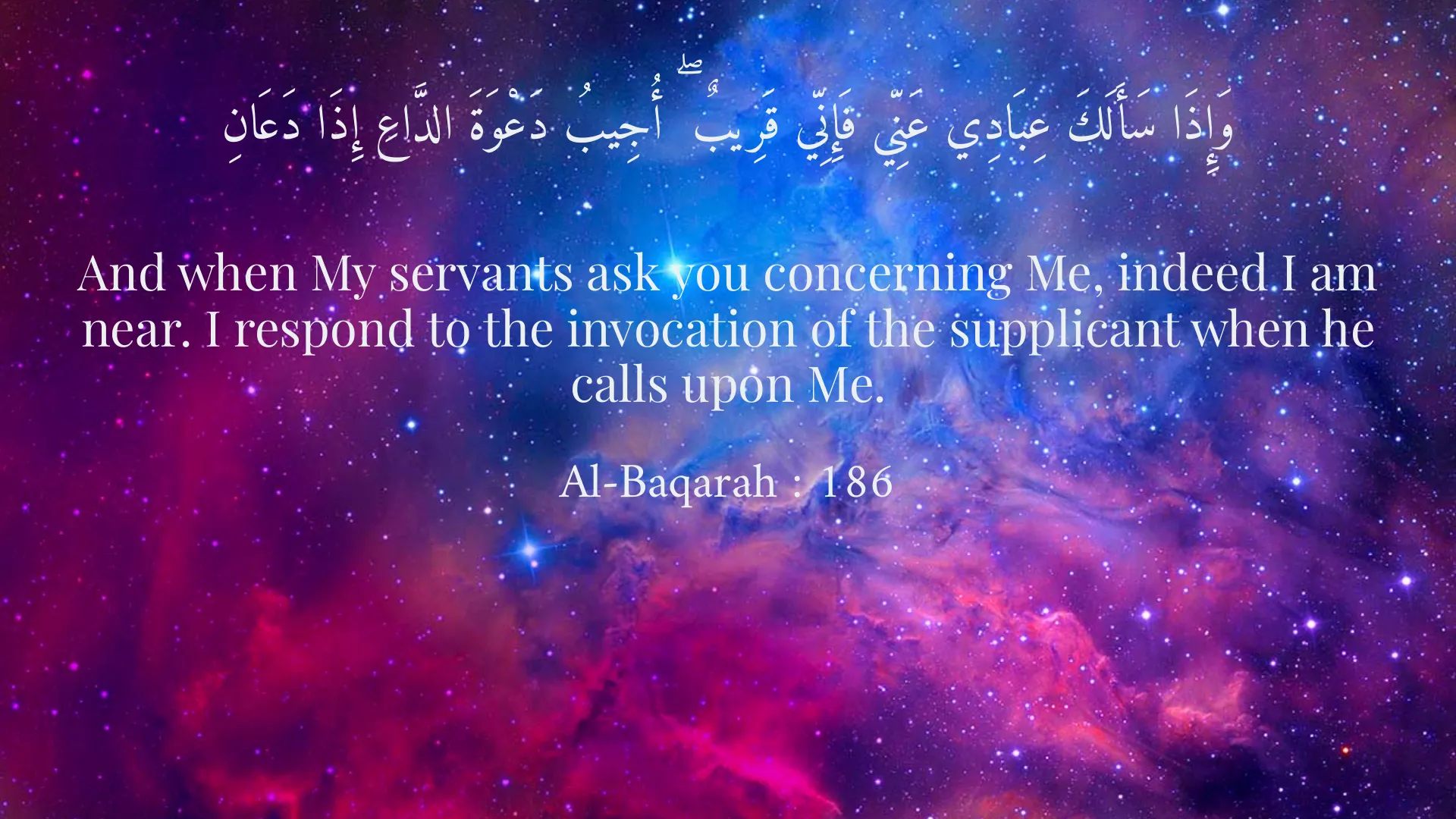
The importance of prayer in Islam is deeply rooted in the Holy Quran, where Allah emphasizes its significance as a means of communication between Him and His servants. Prayer, or Salah, is not merely a ritual; it embodies a profound spiritual connection that allows believers to express their needs, hopes, and desires. In fact, the Quran underscores the necessity of seeking Allah's help through prayer, reinforcing the belief that Allah is always near to those who call upon Him. One of the most powerful affirmations of Allah's willingness to respond to prayers is found in Surah Al-Baqarah, verse 186, where it states: 'And when My servants ask you concerning Me, indeed I am near. I respond to the invocation of the supplicant when he calls upon Me.' This verse is a comforting reminder for Muslims that in their times of need, they are never alone; Allah is always listening and ready to respond. \n\nHowever, despite this assurance, many believers often encounter moments when they feel that their prayers are not answered promptly or, at times, not answered at all. This leads to questioning and often experiences of doubt regarding the efficacy of prayer. One pivotal reason for this perceived delay in Allah’s response can be attributed to the divine will of Allah. Allah’s wisdom transcends human understanding; He may choose to delay an answer or respond in a manner that differs from what is requested. Such possibilities remind believers of the bigger picture that extends beyond their immediate desires, urging them to trust in Allah’s plan, which is ultimately for their best interest. \n\nFurthermore, the story of Prophet Yunus (Jonah) elaborated in Surah As-Saffat, verses 75-77, serves as a powerful example of the importance of perseverance in prayer. Prophet Yunus found himself in the depths of despair, trapped within the belly of a whale, yet he called out to Allah in his darkest hour, and Allah responded to him. This narrative not only illustrates that prayers can reach Allah from the deepest darkness but also signifies Allah's mercy and power to deliver; thus, believers are reminded that their cries, no matter where they find themselves, are heard by their Creator. \n\nMoreover, it is pivotal to recognize that challenges and trials are inherent aspects of life, and they also play a role in the dynamics of prayer. In Surah Al-Baqarah, verse 155, Allah mentions: 'And We will definitely test you with something of fear and hunger and a loss of wealth and lives and fruits...' This verse is a stark reminder that tests are often divine means to bring believers closer to Him. Thus, when faced with hardships, believers are encouraged to turn to prayer as a source of solace and strength. The trials serve not only as a test of faith but also as lessons that reinforce patience and reliance upon Allah’s wisdom. Each challenge can be viewed as an opportunity to deepen one's relationship with Allah through trust and supplication. \n\nIn the journey of faith, the act of prayer is not merely about seeking immediate solutions but about cultivating a lifelong relationship with Allah, learning to navigate through both joy and sorrow. Engaging in consistent prayers allows believers to develop spiritual resilience, fostering a sense of peace that can sustain them through life's trials. As believers continue to pray, even amidst apparent delays in answers, they practice patience, trust, and hope in Allah’s timing, which is perfect. \n\nAdditionally, there may be other reasons intertwining with the nature of human experiences that lead to the delayed responses to prayers. Sometimes, individuals may seek something that is not best for them, or perhaps they are involved in matters that Allah deems unworthy for their spiritual growth. Allah's ultimate knowledge surpasses human desires; hence, He may withhold what one asks for, knowing that it could lead to harm or distraction from the path of righteousness. \n\nUltimately, the practice of prayer is an essential reminder for Muslims to constantly reconnect with their purpose and the essence of their faith. In times of uncertainty, believers should embrace the words of the Quran and remember that persistence in prayer is fundamental. It signifies continual trust and belief in Allah’s benevolence and wisdom. Believers should approach prayer with open hearts, ready to accept whatever comes, whether it be immediate relief or a lesson through challenges. Therefore, the journey of prayer becomes an act of devotion, a testament to faith, and a profound way to cultivate spiritual depth in the face of life’s uncertainties. In conclusion, the call to prayer is a cherished gift that serves to nurture the bond between Allah and His servants. By continuing to turn to Allah in prayer and maintaining faith in His plans, believers can be hopeful and confident that Allah has the best in store for them, reinforcing a path of patience, reliance, and unwavering faith. This is the essence of the believer’s journey—a journey where prayer illuminates the path toward spiritual fulfillment and divine guidance.
Related Verses
وَإِذَا سَأَلَكَ عِبَادِي عَنِّي فَإِنِّي قَرِيبٌ ۖ أُجِيبُ دَعْوَةَ الدَّاعِ إِذَا دَعَانِ
And when My servants ask you concerning Me, indeed I am near. I respond to the invocation of the supplicant when he calls upon Me.
Al-Baqarah : 186
إِذْ رَءَا رَبُّهُ مُنُوَّا مِنَ الْغُلْمَانِ
When he recalled his Lord from the depths of darkness.
As-Saffat : 75
وَلَنَبْلُوَنَّكُم بِشَيْءٍ مِّنَ الْخَوْفِ وَالْجُوعِ وَنَقْصٍ مِّنَ الْأَمْوَالِ وَالْأَنفُسِ وَالثَّمَراتِ ۗ وَبَشِّرِ الصَّابِرِينَ
And We will definitely test you with something of fear and hunger and a loss of wealth and lives and fruits...
Al-Baqarah : 155
Short Story
On one beautiful day, Ali was writing down his prayers. He wished for Allah to respond to all his requests. However, some of his prayers did not seem to get answered. After a while, Ali referred to the Quran verses and realized that Allah has specific wisdom in delaying responses. He decided to be patient and continue his prayers until he found peace.