Quranic Answer
The Holy Quran sheds light on the profound issue of duality within human beings, a concept that remains pivotal in understanding one's faith and moral integrity. This duality often manifests in the disparity between one's outward religious practices and the inner spiritual state, potentially leading to a life filled with hypocrisy. Individuals who may appear religious while being sinful at heart often do so for a multitude of reasons, which can have a significant impact on their relationship with God and their fellow human beings. One of the prominent reasons for this duality is hypocrisy—where individuals engage in acts of worship solely for the sake of gaining recognition or validation from others. This behavior raises questions about the sincerity of their intentions and whether these actions are genuinely for the sake of God. Allah states explicitly in a verse from Surah Al-Ma'un, "So woe to those who pray" (Surah Al-Ma'un, 4). This verse highlights a critical moral lesson: performing religious acts embodying devotion without a sincere intention renders such deeds devoid of true value. In fact, it leads to condemnation and punishment, as it is not merely the act of worship that matters but the intention behind it. Hypocrisy can be viewed as a veil that obscures the true essence of faith. It produces a facade that might fool people but cannot deceive Allah, who sees through the superficiality of such behavior. The Quran warns against becoming ensnared in this duality, emphasizing the importance of aligning one's inner beliefs with outward practices to cultivate genuine faith. The dichotomy of appearing pious while harboring sinful inclinations reflects a struggle that many face in reconciliation with their true selves. The Quran serves as a reminder that believers must strive for authenticity in their spiritual journey. On the topic of true guidance, the Quran states, "If Allah grants you the right guidance, do not take it back" (Surah Al-Baqarah, 95). This verse elucidates the idea that divine guidance is a precious gift, and one must not abandon it after having received it. Some individuals may, however, be tempted to resort to illicit means to navigate life's challenges while maintaining an outward appearance of piety. This highlights a critical point about materialism and desire; the allure of worldly possessions and social validation can cloud one's judgment and detract from their spiritual responsibilities. Moreover, the Quran emphasizes monotheism—the oneness of God—as a core tenet of faith, urging individuals to focus their devotion solely on Allah. When people begin to seek the approval of others rather than that of God, they drift away from the righteous path and are at risk of losing their true purpose in life. The struggle against duality thus becomes a spiritual battle, where the inner self must conquer external temptations to achieve a state of true servitude to God. The question arises: How can one attain a state of sincerity in their faith? The answer lies in an introspective journey—one that involves examining intentions and contemplating the moral implications of one's actions. The Quran does not merely speak to the necessity of faith; it urges believers to cultivate a strong, unwavering character that reflects their commitments. To mitigate the risks of hypocrisy and duality, individuals are encouraged to engage in self-reflection and seek knowledge that aligns with their spiritual values. Regular prayer, sincere supplication, and community involvement can help reinforce the connection between one’s heart and actions, fostering a genuine relationship with God. By embodying the principles of honesty and integrity in every facet of life, believers can bridge the gap between their inner selves and outward expressions of faith. In conclusion, the teachings of the Holy Quran profoundly address the issue of duality, urging believers to transcend superficial displays of religiosity to cultivate a faith grounded in sincerity and truth. It is a call to authenticity, emphasizing the importance of aligning one’s internal character with external actions. The path to achieving this coherence involves active self-examination, continuous learning, and unwavering devotion to Allah. In this endeavor, believers not only fortify their own spirituality but also contribute positively to society, ultimately embodying the true essence of what it means to be a follower of Islam. Hence, addressing the intentions behind actions is paramount in determining the genuine nature of one’s religiosity.
Related Verses
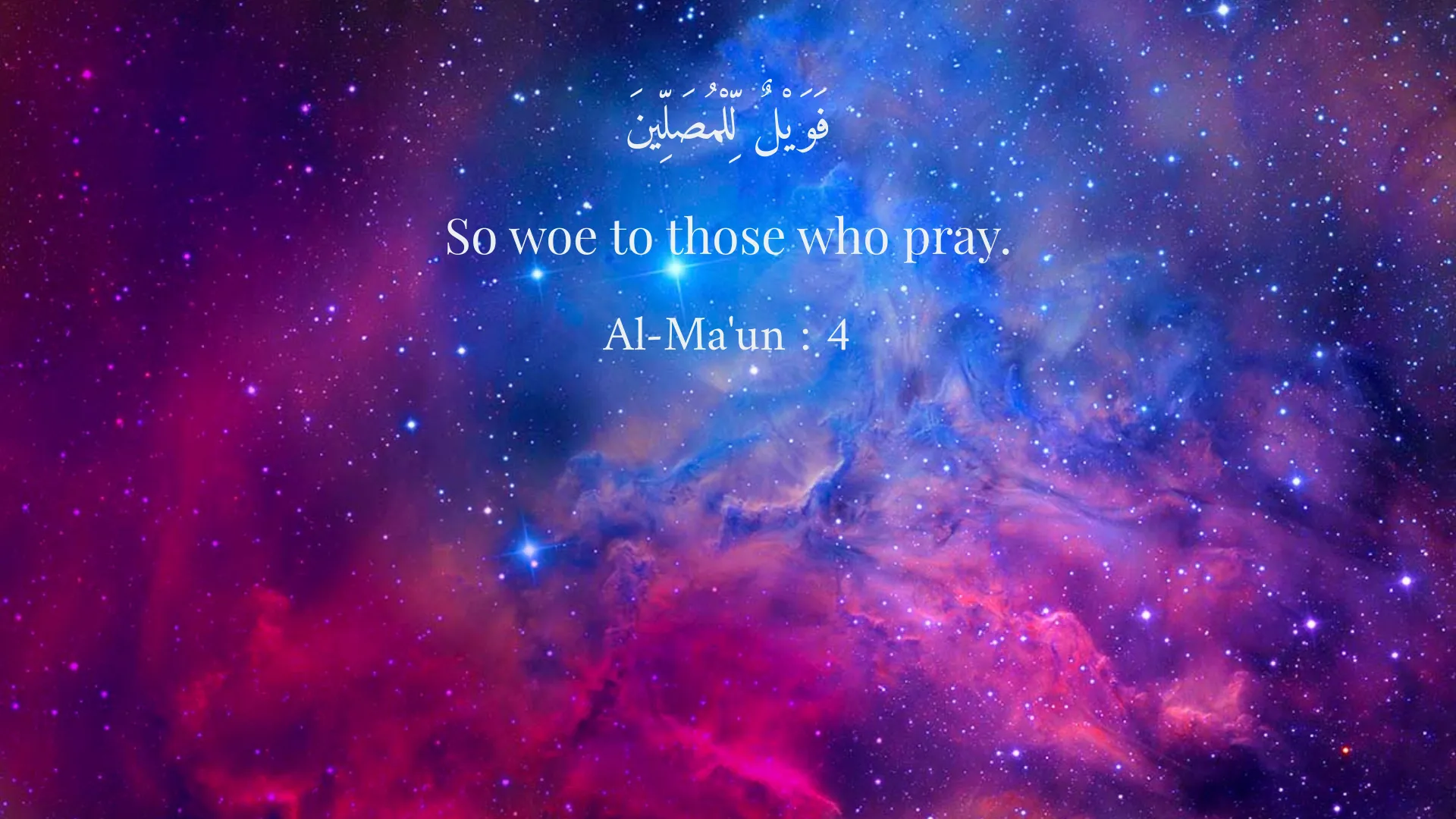
فَوَيْلٌ لِّلْمُصَلِّينَ
So woe to those who pray.
Al-Ma'un : 4
إِنَّ أَلَّمَكُمُ اللَّهُ صَدَقَةً فَلا تَأْخُذُوهَا وَأَنْتُمْ لَا تَعْلَمُونَ
If Allah grants you the right guidance, do not take it back.
Al-Baqarah : 95
Short Story
Once upon a time, a man named Hassan sat by a tree, pondering his life. He appeared religious but felt a sense of emptiness inside. That day, he decided to look within himself and examine his intentions. Hassan recalled the verses of the Quran and realized true faith lies in the harmony between appearance and inner self. From that day on, he made all efforts to have pure intentions and seek the pleasure of Allah. This transformation in his life brought him remarkable inner peace.