Quranic Answer
In the Holy Quran, the reasons behind the hardships and difficulties faced by believers are expressed in various forms. One of these reasons is the divine test and trial. The concept of trials and tribulations is deeply engrained in the Islamic tradition, serving as both a method of purification and a means to strengthen the faith of believers. The Quran emphasizes the notion that life is filled with challenges and that enduring these challenges is a significant aspect of being a believer. This perspective can be traced back to several verses in the Holy Quran that illustrate the divine intention behind the tribulations faced by individuals. In Surah Al-Baqarah, verse 155, Allah states: "And We will surely test you with something of fear and hunger and a loss of wealth and lives and fruits, but give good tidings to the patient." This verse highlights that trials are not arbitrarily imposed; rather, they are an integral part of a believer's journey towards spiritual maturity. The verse also reassures believers that challenges they encounter are not punishments but rather opportunities for growth. The Quran stresses that patience in the face of adversity is paramount. Those who demonstrate patience are promised glad tidings, which serve as a motivational reminder that faith shall be rewarded. Moreover, the trials mentioned in this verse encompass various aspects of life—fear, hunger, loss of wealth, and the death of loved ones. Each of these elements signifies a different challenge that can shake one's faith, yet they are delineated as part of a divine plan. The challenges aim to refine one's character, strengthen reliance on Allah, and initiate introspection into one's values and priorities in life. Recognizing this perspective is crucial for believers, as it transforms the way they approach hardship; rather than viewing it with despair, they can perceive it as an invitation to deepen their faith and understanding of God's presence. Additionally, in Surah Al-Ankabut, verses 10 to 11, Allah articulates: "And of the people are some who say, 'We believe in Allah.' But when they are made to suffer for the cause of Allah, they consider the trials of the people as the punishment of Allah." These verses reveal a fundamental truth about human nature: that genuine faith is often only brought to the surface in times of adversity. Believers may proclaim their faith easily during times of ease, yet what is significant is their reaction when faced with challenges. Such commentary serves as a reminder that true faith is not merely a verbal proclamation but a profound conviction that leads to steadfastness under duress. The trials that believers face act as a litmus test for their faith, and Allah uses these circumstances to distinguish between the true believers and those whose faith is superficial. This differentiation is crucial because it emphasizes the importance of resilience, encouraging believers to maintain a steadfast spirit even when external circumstances seem unfavorable. Moreover, hardships can serve as a source of spiritual and moral growth for believers. Throughout Islamic history, many revered figures have encountered tremendous suffering and adversity, yet they emerged with profound insights and transformative wisdom. These challenges can help believers comprehend true values and elevate their consciousness above mere human concerns. The experiences gained from overcoming such trials often lead to a renewed perspective on life, prioritizing spiritual growth over material pursuits. The Quranic teachings reinforce the idea that every trial has wisdom behind it, leading faithful individuals to discover deeper meanings in their lives. As mentioned in Surah Al-Baqarah, verse 286, "Allah does not burden a soul beyond that it can bear..." This verse reminds believers that they are equipped to handle the challenges they face, and the faith they possess acts as a guidance system through difficult times. Thus, hardships can ultimately strengthen one's conviction and character, giving them a unique opportunity for inner peace and growth. The wisdom behind undergoing trials is further reflected in the concept of gratitude (shukr) which is vastly emphasized in the Quran. Surah Ibrahim, verse 7 states: "And (remember) when your Lord proclaimed: 'If you give thanks (by accepting faith and worship), I will give you more of My Blessings..." This verse denotes that gratitude, regardless of circumstances, is crucial for attracting divine mercy and blessings. The idea is that if a believer continues to express gratitude even amidst hardship, they will not only endure but will also receive divine favor in various forms. The Quran provides a comprehensive framework that encourages believers to confront life’s challenges with patience, gratitude, and unwavering faith. Through reflection upon the divine purpose of trials, believers are urged to transcend their immediate discomforts and align themselves with a higher spiritual purpose. Rather than viewing difficult experiences as misfortunes, believers are encouraged to embrace them as divinely ordained opportunities to enhance their relationship with God. In conclusion, the Quranic verses remind us that enduring hardships and prevailing over them truly reflects strong faith and closeness to God. Believers should not despair in the face of hardships; instead, they should remind themselves that every trial from God comes with wisdom and specific purpose. Those who approach difficulties with a spirit of resilience, patience, and gratitude will find themselves rewarded, both in this life and the hereafter. Thus, the teachings of the Holy Quran serve as a powerful guide for believers navigating through the complexities and trials of life, urging them towards steadfastness, reflection, and ultimately, spiritual elevation.
Related Verses
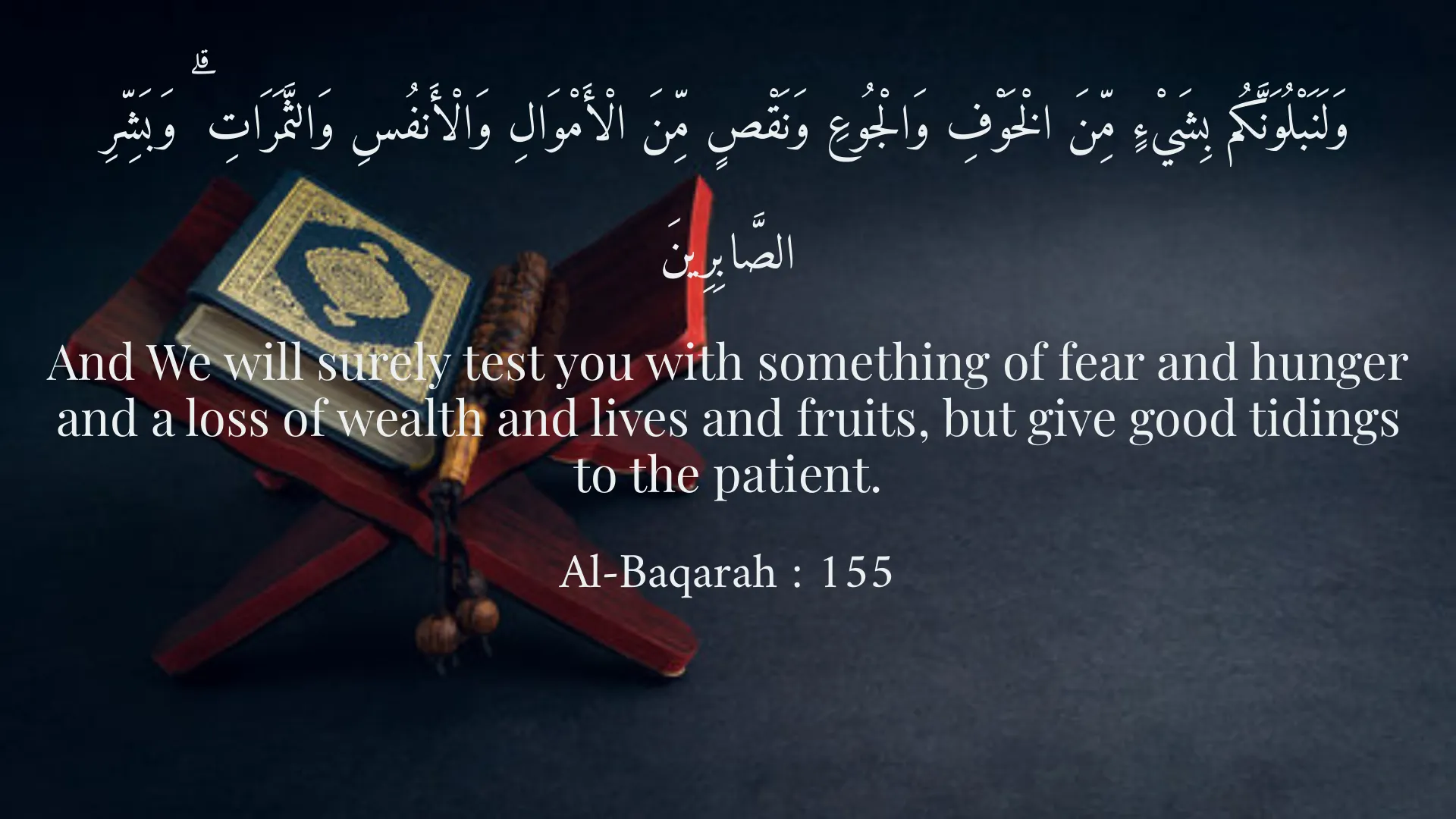
وَلَنَبْلُوَنَّكُم بِشَيْءٍ مِّنَ الْخَوْفِ وَالْجُوعِ وَنَقْصٍ مِّنَ الْأَمْوَالِ وَالْأَنفُسِ وَالثَّمَرَاتِ ۗ وَبَشِّرِ الصَّابِرِينَ
And We will surely test you with something of fear and hunger and a loss of wealth and lives and fruits, but give good tidings to the patient.
Al-Baqarah : 155
وَمِنَ النَّاسِ مَن يَقُولُ آمَنَّا بِاللَّهِ فَإِذَا أُوذِيَ فِي اللَّهِ جَعَلَ فِتْنَةَ النَّاسِ كَعَذَابِ اللَّهِ
And of the people are some who say, 'We believe in Allah.' But when they are made to suffer for the cause of Allah, they consider the trials of the people as the punishment of Allah.
Al-Ankabut : 10
Short Story
Once upon a time, there was a young believer named Yasser. Yasser faced numerous hardships in his life. He was under pressures including financial difficulties and family issues. However, Yasser remembered the Quranic verse that says, "And We will surely test you with something of fear and hunger..." He decided to maintain his patience and faith. Over time, Yasser realized that the hardships had made him stronger and brought him closer to God. He learned that every problem in life can be seen as an opportunity for spiritual and moral growth.