Quranic Answer
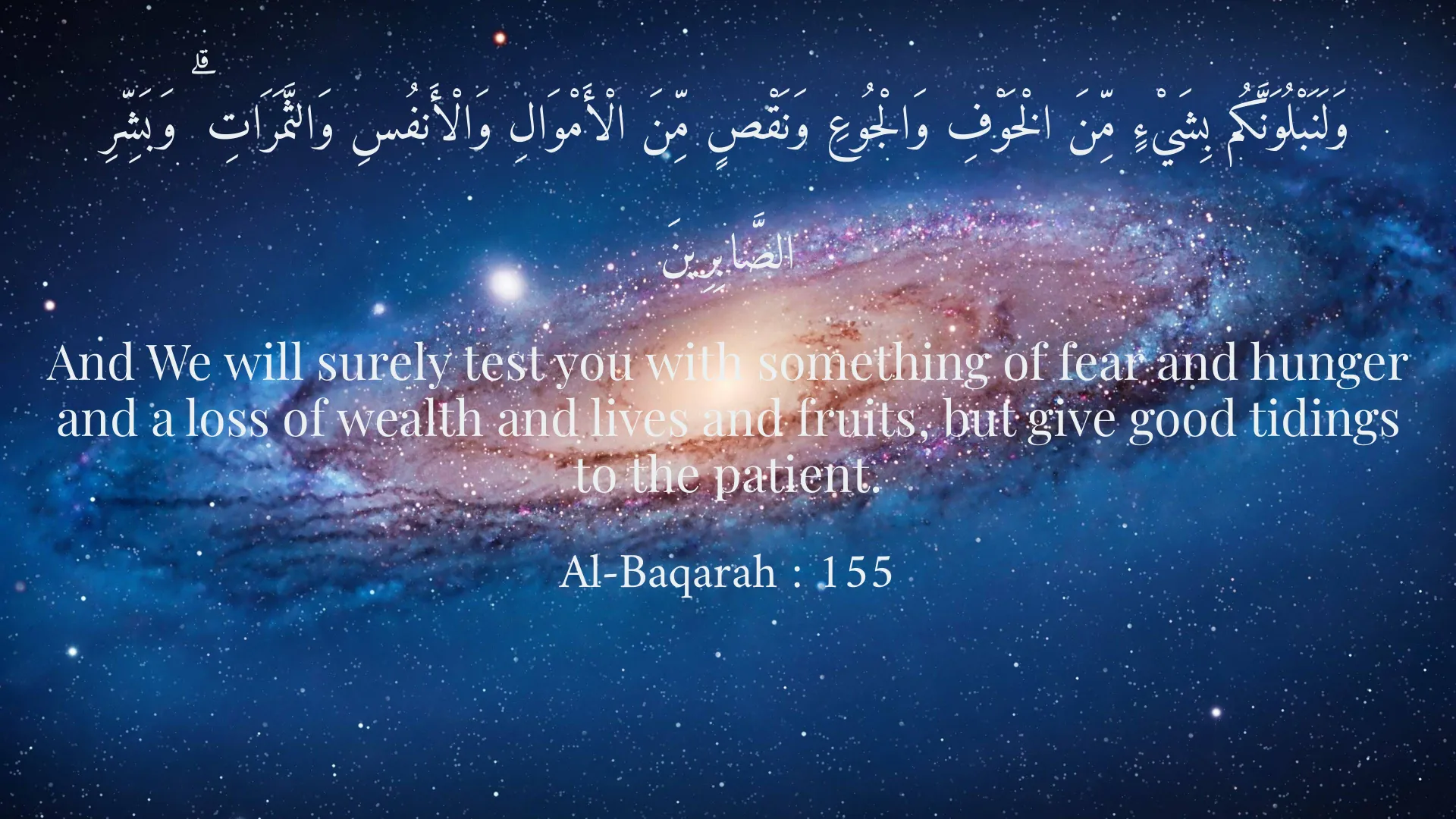
In the Holy Quran, one of the most profound themes presented is the concept of tribulations and hardships as an integral part of divine tests. The belief that life's challenges serve a greater purpose can be found throughout sacred texts and is a common tenet in many faiths; however, the Quran provides a unique lens through which these tests can be understood. In Surah Al-Baqarah, verse 155, Allah says: "And We will surely test you with something of fear and hunger and a loss of wealth and lives and fruits, but give good tidings to the patient." This verse deeply encapsulates the essence of faith, emphasizing that the trials believers face are not mere obstacles, but divine challenges meant to strengthen their relationship with Allah and foster spiritual growth. The Quran explicitly states that tests are a certainty in the lives of every individual. Essentially, they are meant to inspire patience and resilience. The term 'patient' as mentioned in the verse suggests a form of endurance that transcends mere acceptance of hardships. It indicates a proactive response to adversity, urging believers to remain steadfast in their faith and to continually seek solace in Allah's presence. Trials, as depicted in this verse, can take various forms, such as fear, hunger, loss of wealth, grief over loved ones, or hardship in achieving personal ambitions. Each of these tribulations carries the potential for growth, allowing individuals to reflect and reassess their lives and their faith. Moreover, the Quran reassures believers of Allah's unwavering support. Surah Al-Imran, verse 186 states: "Indeed, Allah is sufficient for us, and He is the best disposer of affairs." This affirmation of faith serves as a reminder that even in the depths of despair, one is not alone. Allah's protection is omnipresent; thus, believers should cultivate a sense of trust and reliance on Him, irrespective of the challenges faced. The idea of 'sufficiency' indicates an assurance that God is well aware of each person's struggles and providentially guides them to navigate these turbulent waters. The bond between humans and the divine is often tested amid adversities. Therefore, these tests can act as significant catalysts for personal and spiritual development. They provide opportunities for believers to evaluate their intentions and motivations, reflect on their connection with Allah, and realign their priorities towards a more righteous path. In the face of hardship, believers are offered an opportunity to cleanse their hearts of sin and redirect their focus towards their spiritual duties. This purification process ultimately brings them closer to God. For many, the notion of hardships being punitive can be discouraging. However, when viewed through the correct lens as put forth by the Quran, they become transformative experiences that lead to salvation and spiritual elevation. It is essential to understand that worship is not simply about the physical acts of prayer or ritual, but rather it must be imbued with a sincere intention and profound devotion. The very essence of faith is about turning toward Allah in times of difficulty and expressing gratitude during times of ease. Furthermore, the Quran elucidates that rigorous trials are often meted out to the most righteous among believers. This can be perplexing to many, leading to the inaccurate notion that one’s level of faith should correlate with the absence of difficulties. However, the Quran clarifies that those who are closest to Allah are also among those who are subjected to the most profound tests. This reflects the divine wisdom that the most severe challenges often provide the greatest avenues for growth and enlightenment. It is also important to recognize that the purpose of these tribulations may vary for each individual. While some may experience hardships as a form of retribution for past actions, others might encounter them as lessons intended to nurture their character and faith. No matter the reason, the common theme remains: hardship should be approached with resilience and an unwavering trust in Allah's wisdom. Embracing such challenges can enrich one's spiritual journey and deepen one's faith. Through reflection on the Quranic verses regarding tests and tribulations, we begin to understand that enduring the trials and adversities of life can be transformative. They remind believers of their innate weaknesses—humans are fallible beings, often prone to distractions and missteps. Each hardship serves as a classroom for the soul, teaching humility, patience, and resilience. Ultimately, it highlights the necessity of seeking Allah and fosters a yearning for His mercy and guidance. In conclusion, the theme of tribulation in the Holy Quran resonates deeply with a universal truth: life's adversities are not inherently unjust, but rather doors to divine closeness, opportunities to evolve spiritually, and means to cultivate an enduring trust in Allah. It is through navigating the storms of life, armed with the knowledge that these tests serve a higher purpose, that believers can emerge with strengthened faith, purified hearts, and deepened resilience. Therefore, it is incumbent upon all believers to approach life's trials not with despair, but rather with a sense of hope, courage, and unwavering trust in Allah's plan.
Related Verses
وَلَنَبْلُوَنَّكُم بِشَيْءٍ مِّنَ الْخَوْفِ وَالْجُوعِ وَنَقْصٍ مِّنَ الْأَمْوَالِ وَالْأَنفُسِ وَالثَّمَرَاتِ ۗ وَبَشِّرِ الصَّابِرِينَ
And We will surely test you with something of fear and hunger and a loss of wealth and lives and fruits, but give good tidings to the patient.
Al-Baqarah : 155
إِنَّكَ حَسبُنَا اللهُ وَنِعْمَ الْوَكِيلُ
Indeed, Allah is sufficient for us, and He is the best disposer of affairs.
Al-Imran : 186
Short Story
One day, Adel was thinking about his problems. He recalled the Quranic verses stating that hardships and trials are divine tests. Adel decided to draw closer to God through patience and prayer, using these challenges as an opportunity to strengthen his faith.