Quranic Answer
Divine tests are an integral part of human life, a theme that the Holy Quran addresses extensively. According to Islamic belief, life on Earth serves as a trial period where human beings are examined and judged based on their actions, faith, and character. This concept is central to understanding the human condition and the purpose of existence as laid out in countless verses of the Quran. In Surah Al-Baqarah, verses 155 to 157, Allah states, 'And We will surely test you with something of fear and hunger and a loss of wealth and lives and fruits, but give good tidings to the patient.' This declaration not only delineates various forms of tests—fear, hunger, loss of wealth, and loss of life—but it also emphasizes the importance of patience in the face of challenges. These divine tests serve a higher purpose: they are meant to assess the depth of one’s faith and the resilience of one’s character. They present a unique opportunity for individuals to reflect on their lives and evaluate their spiritual standing. Those who navigate these challenges with gratitude and patience often find themselves undergoing profound personal growth. Conversely, those who complain or express frustration often lack a nuanced understanding of God’s overarching wisdom. This lack of comprehension can render them more susceptible to despair and negativity. As we delve deeper into the Quran, we learn that patience is not merely a passive endurance of hardships; it is an active, dynamic quality that nurtures the soul. In Surah Al-Mu’minun, verse 30, it states, 'Indeed, in the creation of the heavens and the earth and the alternation of the night and the day are signs for those of understanding.' This verse highlights the importance of reflection and introspection, urging believers to seek deeper meaning within the natural world and the personal trials they face. When individuals experience fear and hunger, these tests compel them to seek refuge in their faith. The process of turning to God in times of calamity is a testament to the strength of belief. It motivates believers to rely on their Creator and fosters a profound sense of connection with the divine. In doing so, they often find solace and strength that surpasses conventional coping mechanisms. One's connection to God can provide comfort and clarity, enabling the individual to transcend their immediate difficulties. The loss of wealth serves as another formidable test that many individuals face throughout their lives. Financial instability can lead to feelings of insecurity and helplessness. Nevertheless, these hardships offer individuals a chance to cultivate contentment and gratitude for what they still possess. The Quran encourages generosity, advise believers to share what little they may have, fostering a sense of community and support among those affected by similar trials. This humane gesture often allows individuals to heal and find purpose amidst their suffering. Moreover, the loss of life—be it the death of a loved one or the gradual loss due to illness—poses one of the most profound tests that can deeply challenge an individual’s faith. Such experiences can evoke feelings of grief, anger, and despair; however, confronting these emotions and seeking solace in faith can lead to significant spiritual growth. The Quran reassures believers that life and death are both part of God’s divine decree. This understanding shifts one’s perception toward acceptance, helping them find meaning in their loss and allowing room for healing. In today’s fast-paced world, where instant gratification is the norm, patience can seem elusive. However, developing this virtue is crucial for overcoming life’s tests. The Quran emphasizes that challenges are inevitable; thus, the cultivation of patience transforms them into opportunities for self-improvement. This notion is echoed through various Prophetic traditions; one such saying emphasizes that 'Remarkable is the affair of the believer, for all of his affairs are good.' This highlights a mindset shift; patience in hardship and gratitude in ease are both signs of a true believer. Furthermore, the tests we endure serve as a collective human experience that knits individuals together in empathy and compassion. When one recognizes that we all face struggles and pain, it fosters a sense of community and belonging. Utilizing one’s own experiences to uplift and support others creates a web of resilience and hope, amplifying the moral lessons inherent in divine tests. So, how can one effectively prepare for and respond to these divine tests? Firstly, cultivating a strong spiritual foundation is necessary. Regular prayer, seeking knowledge, and reflecting on the Quran establish a connection with God and a solid grounding that can assist through difficult times. Understanding the stories of past Prophets and righteous figures provides context and also presents tangible examples of how to navigate adversity with grace and dignity. Secondly, developing a strong support system is crucial. Surrounding oneself with positive, supportive, and faith-driven individuals makes the burdens of life easier to bear. Sharing experiences with others can lead to mutual encouragement and a greater understanding of God’s wisdom in our lives. This sense of community can offer comfort during testing times and ensure that believers feel less isolated in their struggles. Lastly, embracing a mindset of gratitude can shift one’s focus away from woes and toward blessings. Keeping a gratitude journal, praying for contentment, and acknowledging the positives amidst struggles can transform a person's outlook on their trials. Through adversity, appreciating small joys can light the way through the darkest of moments. In summary, divine tests, as articulated in the Quran, are an essential component of the human experience. They challenge our faith, cultivate patience, and beckon us to deepen our understanding of God’s wisdom. Such tests are indeed opportunities for spiritual and moral growth, and adopting a perspective that embraces these challenges can enhance one’s quality of life. Learning to navigate these trials with grace empowers individuals on their spiritual journeys and promotes enduring prosperity in their hearts and communities.
Related Verses
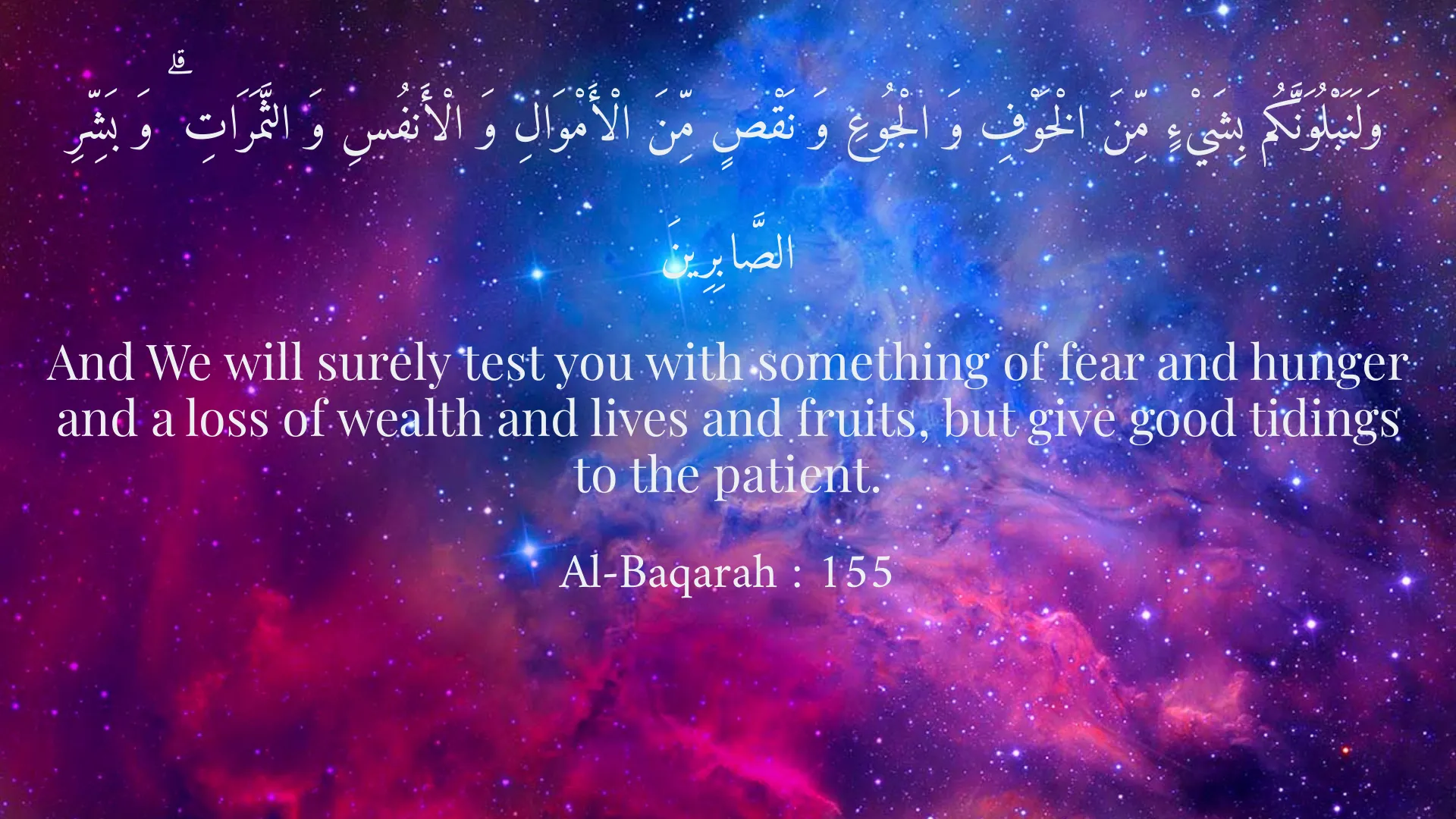
وَلَنَبْلُوَنَّكُم بِشَيْءٍ مِّنَ الْخَوْفِ وَ الْجُوعِ وَ نَقْصٍ مِّنَ الْأَمْوَالِ وَ الْأَنفُسِ وَ الثَّمَرَاتِ ۗ وَ بَشِّرِ الصَّابِرِينَ
And We will surely test you with something of fear and hunger and a loss of wealth and lives and fruits, but give good tidings to the patient.
Al-Baqarah : 155
إنّ في خلق السماوات والأرض واختلاف الليل والنهار لآيات لأولي الألباب
Indeed, in the creation of the heavens and the earth and the alternation of the night and the day are signs for those of understanding.
Al-Mu’minun : 30
Short Story
Once upon a time, there was a young man named Yusuf who faced many challenges. Every day he complained to God, not understanding why he was put in such a situation. One day, a wise man approached him and said: 'I remember the Quranic verses that tell us Allah tests us through trials. These trials are not just to cause us distress but are opportunities for our growth. Yusuf reflected on this point and decided to embrace divine tests with gratitude and patience.'