Quranic Answer
The Holy Quran, revered as the ultimate source of guidance for Muslims, presents a profound exploration of human behavior, faith, and the factors influencing belief and disbelief. Among these, the Quran elucidates the underlying causes of the lacking faith in certain individuals, particularly emphasizing the struggle against worldly desires and primal instincts. This article examines the thematic implications as elucidated in specific verses, primarily from Surah Al-An'am and Surah Al-Baqarah, providing insights into why some people may reject faith and the consequences of such disbelief. At the very core of this discourse lies the understanding that human beings are inherently susceptible to temptations and desires that stem from their worldly existence. In Surah Al-An'am, verse 143, Allah sheds light on individuals who have turned away from the truth. This deviation is attributed to ignorance and obstinacy, factors that can be exacerbated by negative emotions such as jealousy and hatred. These vices not only cloud judgment but also create barriers that shield individuals from recognizing and embracing the truth. The Quran serves as a mirror to reflect the imperfections that reside in human nature, urging a call to self-awareness and introspection. Furthermore, it is crucial to delve deeper into the implications of ignorance. The Quran states that a considerable portion of humanity fails to grasp the essence of truth due to their entrenched habits and the environments in which they are embedded. This lack of understanding elevates ignorance to a form of spiritual blindness. Individuals become ensnared in a cycle of apathy towards the truths encapsulated within divine revelation, resulting in a profound disconnect from their Creator. Moving to Surah Al-Baqarah, verses 6 and 7, the Quran further elucidates the state of the hearts of disbelievers and wicked. Allah explicitly mentions that He has placed a veil of ugliness and darkness over their hearts, rendering them incapable of comprehending His signs and messages. This divine act of sealing the hearts serves as both a consequence of their disbelief and a divine decree, highlighting a theme of predestination in the realm of faith. Those without belief are subjected to a divine form of torment, a reflection of their estrangement from the source of truth and enlightenment. The portrayal of such hearts, rendered immune to the beauty of faith, invites contemplation on the role of choice in the human experience. While one may be guided toward truth, the rejection of such guidance stems from an excess of arrogance or denial. In this context, ignorance, negligence, and material desires resonate as pivotal forces that inhibit acceptance of faith. The Quran invites believers to ponder their surroundings—understanding that societal norms and practices can lead to a dangerous complacency that detaches one from spiritual truths. Yet, juxtaposed against this bleak picture lies the potential for redemption and enlightenment. The Quranic perspective emphasizes that the journey toward faith often involves grappling with inner demons, overcoming ignorance, and distancing oneself from the distractions of worldly existence. Allah's guidance remains ever-present, offering clarity and insight to those who are earnest in seeking the truth. The human desire for meaning and connection is an inherent characteristic that can be reignited through sincere reflection and the pursuit of knowledge. Moreover, the Quran acknowledges that despite the detrimental impacts of ignorance and desire, there is always hope for those willing to confront their shortcomings. This sense of hope is critical, as it underscores the importance of striving for understanding amidst the chaotic landscape of desires and biases. One significant aspect of this struggle lies in the ability to assess the grip of worldly temptations and to challenge societal norms that conflict with spiritual aspirations. The encouraging message is that through consistent search for knowledge and conscious efforts to overcome ignorance, individuals can tear down the veils obscuring their hearts and minds. In conclusion, the Quranic discourse on disbelief and the reasons behind it reveals numerous insights into human behavior. The interplay of ignorance, neglect, and the allure of worldly desires emerges as a central theme in the struggle against faith. Through the teachings of Allah laid out in the Quran, believers are challenged to pursue knowledge diligently, remain vigilant against the distractions of their environments, and bring their hearts closer to the truth. The lessons garnered serve as a timeless reminder of the importance of understanding the self, the world, and the divine truths that govern our existence. As individuals journey through life, the responsibility rests upon them to choose paths that lead toward enlightenment, ultimately fostering a deeper connection with their Creator.
Related Verses
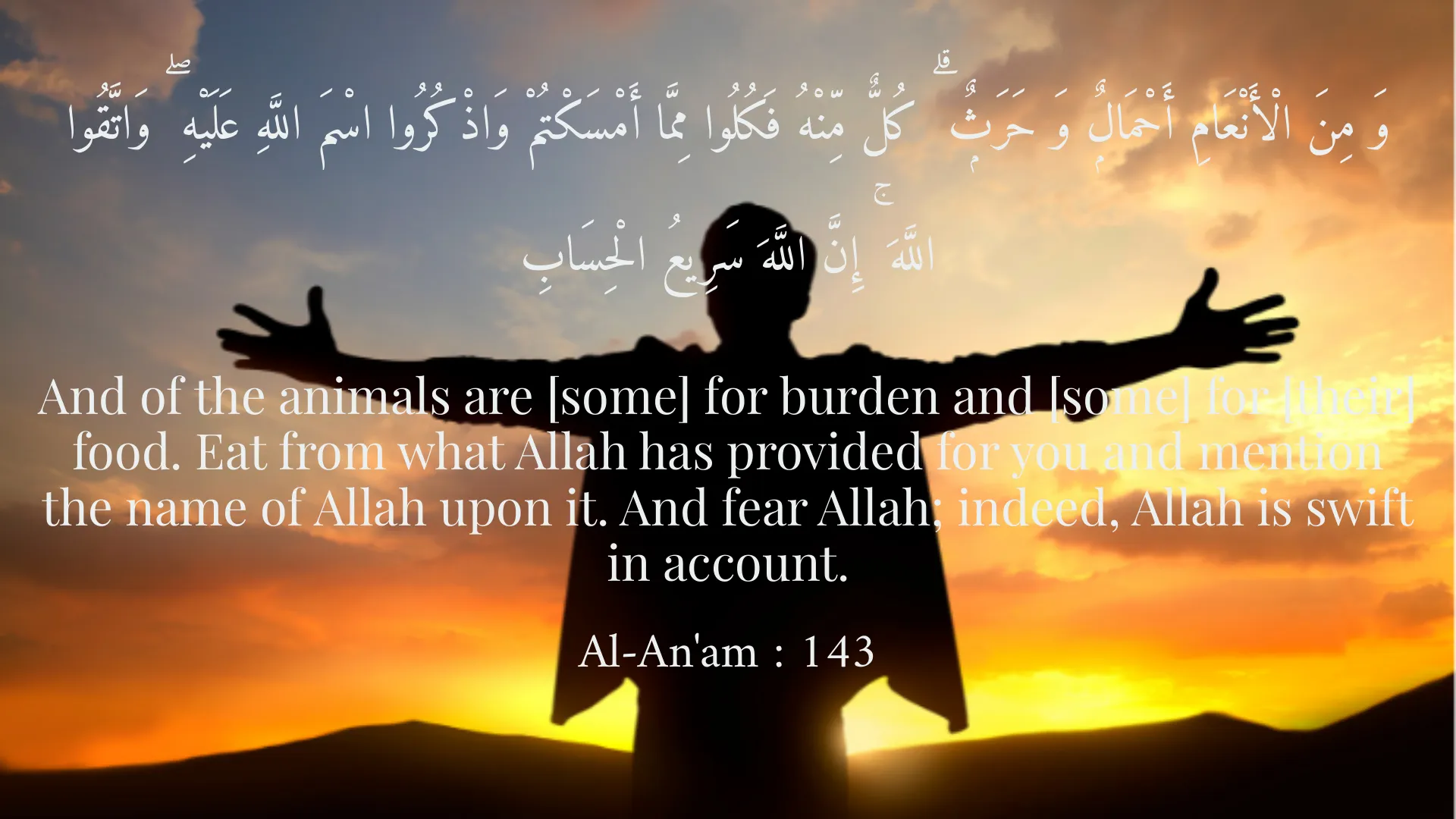
وَ مِنَ الْأَنْعَامِ أَحْمَالٌۭ وَ حَرَثٌۭ ۗ كُلٌّ مِّنْهُ فَكُلُوا مِمَّا أَمْسَكْتُمْ وَاذْكُرُوا اسْمَ اللَّهِ عَلَيْهِ ۖ وَاتَّقُوا اللَّهَ ۚ إِنَّ اللَّهَ سَرِيعُ الْحِسَابِ
And of the animals are [some] for burden and [some] for [their] food. Eat from what Allah has provided for you and mention the name of Allah upon it. And fear Allah; indeed, Allah is swift in account.
Al-An'am : 143
إِنَّ الَّذِينَ كَفَرُوا سَوَاءٌ عَلَيْهِمْ أَأَنذَرْتَهُمْ أَم لَمْ تُنذِرْهُمْ لَا يُؤْمِنُونَ
Indeed, those who disbelieve - it is all the same for them whether you warn them or do not warn them; they will not believe.
Al-Baqarah : 6
خَتَمَ اللَّهُ عَلَى قُلُوبِهِمْ وَعَلَى سَمْعِهِمْ وَعَلَى أَبْصَارِهِمْ غِشَاوَةٌ ۖ وَلَهُم عَذَابٌ عَظِيمٌ
Allah has sealed their hearts and their hearing, and over their vision is a veil. And for them is a great punishment.
Al-Baqarah : 7
Short Story
One day, a man wandering in the desert sought a truth that would bring him peace. He came across a large tree and sat beneath it. In the shade, he remembered how much he had been fascinated with fleeting pleasures and had never embraced faith in truth. He prayed and asked Allah to enlighten his heart and grant him true insight. Remembering this prayer, he decided to step into a life filled with higher meanings.