Quranic Answer
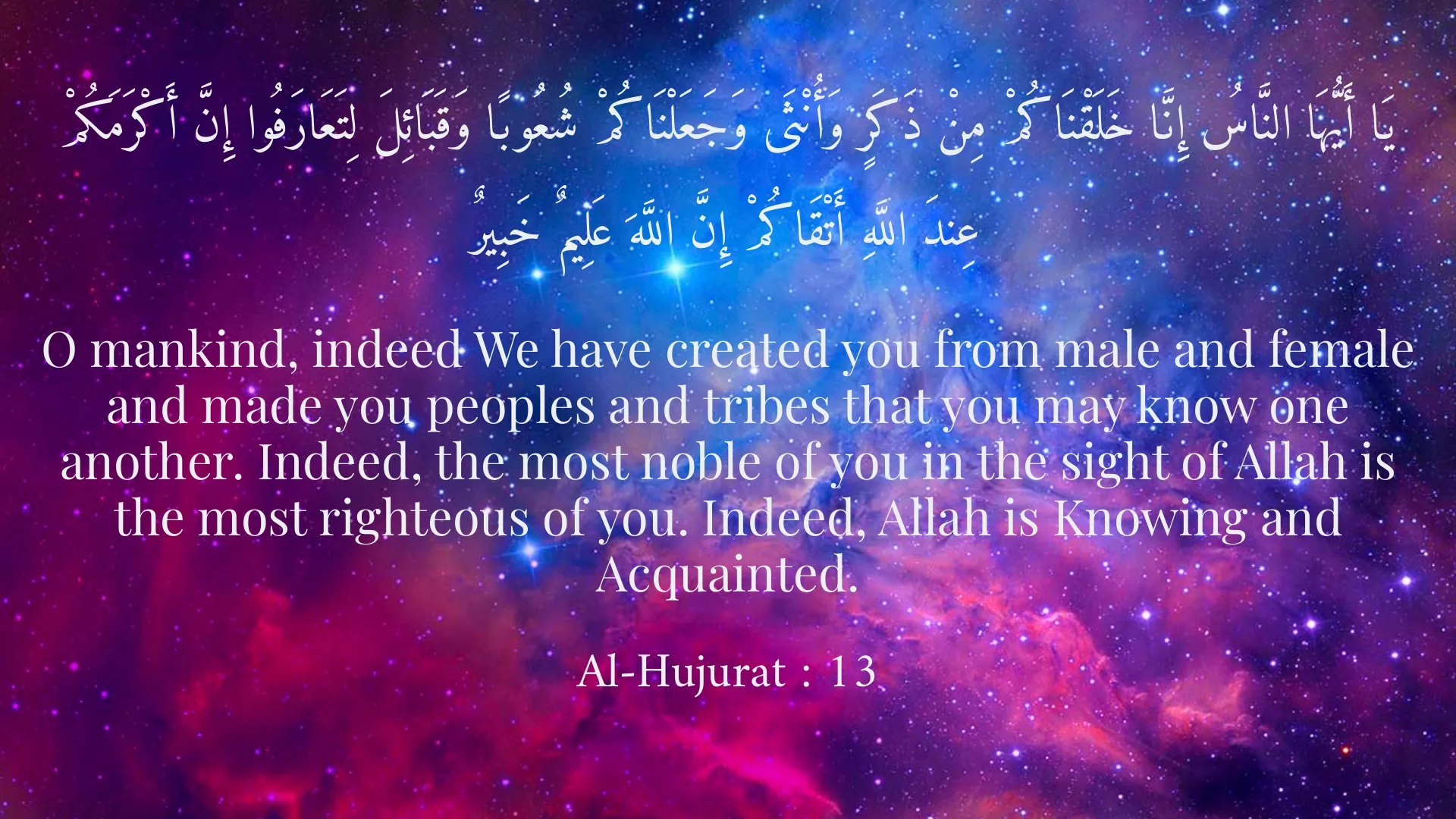
In the Holy Quran, God has emphasized the importance of faith and spirituality, highlighting that these qualities are rooted deep within the hearts of individuals. This significant teaching is exemplified in Surah Al-Hujurat, where Allah articulates the fundamental tenets of human equality and righteousness. The verse 13 states: 'O mankind, indeed We have created you from male and female and made you peoples and tribes that you may know one another. Indeed, the most noble of you in the sight of Allah is the most righteous of you. Indeed, Allah is Knowing and Acquainted.' Through this revelation, God calls upon humanity to embrace diversity, indicating that the variances in our backgrounds, cultures, and affiliations serve as a means of fostering understanding and compassion amongst one another. In essence, this verse serves as a reminder that our true worth is measured not by our external characteristics or social status but rather by our inner righteousness and connection with God. In the modern world, where people often attribute significance to outward symbols of piety—such as clothing, rituals, and public displays of worship—it is essential to recognize that these elements can sometimes mask a person's true spiritual state. The outward appearance may be deceptive, and without a profound understanding of one's internal spiritual disposition, it can lead to erroneous judgments. As highlighted in Surah Al-Imran, verse 75, Allah points out the existence of hypocrisy among some individuals, stating: 'And among the People of the Scripture is he who, if you trust him with a great amount of wealth, he will return it to you; but if you trust him with a single silver coin, he will not return it to you unless you constantly stand over him.' This verse underscores the stark contrast between how a person may outwardly present themselves in society and the reality of their intentions and actions. It serves to caution against taking people at face value, as true sincerity and trustworthiness lie beneath the surface. The teachings of the Quran implore us to look beyond physical appearances and societal roles, delving instead into the essence of an individual's character and their faith. During these times when material possessions and outward conformity to societal norms often dictate the perception of an individual's righteousness, it becomes paramount to reflect on the true meaning of spirituality and religiosity. A heartfelt connection with the Almighty should be the core of one's identity, and this connection cannot easily be deciphered from external indicators. In exploring the implications of true faith as taught in the Quran, one may reflect on the qualities that collectively contribute to a righteous individual. These include humility, compassion, integrity, and a genuine commitment to seeking God's pleasure. Such attributes are vital in individuals who wish to lead a life of righteousness, as they are reflections of a heart that is attuned to divine principles. The Quran serves as a guide to nurture these virtues, reminding us that it is our deeds and intentions that ultimately resonate with Allah, rather than superficial or ostentatious displays of faith. Furthermore, the focus of spirituality on the inner self lays the foundation for a healthy sense of community and social responsibility. When people judge others based solely on their appearances, it can breed division and foster misunderstandings within society. By recognizing the deeper spiritual connections shared amongst humanity, one can cultivate an environment of mutual respect and understanding. This is congruent with the prophetic teachings that emphasize compassion as a cornerstone of faith. The disparity between outward appearances and inner realities can lead to social tensions and conflicts, as individuals may feel alienated or judged based on superficial criteria. To counter this, one must actively strive for introspection and continual self-improvement. As one examines their own faith and intentions, it becomes easier to extend kindness and understanding to others, fostering a sense of unity within the community. The essence of true religiosity, as outlined in the Quran, necessitates a commitment to character development and self-awareness. Each individual has the opportunity to cultivate an inner landscape that resonates with righteousness and purity of heart. Activities such as prayer, reflection, and charitable acts serve as instrumental avenues through which one can strengthen their faith and connection with God. Additionally, learning from the experiences and struggles of others can foster a sense of empathy, allowing individuals to develop a more profound understanding of the human experience. In this way, the teachings of the Quran guide us not only towards enhancing our internal spirituality but also towards building bridges between people, regardless of their background. By embracing the divine message that emphasizes the equality of all humans and the superiority of righteousness over outward appearances, individuals can contribute positively to a society that values integrity, understanding, and compassion. In conclusion, the Holy Quran transcends time with its messages of inner faith and spirituality. It teaches us that true religiosity is not merely dictated by our external looks or ritualistic practices but rather by the purity of our hearts and our sincere relationship with Allah. As we navigate our lives, let us keep in mind the essence of our faith, focusing on fostering righteousness and compassion that will ultimately bring us closer to Him and to one another. Let us be vigilant against the superficiality that can cloud our judgments and instead embrace our inner spirituality as the foundation for our identity and interactions in this world. Indeed, nurturing a pure heart and steadfast faith represents the true path of religiosity, as illustrated by the teachings of the Quran.
Related Verses
يَا أَيُّهَا النَّاسُ إِنَّا خَلَقْنَاكُمْ مِنْ ذَكَرٍ وَأُنْثَى وَجَعَلْنَاكُمْ شُعُوبًا وَقَبَائِلَ لِتَعَارَفُوا إِنَّ أَكْرَمَكُمْ عِندَ اللَّهِ أَتْقَاكُمْ إِنَّ اللَّهَ عَلِيمٌ خَبِيرٌ
O mankind, indeed We have created you from male and female and made you peoples and tribes that you may know one another. Indeed, the most noble of you in the sight of Allah is the most righteous of you. Indeed, Allah is Knowing and Acquainted.
Al-Hujurat : 13
وَمِنْ أَهْلِ الْكِتَابِ مَنْ إِن تَأْمَنْهُ بِقِنْطَارٍ يُؤَدِّهِ إِلَيْكَ وَإِن تَأْمَنْهُ بِدِينَارٍ لَّا يُؤَدِّهِ إِلَيْكَ إِلَّا مَا دُمْتَ عَلَيْهِ قَائِمًا
And among the People of the Scripture is he who, if you trust him with a great amount of wealth, he will return it to you; but if you trust him with a single silver coin, he will not return it to you unless you constantly stand over him.
Al-Imran : 75
Short Story
One day, Adel was pondering about his life and how he should perceive others. He realized that many individuals may not appear religious outwardly, yet possess deep and pure faith within. He decided to be more discerning in his judgments and to respect the inner intentions of people. This reflection made him a better person and increased his trust in others.