Quranic Answer
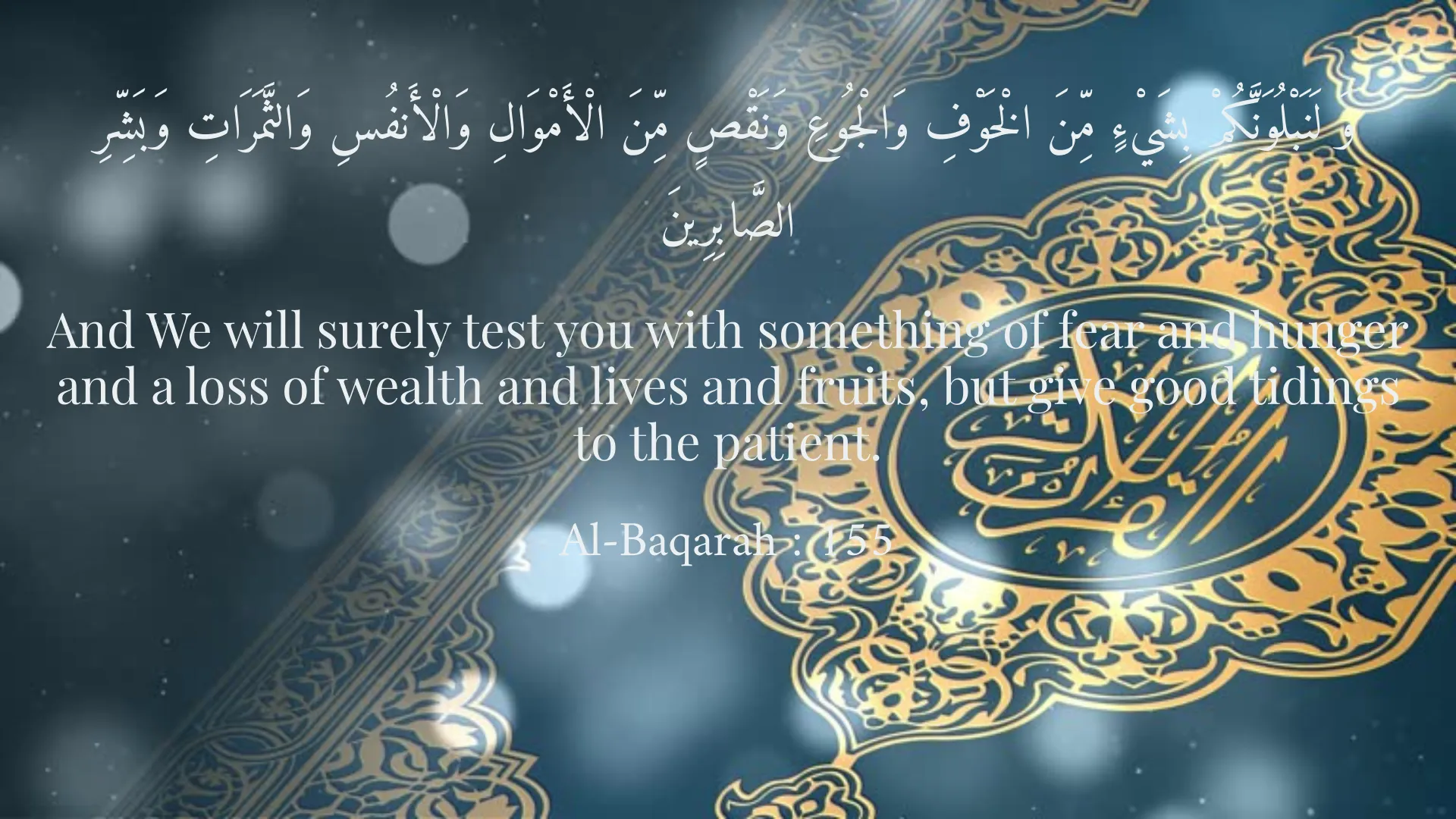
In the Holy Quran, various reasons are mentioned for the delay in answering prayers. Understanding these reasons is essential for believers who seek to strengthen their faith and deepen their relationship with Allah. One major theme throughout the Quran is the testing and trial of believers, a principle which is eloquently articulated in Surah Al-Baqarah, verse 155: 'And We will surely test you with something of fear and hunger and a loss of wealth and lives and fruits, but give good tidings to the patient.' This verse serves multiple purposes; it elucidates that life is inherently filled with challenges and that these challenges are not arbitrary but serve divine purposes. Such trials are designed to enhance the faith and patience of believers, transforming their adversities into avenues for spiritual growth. The testing of believers is a recurring theme in Islamic theology. In fact, it can be posited that the essence of faith is often forged in the crucible of hardship. The Quran does not promise a life devoid of difficulties; rather, it acknowledges the inevitability of these trials. This perspective is empowering for many believers, as it encourages them to view their experiences through a spiritual lens. The delay in answering prayers can often serve as an integral part of this testing process. When prayers seemingly go unanswered, it may be a divine strategy to cultivate resilience and patience in individuals. Furthermore, the concept of divine wisdom plays a critical role in the delay of prayer responses. As highlighted in Surah Al-Mu'minun, verse 60, 'And indeed, the prayer of the night will not be answered.' This verse alludes to the idea that Allah's plans and timing are superior to human understanding. Oftentimes, believers may perceive silence in response to their prayers as neglect, but from a theological perspective, it may signify God's intricate wisdom at work. There are instances where what individuals desire may not align with what is ultimately beneficial for them. As such, the refusal or delay in answering prayers is not an indication of abandonment but rather a manifestation of divine love and concern. Another layer to understand regarding the delay in prayer answers is the notion of timing. Allah, in His infinite wisdom, knows the best time and circumstance for every event, including responding to prayers. Sometimes, believers may yearn for immediate answers due to their limited perspective on what is best for their situations. However, the delay can be an opportunity for better circumstances to unfold – those that could significantly enhance the outcome of the prayer. In this way, believers are encouraged to remain steadfast in their devotion, trusting that Allah is orchestrating events in their favor. In times of difficulty or when prayers are unanswered, believers are urged to practice patience. This concept of patience, or 'sabr,' is deeply rooted in Quranic teachings. The virtue of patience is often emphasized by Allah, reflecting its importance in the journey of a believer. Surah Al-Baqarah explicitly associates patience with rewards, as Allah assures that those who endure will be given good tidings. Hence, when faced with delays, believers must exercise patience and trust in Allah's divine plan, reinforcing their relationship with Him. Moreover, the delay in responding to prayers may also serve to enhance the believer's reliance on Allah. Such times can foster a deeper sense of dependence and vulnerability, which can lead to profound spiritual intimacy. Believers are encouraged to engage more deeply in prayer, supplication, and reflection during these periods, thus inviting an opportunity for personal growth and resilience. In Islamic teachings, the act of prayer (Salah or Dua) serves as a direct line of communication between the believer and Allah. Therefore, the delay in answers does not negate the value of prayer; rather, it enriches the quality of the relationship. It is crucial to recognize that the act of praying is in itself a valuable exercise that cultivates spirituality, strengthens resolve, and fosters a mindset of connection with the Divine. This intrinsic value exists irrespective of immediate outcomes. It is also essential for believers to engage in self-reflection during periods of unanswered prayers. The delay may be a time to evaluate one’s intentions and sincerity in supplication. It encourages believers to ask themselves whether their requests align with divine wisdom and greater good. This self-reflection can lead to realizations that could fundamentally change one's approach to prayer and reliance on Allah. In summary, the delay in answering prayers is illuminated through various teachings within the Holy Quran. It is often a test, a reflection of Allah's wisdom, and an occasion for believers to exercise patience. The intricate interplay of these elements portrays a profound relationship between the believer and Allah, rooted in trust, love, and ultimately, a deeper understanding of faith. To navigate the complexities of prayer, believers are encouraged to be persistent in their supplications while holding on to their faith in Allah's care and love. In doing so, they are reminded that Allah’s plans are always more rewarding than the limitations of their own desires, ultimately nurturing a more mature and resilient faith journey.
Related Verses
وَ لَنَبْلُوَنَّكُمْ بِشَيْءٍ مِّنَ الْخَوْفِ وَالْجُوعِ وَنَقْصٍ مِّنَ الْأَمْوَالِ وَالْأَنفُسِ وَالثَّمَرَاتِ وَبَشِّرِ الصَّابِرِينَ
And We will surely test you with something of fear and hunger and a loss of wealth and lives and fruits, but give good tidings to the patient.
Al-Baqarah : 155
وَ أَنَّهُ لَا يُسْتَجَابُ لَهُ دَعَاءُ اللَّيْلَةِ
And indeed, the prayer of the night will not be answered.
Al-Mu'minun : 60
Short Story
One day, a man reflected on his delayed prayers. After a while, he remembered verses from the Quran stating that Allah answers prayers at the right time. In doing so, he met someone in a similar situation and learned from him about patience and faith. Their friendship helped them support each other, persistently praying, and ultimately, their prayers were answered in the best way.