Quranic Answer
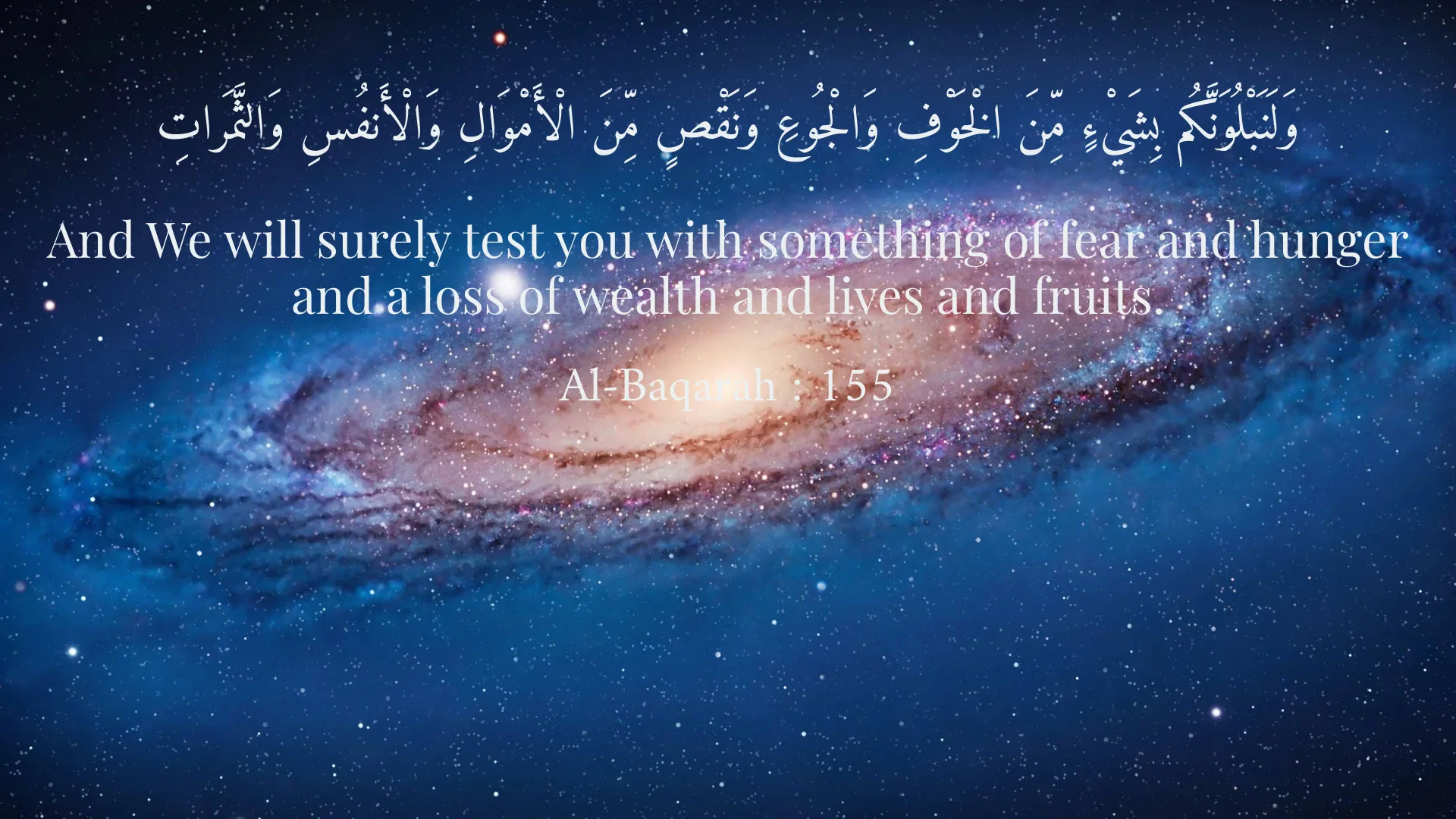
In the Holy Quran, calamities and hardships are mentioned as profound means to test one’s faith, promote personal growth, and develop human character. The significance of these trials is a central theme that runs deep throughout Islamic teachings, reminding believers of the transient nature of life and the essence of faith. One of the clearest expressions of this idea can be found in Surah Al-Baqarah, verse 155, where Allah states: 'And We will surely test you with something of fear and hunger and a loss of wealth and lives and fruits.' This verse serves as a crucial reminder that existence in this world is inherently intertwined with trials and challenges, which may include loss, fear, and hunger. Oftentimes, we may find ourselves pondering the ultimate purpose behind the adversities we face in life. The Quran offers insight into the philosophy of discomfort and misfortune, suggesting that these tribulations are not mere coincidences but intentional tests meant to refine our souls and fortify our faith. The concept of testing is reiterated throughout the Quran. Each trial we face reminds us of the transient nature of worldly possessions and the importance of maintaining a strong connection with God. Moreover, in Surah Al-Anfal, verse 28, we see another dimension of this perspective. It states: 'And know that your properties and your children are but a trial.' This elucidates that even the things and people we hold most dear can serve as tests. Wealth and children, considered as ultimate sources of happiness, are, in fact, avenues through which we must assess our priorities and devotion to God. Calamities instigate a profound transformation within individuals, compelling them to reflect inwardly. It is often during times of distress that individuals are motivated to seek out a deeper relationship with God, prompting them to turn to prayer, repentance, and the search for forgiveness. As life unfolds, nobody can escape the uncertainties and challenges that accompany the journey; illness, loss of loved ones, economic struggles, and moments of utter despair. These experiences force individuals to confront their vulnerabilities, thereby fostering an environment conducive to spiritual awakening and moral development. The notion that trials are manifestations of God’s love and mercy is a remarkable insight offered within the Quran. It invites believers to reinterpret their hardships, viewing them not solely as sources of suffering but as opportunities for spiritual elevation, purification, and deepening of faith. Imagine a sculptor chiseling away at a block of marble; through persistence, the sculptor reveals an exquisite work of art hidden within. Likewise, through the trials ordained upon us, we can emerge as more enlightened, compassionate, and resilient individuals. This understanding shifts the perspective on adversity from a narrative of despair to one of potential growth and a closer affinity with the divine. The testing through trials also nurtures empathy and compassion in the hearts of believers. Experiencing loss ignites a deep understanding of others' suffering, thus encouraging individuals to extend their hands in kindness and assistance. The Quran frequently emphasizes the vital role of community and collective support during trying times. For instance, the principle of charity (Zakat) is emphasized as not only an act of benevolence but a duty to assist those who are suffering. This interconnection, fostered through hardships, cultivates a shared sense of purpose and solidarity among individuals navigating the complexities of life. Furthermore, life’s tribulations provide life lessons that often cannot be learned through comfort. The trials and hardships we endure shape our character and refine our perspectives. They teach resilience, patience, and reliance on God’s wisdom. It is said that adversity introduces a person to themselves. During times of ease, people may overlook their flaws and weaknesses, but when faced with challenges, they must confront their inner battles, fostering an environment ripe for growth. During these times of trial, individuals are encouraged to remain steadfast and patient. The Quran reassures believers that after hardship comes ease. In Surah Ash-Sharh, Allah states: 'Indeed, with hardship comes ease.' This assurance serves as a beacon of hope, motivating individuals to persevere through the stormy seasons of life, inspired by the knowledge that relief and blessings will eventually follow their trials. The promise of ease is not only a spiritual consolation but also cements a relational dynamic with God—drawing a believer closer to the divine, reiterating that every hardship is not in vain but serves a greater purpose in the larger tapestry of existence. In conclusion, the trials and tribulations in life are significant aspects of a believer's journey towards spiritual and moral growth. They serve as reflections of divine love, urging human beings to transcend challenges and continually strive for a deeper connection with God. As we face the various calamities and hardships of life, it is imperative to embrace them as lessons and opportunities for growth. Each experience, whether marked by fear, grief, or loss, ultimately invites us to evolve into individuals who are not only more resilient but also more aware of the blessings and mercies that we often take for granted. Thus, embracing trials as integral parts of life cultivates a richer understanding of the divine will, fostering gratitude, empathy, and an unwavering faith in God’s wisdom.
Related Verses
وَلَنَبْلُوَنَّكُم بِشَيْءٍ مِّنَ الْخَوْفِ وَالْجُوعِ وَنَقْصٍ مِّنَ الْأَمْوَالِ وَالْأَنفُسِ وَالثَّمَراتِ
And We will surely test you with something of fear and hunger and a loss of wealth and lives and fruits.
Al-Baqarah : 155
وَاعْلَمُوا أَنَّ أَمْوَالَكُمْ وَأَوْلَادَكُمْ فِتْنَةٌ
And know that your properties and your children are but a trial.
Al-Anfal : 28
Short Story
One day, a man pondered within himself why problems arose in his life. He was contemplating whether to complain to God or not. Suddenly, he recalled a verse from the Quran stating, 'And We will surely test you with something of fear and hunger...'. He realized that difficulties are signs of God's love and prepare him for spiritual growth and peace. With this thought, he felt relief and decided to endure and draw closer to God.