Quranic Answer
In the Holy Quran, the concept of testing human beings is one of the most important themes that has been addressed extensively throughout its verses. From the very inception of creation, God has endowed humans with the gift of free will, enabling them to choose between right and wrong. This divine gift is not merely a formality; it comes with the weight of responsibility and the necessity for accountability. The tests presented to human beings are intended to gauge their faith, their choices, and their dedication to the principles of righteousness. Through these trials, individuals are given the opportunity to demonstrate their true character, to strengthen their beliefs, and to grow spiritually. One of the most poignant references to the concept of divine testing can be found in Surah Al-Baqarah, verse 155, where it states, 'And We will surely test you with something of fear and hunger and a loss of wealth and lives and fruits, but give good tidings to the patient.' This verse encapsulates the essence of life's challenges, suggesting that fear and hunger, as well as losses in wealth, life, and the fruits of one's labor, are not merely random occurrences but are integral parts of God’s divine plan for evaluating human beings. These tests can seem daunting and overwhelming at times, as they often come unannounced and can lead to despair. However, the verse ends on a note of encouragement, emphasizing that there is indeed a silver lining to these trials: patience. Through the act of being patient amidst discomfort and hardship, individuals can cultivate resilience, a virtue that is deeply valued in Islamic teachings. Patience, or 'Sabr,' serves as a cornerstone for personal growth and development, leading individuals to a state of spiritual maturity. Further illuminating the significance of tests in human life, Surah Al-Mulk, verse 29 states, 'He is the One who created death and life to test you as to which of you is best in deed.' This verse adds another layer of depth to the understanding of existence itself, suggesting that not only is life a test but that even the end of life—death—is purposed to assess human actions. The juxtaposition of life and death here signals that both states are crucial in the evaluation of human character and intentions. While life offers a canvas for actions, death serves as a reminder of mortality and the limited time available to one to act righteously. The ultimate goal of these divine tests is clear: to assess the quality of human actions. God has given human beings the tools necessary to navigate these tests, including the faculties of reason, intellect, and intuition. By leveraging these tools wisely, individuals are able to make choices that align with their faith and values, thereby crafting a life of meaning and purpose. Those who successfully withstand life’s tests are often rewarded with growth that transcends their immediate circumstances. Moreover, the trials that each individual faces can also be seen as opportunities not just for personal development but for fostering community and shared compassion. As humans experience hardships—be it through loss, illness, or deprivation—there comes a natural inclination to seek solace in one another. Acts of worship, community service, and expressions of love can serve as powerful antidotes to the pain of life’s tests. Through supporting one another in times of difficulty, individuals can foster a sense of unity and resilience that not only alleviates personal suffering but also strengthens the bonds within the community. It is also important to recognize that these tests do not target everyone in the same way; each person faces unique challenges tailored to their life circumstances. This notion reinforces the intimate relationship between the Creator and each individual, as God, in His infinite wisdom, understands the precise nature of tribulations that will lead to spiritual improvement for each person. Consequently, an individual may encounter trials that test their patience in family matters, while another may face hardships related to financial constraints. Both are equally significant and serve as invitations for reflection, growth, and a return to the divine. In conclusion, the divine testing outlined in the Holy Quran is an intricate and profound theme that permeates the life of a believer. It goes beyond simply enduring challenges; rather, it is about active engagement with one’s faith, the cultivation of virtues such as patience, and the commitment to ethical actions. By understanding that life’s tests serve a greater purpose, individuals can approach their struggles with a perspective of hope and determination. In essence, these trials are not just obstacles but stepping stones on the path towards spiritual perfection and fulfillment in both this life and the hereafter. Through perseverance and faithfulness during these tests, one can aspire toward salvation and reach a state of spiritual maturity that draws them closer to their Creator.
Related Verses
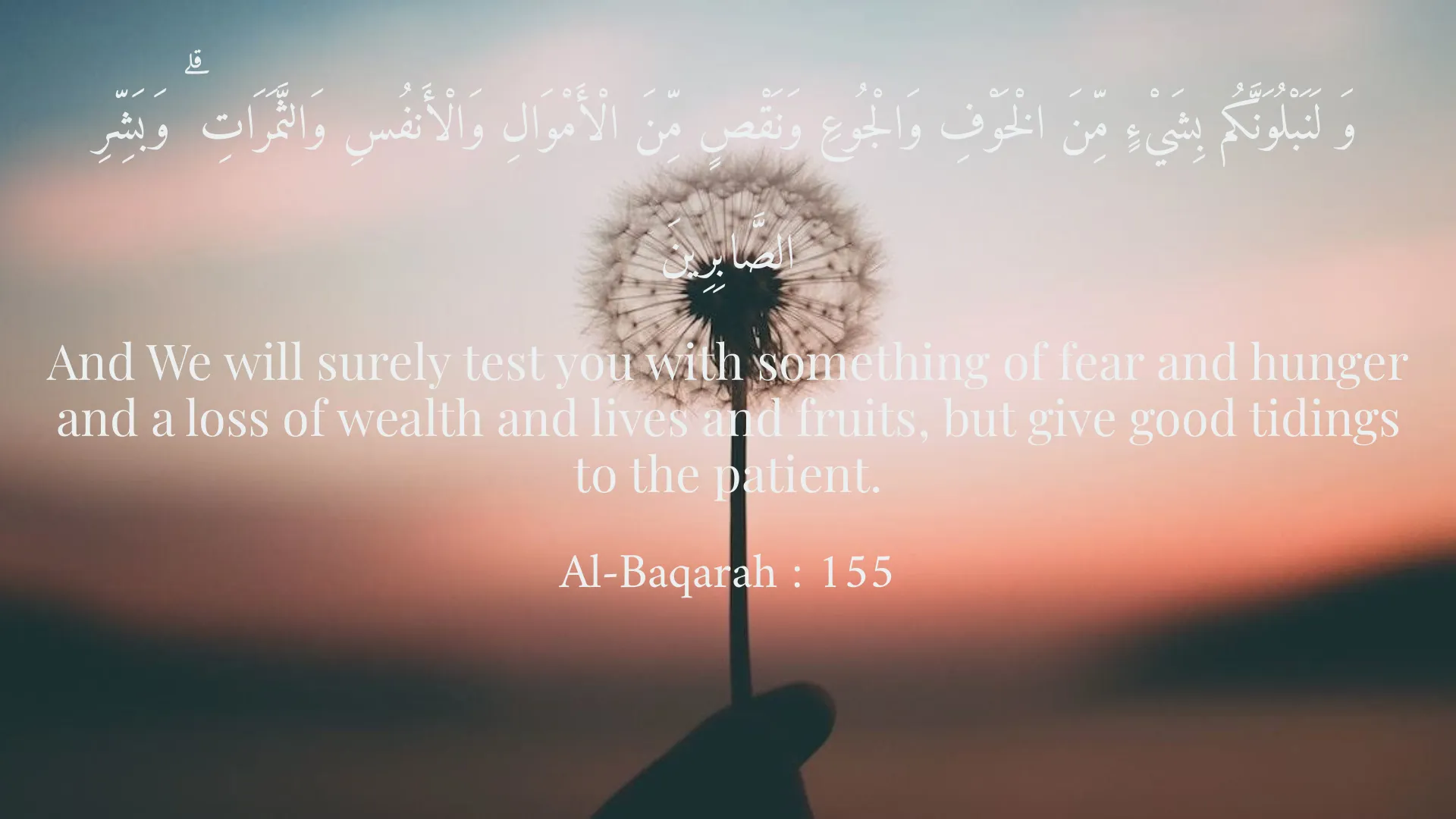
وَ لَنَبْلُوَنَّكُم بِشَيْءٍ مِّنَ الْخَوْفِ وَالْجُوعِ وَنَقْصٍ مِّنَ الْأَمْوَالِ وَالْأَنفُسِ وَالثَّمَرَاتِ ۗ وَبَشِّرِ الصَّابِرِينَ
And We will surely test you with something of fear and hunger and a loss of wealth and lives and fruits, but give good tidings to the patient.
Al-Baqarah : 155
هُوَ الَّذِي خَلَقَ الْمَوْتَ وَالْحَيَاةَ لِيَبْلُوَكُمْ أَيُّكُمْ أَحْسَنُ عَمَلًا
He is the One who created death and life to test you as to which of you is best in deed.
Al-Mulk : 29
Short Story
One day, a man named Hasan lived in a beautiful land. He was always pondering the secret of life and why God tests humans. One day, while sitting in his garden, he recalled a verse from the Quran that said, 'We test you to measure your faith and patience.' Hasan realized that tests are not just hardships, but opportunities for growth and learning. From that day onwards, he looked at life with a new perspective, viewing each problem as a test from God.