Quranic Answer
Pain and Challenges as Tests of Faith in the Holy Quran In the Holy Quran, Allah, the Most Merciful and All-Knowing, presents a profound understanding of the human experience, positioning pain and challenges as essential tests of faith. The Quran suggests that life is filled with trials that serve to measure human patience and resilience while simultaneously reinforcing one's faith. These trials are regarded as integral parts of the divine plan, demonstrating God's unwavering love and care for His servants. Through these sacred texts, believers are reminded that adversity is not merely to be endured but embraced as an opportunity for spiritual growth and enlightenment. One of the most cited references regarding this theme is found in Surah Al-Baqarah, verse 155, where it is stated: "And We will surely test you with something of fear and hunger and a loss of wealth and lives and fruits, but give good tidings to the patient." This verse serves as a powerful reminder that tests through various forms—including emotional and physical pain, loss of wealth, and even the loss of loved ones—are inevitable parts of life. They are not arbitrary punishments imposed on humanity but rather intended to foster resilience, deepen faith, and bring believers closer to Allah. The significance of these trials is further explored in Surah Al-Mu'minun, verse 30, which articulates: "Indeed, in the creation of the heavens and the earth and the alternation of the night and the day are signs for those of understanding." Here, Allah underscores the importance of recognizing the signs of His existence and the lessons they impart. The effect of pain and suffering on the human spirit can provoke deep reflection, compelling individuals to evaluate what truly matters in life. Such moments of adversity often offer pivotal opportunities for self-improvement and divine connection. The Quran teaches that pain is not to be seen as a mere burden or misfortune; rather, it can be understood as a valuable teacher. Through endurance and patience in the face of hardship, believers can rise to higher ranks in both this world and the hereafter. This principle is elegantly illustrated in the lives of the Prophets and countless believers who have faced trials yet emerged stronger and more devoted in their faith. When confronted with challenges, people frequently turn to prayer and supplication as a means of seeking solace and connection with the divine. This instinctual response emphasizes the fundamental belief that Allah is always there to respond to the needs of His servants. Engaging in prayer during hardships not only provides comfort but also serves as an avenue for spiritual elevation. This experience can lead to a transformative understanding of one's circumstances, nurturing a perspective that sees beyond immediate suffering to the potential growth it fosters. Understanding pain and suffering as tests allows believers to internalize the teaching that every hardship carries with it the potential for moral and spiritual rectification. By remaining steadfast and patient, they embody the virtues that Allah cherishes in His devout servants. Thus, the Quran does not merely present suffering as a destiny to be feared; it offers it as a path toward a deeper relationship with God—a means of reinforcing faith in the divine wisdom behind all events. Moreover, the trials faced in life encourage a sense of community and compassion among individuals. As people share their struggles and seek support from one another, they create a network of encouragement, empathy, and strength. This sense of solidarity can be viewed as a collective response to the divine tests of life. It reminds individuals that while their pain may feel isolating, they are not alone in their experiences. Sharing their burdens and supporting one another fosters communal growth and enhances the spiritual journey. In conclusion, the Holy Quran provides a profound framework for understanding pain and challenges as integral components of the human experience. Rather than viewing these tests as mere penalties, believers are invited to see them as opportunities for growth and elevation. Each hardship encountered is a chance to cultivate patience, deepen faith, and strengthen one's connection to Allah. By embracing adversity and remaining steadfast in their devotion, individuals not only navigate their personal trials but also emerge as resilient and compassionate members of their communities. Ultimately, pain becomes a pathway to enlightenment, offering invaluable lessons that prepare believers for the ultimate goal of life: an eternal union with the Divine and the attainment of spiritual perfection.
Related Verses
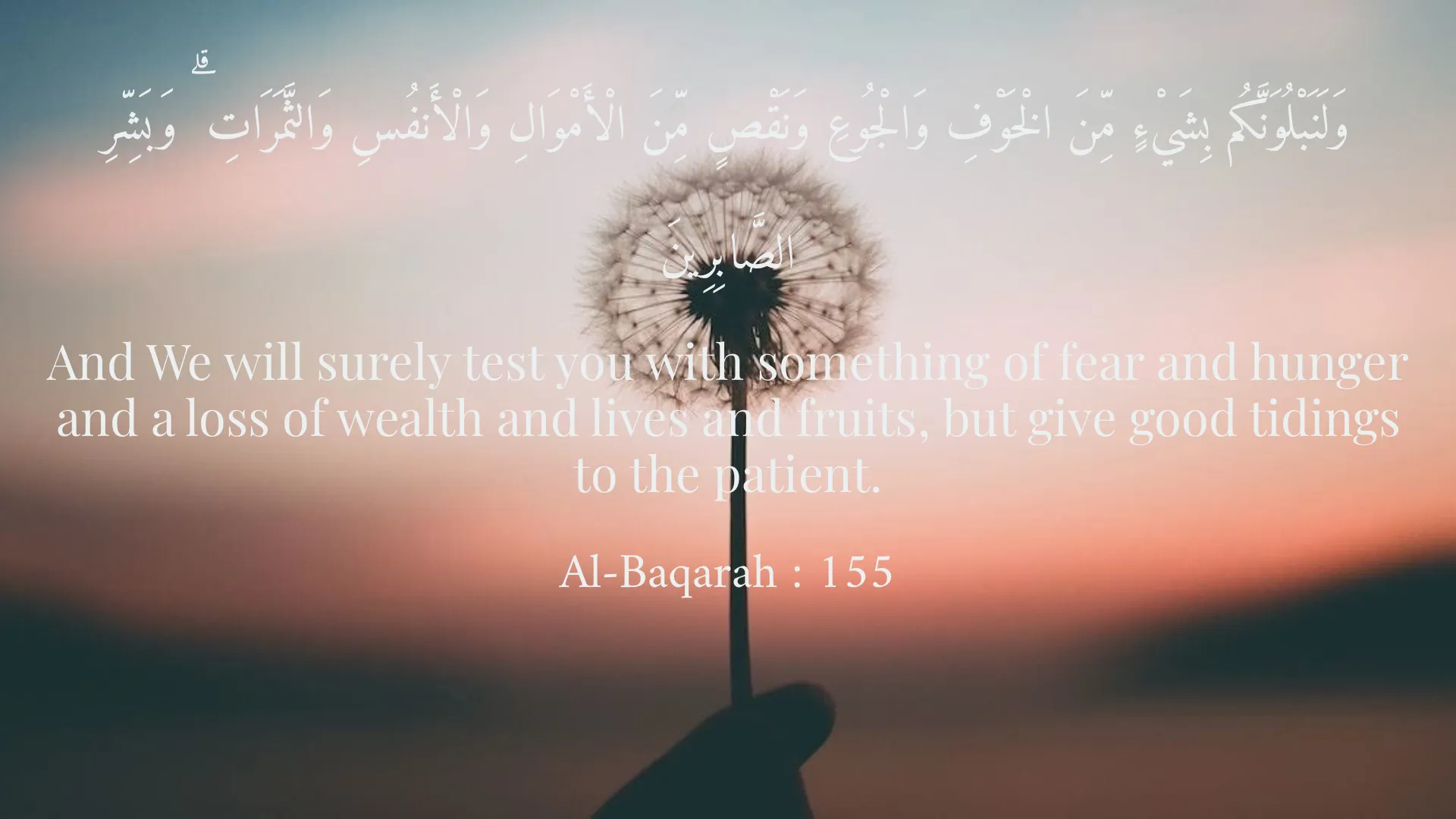
وَلَنَبْلُوَنَّكُم بِشَيْءٍ مِّنَ الْخَوْفِ وَالْجُوعِ وَنَقْصٍ مِّنَ الْأَمْوَالِ وَالْأَنفُسِ وَالثَّمَرَاتِ ۗ وَبَشِّرِ الصَّابِرِينَ
And We will surely test you with something of fear and hunger and a loss of wealth and lives and fruits, but give good tidings to the patient.
Al-Baqarah : 155
إِنَّ فِي خَلْقِ السَّمَاوَاتِ وَالْأَرْضِ وَاخْتِلَافِ اللَّيْلِ وَالنَّهَارِ لَآيَاتٍ لِّأُولِي الْأَلْبَابِ
Indeed, in the creation of the heavens and the earth and the alternation of the night and the day are signs for those of understanding.
Al-Mu'minun : 30
Short Story
One day, a man named Hossein suffered from severe pain and didn't know how to cope with this issue. He went to a religious scholar and sought help. The scholar said, 'Know that this pain is a test from Allah, and you must be patient and learn from it.' Hossein began to pray and found peace in his heart over time. He realized that this pain not only made him stronger but also brought him closer to God.