Quranic Answer
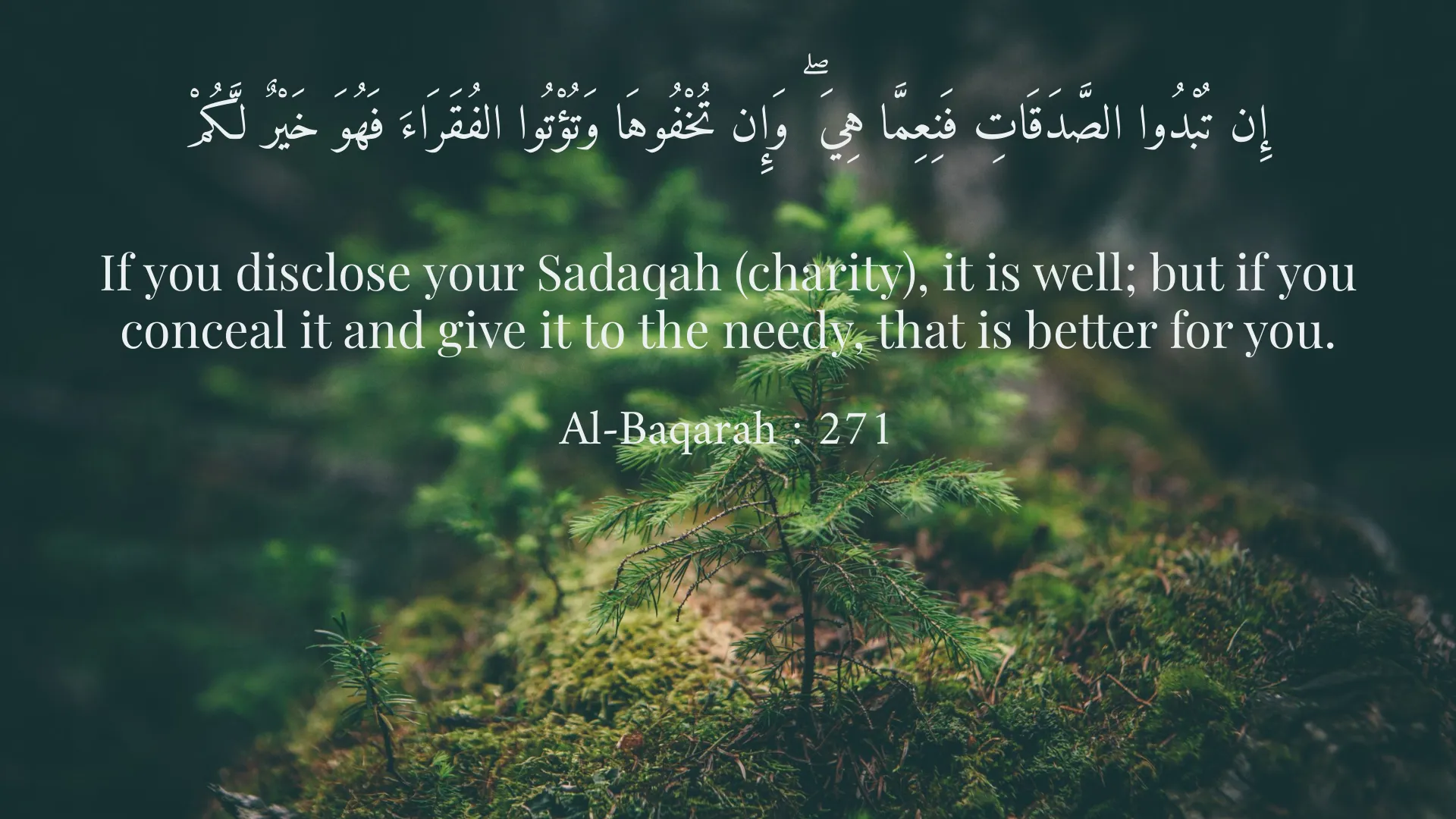
The Holy Quran, a revered text in Islam, serves as a comprehensive guide for human behavior and ethics. Among its many teachings, the emphasis on spending generously and aiding those in need stands out prominently. This call for generosity is not just a mere recommendation; rather, it is a fundamental aspect of Islamic teachings that resonates deeply within the hearts of Muslims worldwide. The Quran’s perspective on charity, particularly emphasizing secret charitable acts, provides an intriguing lens through which one can understand the higher moral conduct desired by Allah. At the core of these charitable principles lies a profound understanding of intention. Sincerity in one's actions is of utmost importance in Islam. This is beautifully captured in Surah Al-Baqarah, verse 271, where Allah states, 'If you disclose your Sadaqah (charity), it is well; but if you conceal it and give it to the needy, that is better for you.' This particular verse holds powerful messages about the nature of giving. Many may wonder why the Quran promotes secret charitable acts over public ones. The underlying answer harks back to the intention behind the act. When a person gives charity discreetly, away from society's watchful eyes, it is an indication of their pure intention, reflecting a genuine desire to please Allah rather than seeking human accolades or recognition. This aligns with the broader Islamic principle of Ikhlas, or sincerity, ensuring that all acts of devotion—including charity—are directed solely to Allah. Charity in Islam, known as Sadaqah, extends beyond the obligatory Zakah, a fixed percentage of accumulated wealth given to the needy annually. Rather, Sadaqah represents voluntary giving and can emerge in numerous forms: financial support, food, shelter, or even a kind word. Surah Al-Isra, verse 26 emphasizes this responsibility further, commanding Muslims to actively give Zakah and charity, thereby underscoring the critical nature of these acts in spiritual practice. This call to action signifies that assistance to the less fortunate is not merely an optional act of kindness, but rather an essential duty that strengthens community ties and uplifts societal conditions. The implications of secret charitable acts delve into the spiritual enrichment for the individual. When one assists the needy without the expectation of public acknowledgment, it shifts the focus away from oneself and directs it towards fulfilling a communal obligation. In this way, the act of giving becomes a profoundly fulfilling experience, allowing individuals to forge a closer relationship with Allah. Such practices act as tangible manifestations of one's faith, creating a sense of belonging to a larger purpose beyond oneself. The significance of nurturing this relationship with Allah through good deeds cannot be understated—it fosters faith, encourages perseverance, and leads to an enhanced understanding of one's role in the world. Delving deeper into the notion of generosity, we find a spectrum of benefits that emerge from engaging actively in charitable endeavors. Firstly, altruistic behavior fosters empathy and compassion within us. These emotions serve as building blocks for human connection, allowing us to understand and relate to the difficulties faced by others. By engaging in secret charitable acts, individuals not only address acute needs but also cultivate a culture of kindness and understanding within their communities. This is essential in mitigating feelings of isolation and despair that many in society experience. Secondly, secret charitable acts can act as a shield against materialism and self-centeredness. In a world increasingly defined by consumerism, where individuals often equate happiness with material wealth, charity reminds us that true fulfillment lies in service to others. When one prioritizes the well-being of others above personal gain, it leads to personal growth and spiritual enlightenment, fostering a deeper sense of purpose and contentment. Furthermore, there exists a broader societal impact that arises from widespread practices of secret generosity. Communities flourish when their members actively engage in uplifting one another. The act of giving—particularly when done anonymously—enhances trust and solidarity within them. It serves as a counter-narrative to self-interest, cultivating an environment whereby individuals are seen as responsible stewards not just of their wealth, but also of the collective welfare of society. The cascading effects of such a cultural shift can lead to reduced poverty levels, improved mental health amongst individuals, and ultimately, healthier societal structures. Students and young people stand to gain significantly from understanding the values of charity as espoused by the Quran. They are our future leaders and, if they are inspired to practice generosity and altruism from an early age, a foundation is laid for a generation dedicated to social justice and community service. Education around these values can instill a sense of responsibility towards others, ensuring that empathy and compassion underpin their actions. By nurturing this understanding of charity as embedded in Islamic teachings, we foster a new wave of thinkers who prioritize community upliftment over personal gain, thus shaping a brighter future. In conclusion, the Quran’s focus on secret charitable acts serves as a powerful reminder of the transformative potential of generosity in personal and societal contexts. It highlights the importance of intention behind giving, urging individuals to seek Allah's pleasure rather than societal accolades. Through these principles, Muslims are called to reignite a sense of compassion, community, and moral integrity within themselves. The pursuit of charity is not only a religious obligation but a profound journey towards spiritual and social enrichment—an invitation to actively participate in creating a world characterized by understanding, empathy, and shared responsibility. Embracing these principles can allow individuals and communities to rise together, fostering relationships that transcend divisions and build bridges of support and kindness across all cultures. In essence, the path to gaining Allah's favor and enriching one's own faith is intricately tied to the art of giving selflessly, highlighting the timeless wisdom embedded within the pages of the Holy Quran.
Related Verses
إِن تُبْدُوا الصَّدَقَاتِ فَنِعِمَّا هِيَ ۖ وَإِن تُخْفُوهَا وَتُؤْتُوا الفُقَرَاءَ فَهُوَ خَيْرٌ لَّكُمْ
If you disclose your Sadaqah (charity), it is well; but if you conceal it and give it to the needy, that is better for you.
Al-Baqarah : 271
وَآتِ الْقُرْبَى حَقَّهُ وَالْمِسْكِينُ وَابْنَ السَّبِيلِ
And give to the near relative his due and to the needy and the traveler.
Al-Isra : 26
Short Story
One day, a charitable man saved some money for the needy. He decided to give this money secretly to a needy family. Late at night, he went to their house, left the coins behind the door, and left. The next morning, when the family found this help, they prayed to thank God, and from that day on, their lives changed. The charitable man never sought recognition; his only aim was God's pleasure.