Quranic Answer
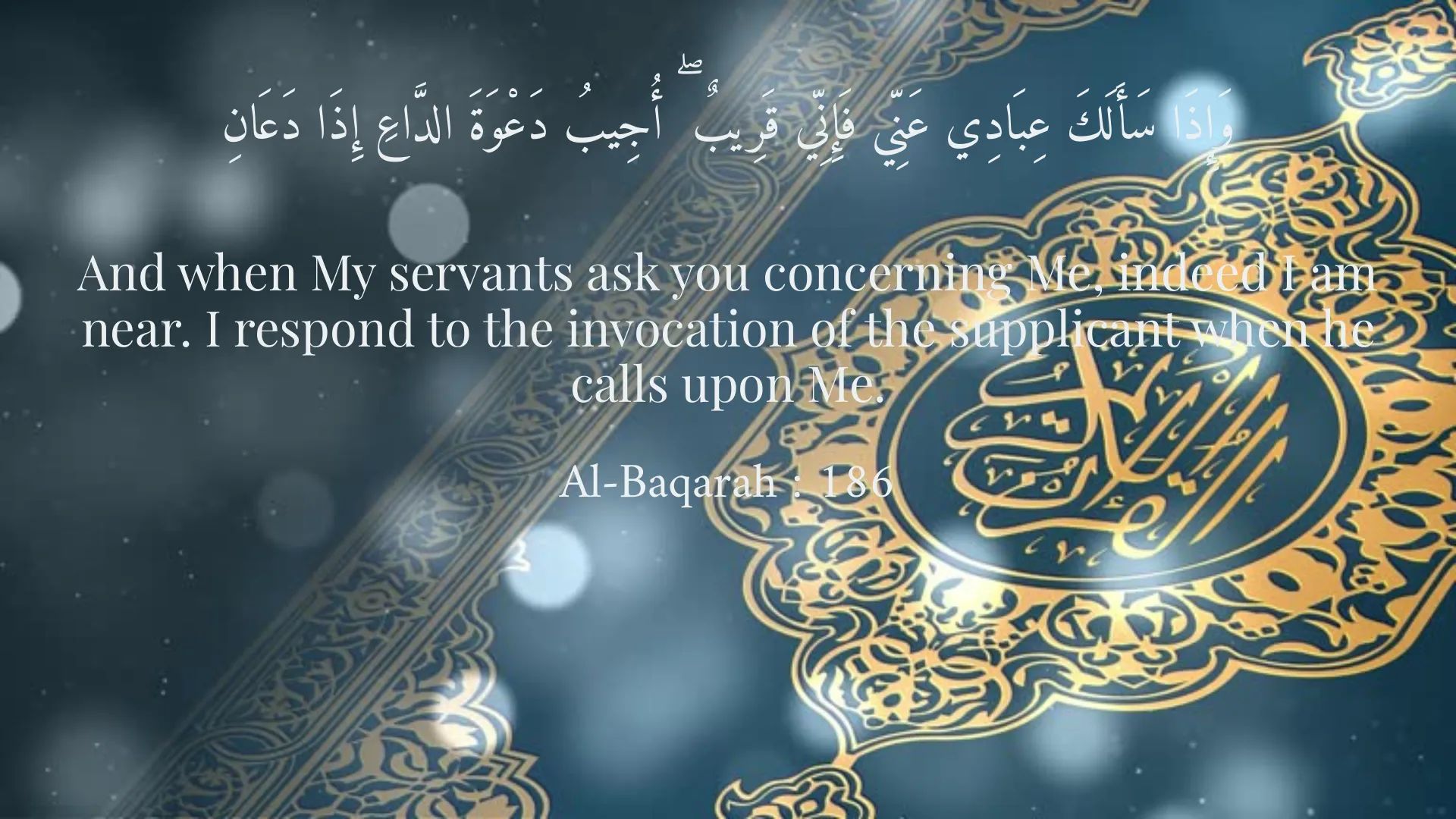
In the Holy Quran, Allah emphasizes His closeness to His servants, highlighting a profound relationship that exists between them. One of the most reassuring verses in the Quran is found in Surah Al-Baqarah, verse 186: 'And when My servants ask you concerning Me, indeed I am near. I respond to the invocation of the supplicant when he calls upon Me.' This verse profoundly captures the essence of Allah's relationship with His believers. It emphasizes that Allah is not distant or unreachable; rather, He is closely aware of the needs and struggles of His creation. However, the nature of Allah's response to prayers and supplications is often accompanied by an essential nuance: the timing of these responses may not always align with human expectations. Believers might find themselves at a crossroads when their prayers seem unanswered or delayed. This experience often leads to feelings of doubt and confusion. It is crucial to understand that the delay in response does not reflect the absence of Allah, nor does it signify neglect. Instead, it is a manifestation of Allah's divine wisdom, which transcends human understanding. In the context of this divine wisdom, various insights can be gleaned from the lessons embedded in the Quran. Allah's verse regarding His nearness indicates an intimate connection with believers. Despite this closeness, believers must grapple with the reality that their supplications may not be met immediately. This inherent dichotomy serves as a vital aspect of the spiritual journey. It challenges individuals to cultivate patience, faith, and resilience. Learning to navigate periods of silence from Allah is not just about enduring; it is about growing in faith. The act of praying itself becomes a means of drawing nearer to Allah, reinforcing the idea that faith is not merely about receiving immediate answers but about strengthening the bond with the divine. This theme is further explored in Surah Al-Imran, verse 186, where it states, 'You will surely be tested in your properties and your selves,' indicating that challenges and trials are integral to the believer’s life. Such trials serve the purpose of refining faith and character. They act as moments of divine testing that push believers beyond their comfort zones. This testing is sharply intertwined with both patience and resilience. In fact, the manner in which a believer reacts to prayers that seem unanswered can reflect the depth of their faith. Through the delays in Allah's responses, believers are invited to practice patience, and this patience serves as a significant test of faith. The Quran acknowledges the difficulties faced by believers but offers an explanation that transcends immediate human concerns. Allah's timing in addressing the prayers of His servants is often rooted in a higher wisdom and purpose. Perhaps the answer is delayed because it serves a greater good, aligns with a broader cosmic plan, or is withheld for a time in which it will be of greater benefit to the supplicant. Believers are encouraged to trust in this divine timing, recognizing that Allah knows best what is suitable for each individual. Moreover, the challenge of waiting upon Allah for an answer can often serve as an impetus for deeper spiritual development. In these moments of waiting, individuals can discover opportunities for self-reflection, personal growth, and a deeper understanding of their faith. The distance that one might feel during these waiting periods can lead to increased introspection, prayer, and dedication to spiritual practices. The journey can foster a more profound connection with Allah that goes beyond the request itself; it can lead to a more holistic faith experience. Patience in prayer and supplication is thus a practice that builds character and spiritual endurance. The process of waiting tests the resolve of the believer, cultivating virtues such as humility and gratitude. Faithful individuals learn that sometimes what appeals to them may not align with what they truly need. As Allah states, He responds to the invocation of the supplicant; however, the response may manifest in various forms, including guidance, strength, or the strengthening of one’s character amidst trials. Thus, the seemingly delayed responses to prayers can ultimately serve a higher purpose. Those who persevere in their faith during these times can emerge from their trials with strengthened hearts, a more profound appreciation for the blessings they do possess, and a closer relationship with their Creator. Every test endured and every prayer persevered through becomes a stepping stone toward spiritual maturity. In summary, the Quran makes it abundantly clear that Allah is close to His servants and that He responds to their prayers. However, the timing of those responses is governed by divine wisdom. Believers are called to learn patience, to withstand trials, and to engage wholeheartedly in their spiritual journey. Each unfulfilled prayer is not a sign of abandonment but rather an invitation to deepen one’s faith, practice patience, and develop a more profound relationship with God. By embracing the waiting game, believers can uncover the rich lessons embedded in their experiences and emerge more committed and devoted to their faith. The journey of waiting is a beautiful, transformative process in the life of a believer, and it often leads to greater spiritual growth and closeness to Allah.
Related Verses
وَإِذَا سَأَلَكَ عِبَادِي عَنِّي فَإِنِّي قَرِيبٌ ۖ أُجِيبُ دَعْوَةَ الدَّاعِ إِذَا دَعَانِ
And when My servants ask you concerning Me, indeed I am near. I respond to the invocation of the supplicant when he calls upon Me.
Al-Baqarah : 186
لَتُبْلَوُنَّ فِي أَمْوَالِكُمْ وَأَنفُسِكُمْ
You will surely be tested in your properties and your selves.
Al-Imran : 186
Short Story
Once upon a time, there was a man named Hasan who always prayed for help from Allah. However, he never received an immediate answer and became disheartened. One day, he met a great scholar who told him, "Allah is always close and answers, but sometimes, you need to show patience and perseverance to learn greater lessons. When you wait and pray, you also grow and become closer to Him." Hearing this, Hasan felt at peace and recognized that patience in prayer is a blessing.