Quranic Answer
The concept of sustenance and blessings in the Holy Quran transcends mere material abundance; it is deeply rooted in divine wisdom and the intricate relationship between mankind and the Creator. Throughout various chapters and verses of the Quran, Allah elucidates the principles underlying the distribution of sustenance. This article aims to explore these principles, highlighting the interconnectedness of faith, actions, and the divine decree in determining an individual's provision. Sustenance in the Quran is described not only as physical provisions but also encompasses spiritual, emotional, and psychological well-being. The Holy Quran asserts that Allah, in His infinite wisdom, assigns sustenance according to His divine plan. This is explicitly emphasized in Surah Al-Isra, verse 30, where Allah states: "And your Lord extends provision for whom He wills and restricts [it]." This verse conveys the profound reality that one's success and wealth are ultimately orchestrated by God's will. The distribution of sustenance, therefore, reflects a higher purpose beyond human comprehension. It is essential to recognize that worldly possessions do not correlate directly with divine favor. For instance, one may observe individuals who are materially affluent yet lack the inner peace and satisfaction that comes from a strong connection with God. In contrast, those who may possess little in terms of material wealth but are devoted in their faith experience a profound sense of contentment and happiness. This dichotomy highlights a vital aspect of life: that one’s worth is not measured by material possessions but rather by one's devotion and closeness to Allah. In Surah Az-Zumar, verse 52, Allah questions: "Do they not know that Allah extends provision for whom He wills and restricts it?" This rhetorical question serves as a reminder of the divine wisdom behind the economic disparities we witness in the world. It invites introspection and encourages individuals to evaluate their relationship with God and the underlying spiritual principles governing their lives. The wisdom embedded in this verse reinforces the idea that true sustenance emanates from a heart aligned with faith and good deeds. Moreover, the notion of divine tests and trials plays a significant role in understanding the distribution of blessings. The Quran teaches that individuals with greater blessings may be subjected to more formidable tests. This spiritual principle serves to remind believers that prosperity comes with responsibility, and it is through the testing of one's faith and gratitude that true character is revealed. As articulated in Surah Al-Baqarah, verse 155: "And We will surely test you with something of fear and hunger and a loss of wealth and lives and fruits, but give good tidings to the patient." This verse illustrates the reality that trials are an inherent aspect of life, serving as a means of spiritual elevation and growth. To further explore the multifaceted nature of sustenance, one must consider the importance of gratitude and its relationship to divine blessings. The Quran repeatedly emphasizes the merit of being grateful for the provisions one receives, regardless of their quantity. Surah Ibrahim, verse 7 states: "And remember when your Lord proclaimed: 'If you give thanks [for My bounty], I will surely increase it for you; but if you deny, indeed, My punishment is severe.'" This verse highlights the reciprocal relationship between gratitude and the increase of blessings—a core principle that underscores the dynamic exchange between the human spirit and the divine. True happiness, as described in the Quran, is not solely derived from material gains but thrives in the connection that one fosters with Allah. Sustenance, therefore, is not limited to one's financial resources or social status but extends to the nourishment of the soul through prayer, remembrance, and faith. This holistic perspective invites believers to align their pursuits with spiritual objectives, encouraging them to nurture their relationship with the Creator. In doing so, they pave the way for a life filled with true satisfaction and contentment, even amidst life's trials and tribulations. In conclusion, the divine distribution of sustenance as articulated in the Holy Quran invites believers to embrace a broader understanding of prosperity. It calls upon them to recognize the interplay between faith, devotion, gratitude, and the tests of life. Wealth and material success, while significant in the human experience, do not serve as the ultimate measure of blessing. Instead, true sustenance can be found in one's unwavering connection with Allah and the heartfelt utilization of His gifts. As individuals strive to cultivate gratitude, patience, and a deeper connection with their Creator, they unlock the profound joy and fulfillment that sustains the human spirit, regardless of external circumstances. This wisdom serves as a guiding light for individuals seeking meaning and purpose in their lives, encouraging them to embrace the teachings of the Quran and foster a life rooted in faith.
Related Verses
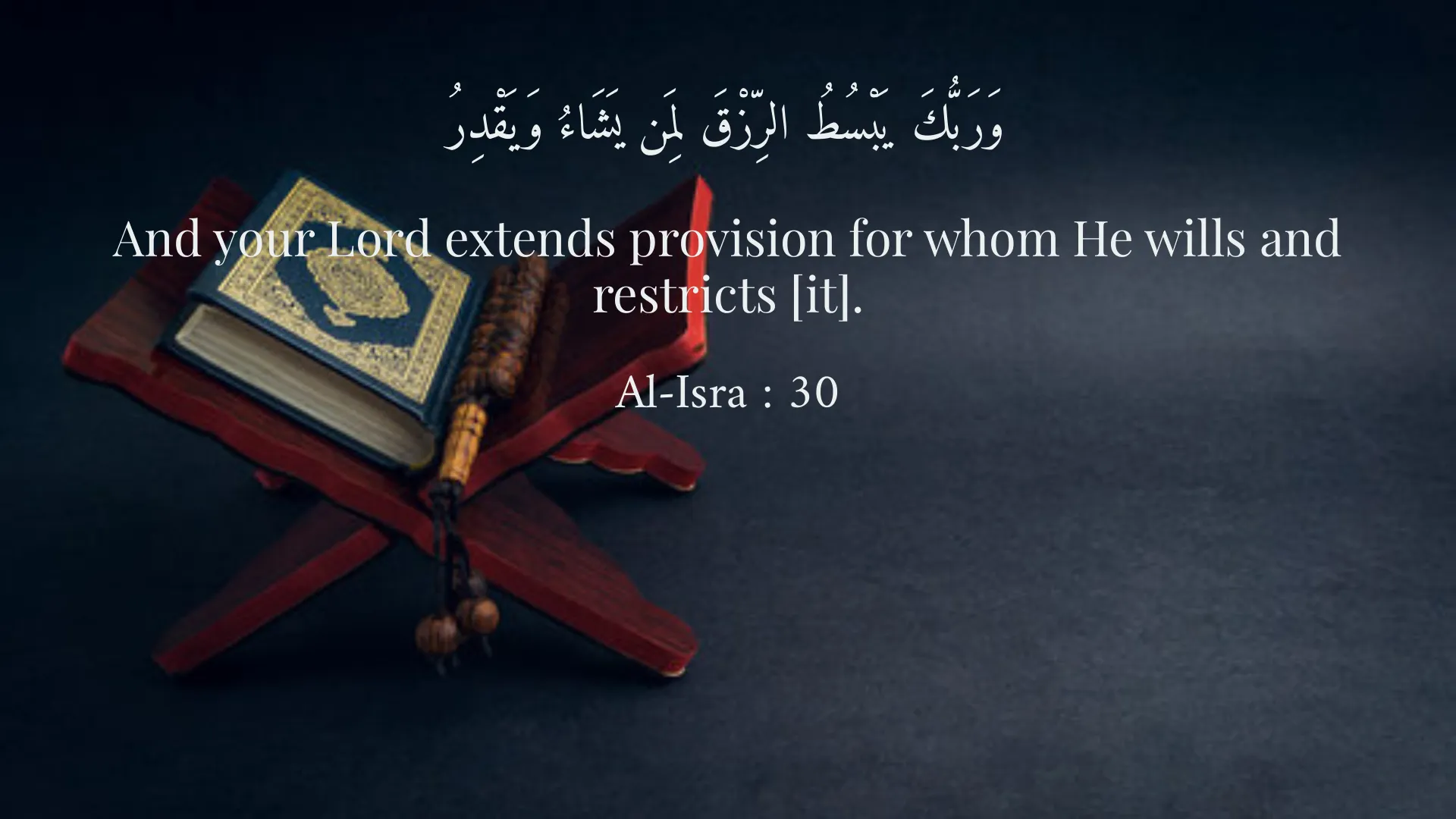
وَرَبُّكَ يَبْسُطُ الرِّزْقَ لِمَن يَشَاءُ وَيَقْدِرُ
And your Lord extends provision for whom He wills and restricts [it].
Al-Isra : 30
أَلَمْ يَعْلَمُوا أَنَّ اللَّهَ يَبْسُطُ الرِّزْقَ لِمَنْ يَشَاءُ وَيَقْدِرُ
Do they not know that Allah extends provision for whom He wills and restricts it?
Az-Zumar : 52
Short Story
One day, Jesus and his companions were sitting under a tree. One of his companions asked him, 'Why has God granted some individuals more sustenance?' Jesus replied, 'Allah has His own wisdom. We do not know what is in their hearts, and perhaps these blessings are given to them as a test.' His companions lowered their heads and fell into deep thought.