Quranic Answer
The Concept of Punishment in the Holy Quran: A Reflection on Accountability and Mercy The Holy Quran, regarded as the literal word of God by Muslims, serves as a comprehensive guide for humanity. It addresses various aspects of life, including guidance for moral conduct, social relations, and personal responsibility. Among its many themes, the notion of punishment for disbelief and wrongdoing is prominently featured. In this article, we will delve deeper into the Quranic perspective on punishment, exploring the implications it holds for mankind, and the interplay between divine justice, human accountability, and the mercy of Allah. One of the most striking aspects of the Quran is its unwavering stance on accountability. In Surah Al-Mursalat, verse 29 states, 'And the punishment will be upon those who deny.' This is not just a mere proclamation but serves as a broad warning that emphasizes the critical importance of belief in Allah and adherence to His guidance. The phrase clearly signifies that the denial of God's existence and the willful turning away from His path lead to punitive consequences. This establishes a foundational principle that every individual is held accountable for their beliefs and actions. The promise of punishment in the Quran is multifaceted; it acts not only as a deterrent against disobedience but also as a reminder of the responsibilities that come with faith. By acknowledging the existence of punishment, individuals are prompted to reflect on their conduct and the moral implications of their choices. This is essential in fostering a sense of responsibility within society. People are urged to engage in self-assessment and introspection, understanding that actions, whether good or bad, will have repercussions in the hereafter. In Surah An-Naba, verses 17 to 20, God vividly describes the Day of Resurrection, a critical moment when all humans will stand before Him for judgment. It is here that punishment and reward are meted out based on human deeds during their earthly existence. These verses serve to instill a sense of urgency in believers, urging them to fulfill their obligations toward God and society while also discouraging them from engaging in vice and wrongdoing. The depiction of the Day of Judgment accentuates the ultimate accountability every human will face, reinforcing the importance of living a life aligned with divine commands. The emphasis on punishment further elucidates the concept of divine justice within the Quran. Justice is a fundamental attribute of Allah; it is ensured that no wrongdoer escapes the consequences of their actions. The Quran asserts that the wrongs committed in this world will be addressed and rectified in the Hereafter, where divine justice prevails. This notion is particularly significant for those who suffer injustices on earth, as it offers them hope that their plight will not be ignored; they will receive recompense for the wrongs they endured. Additionally, examining the promise of punishment in the Quran reveals its role as a protective measure within society. By instilling a sense of fear regarding divine retribution, individuals are encouraged to adhere to moral and ethical standards. This guidance promotes the well-being of communities and encourages harmonious coexistence, as people strive to treat one another with respect and justice. Therefore, the threat of punishment not only aims to deter individuals from sinning but also serves to uphold societal values and morals crucial for maintaining order and stability. However, it is essential to recognize that Allah, in His infinite wisdom, does not solely focus on punishment. The Quran continuously highlights God's attributes of compassion and mercy, which provide a pathway for forgiveness and redemption. Allah desires for His creations to turn away from misguidance and embrace righteousness. Therefore, it is within the Quran's narrative that the concept of repentance, or 'Tawbah,' is introduced as an option for those who have strayed from the right path. The divine call for repentance exemplifies the ultimate mercy of Allah and reinforces the idea that punishment is not a desire for destruction but rather a form of guidance. The promise of punishment serves as a reminder for believers to recognize their shortcomings and take active steps toward repentance. In Surah Al-Furqan, verse 70, it is mentioned, 'Except for those who repent, believe and do righteous work. For them, Allah will replace their evil deeds with good.' This verse illustrates that through genuine repentance and righteous deeds, individuals can attain forgiveness and minimize the weight of their sins. Thus, the promise of punishment serves as an invitation for awareness and awakening in the lives of individuals. It is a call to recognize one's responsibilities, acknowledge one's missteps, and embrace a life aligned with the teachings of the Quran. Each person is reminded that while punishment is inevitable for those who deny and engage in wrongdoing, the door to mercy and forgiveness remains open for those who earnestly seek to amend their ways. In conclusion, the concept of punishment in the Holy Quran embodies several significant themes, including accountability, justice, mercy, and guidance. It serves as both a warning and an invitation for reflection, ensuring that humanity grasps the weight of their actions while also recognizing the vastness of Allah's mercy. Through this intricate balance, the Quran not only shapes the moral framework for individuals but also fosters an environment of ethical conduct that ultimately benefits society as a whole. By internalizing these teachings, believers can navigate their lives with a profound sense of responsibility and awareness, upholding values that reflect the teachings of the Quran both individually and collectively.
Related Verses
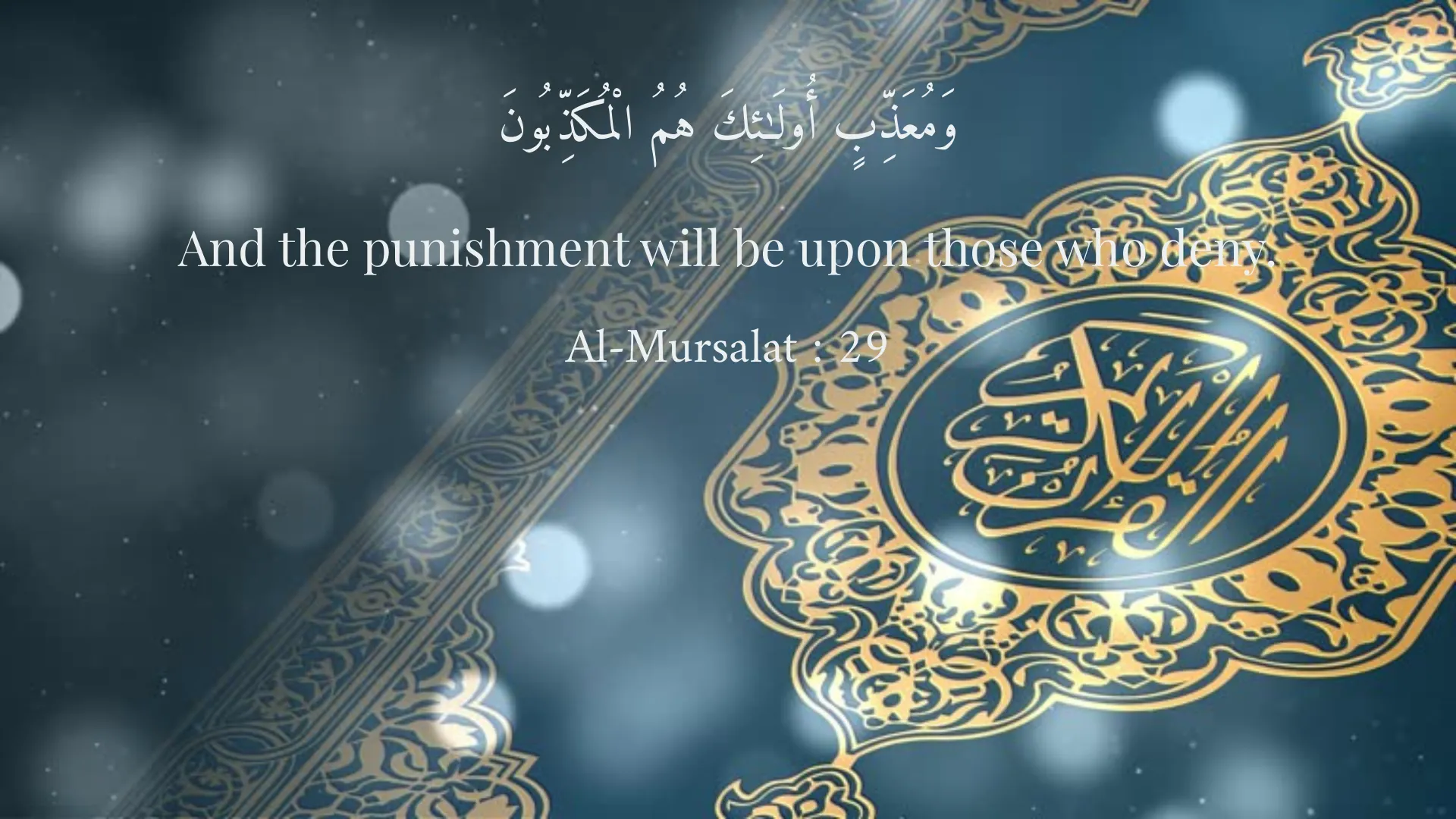
وَمُعَذِّبٍ أُولَـٰئِكَ هُمُ الْمُكَذِّبُونَ
And the punishment will be upon those who deny.
Al-Mursalat : 29
إِنَّ يَوْمَ الْفَصْلِ كَانَ مِيقَـٰتًا
Indeed, the Day of Judgement is an appointed time.
An-Naba : 17
يَوْمَ يُنفَخُ فِي الصُّورِ فَتَأْتُونَ أَفْوَاجًا
The day the trumpet is blown and you will come forth in groups.
An-Naba : 18
Short Story
Once upon a time, a worshiper was sitting in the heart of the mountains, deeply engaged in worship. He noticed that people were drowning in disbelief and misguidance and was deeply concerned about their state. In his heart, he prayed for God to return them to the right path. Suddenly, a voice from the heavens said to him: 'Tell My servants that My punishment awaits those who disbelieve in Me and stray from the right way.' The worshiper was deeply affected by this message and decided to tell the people that while God is always gracious and merciful, punishment also rightly follows disbelief.