Quranic Answer
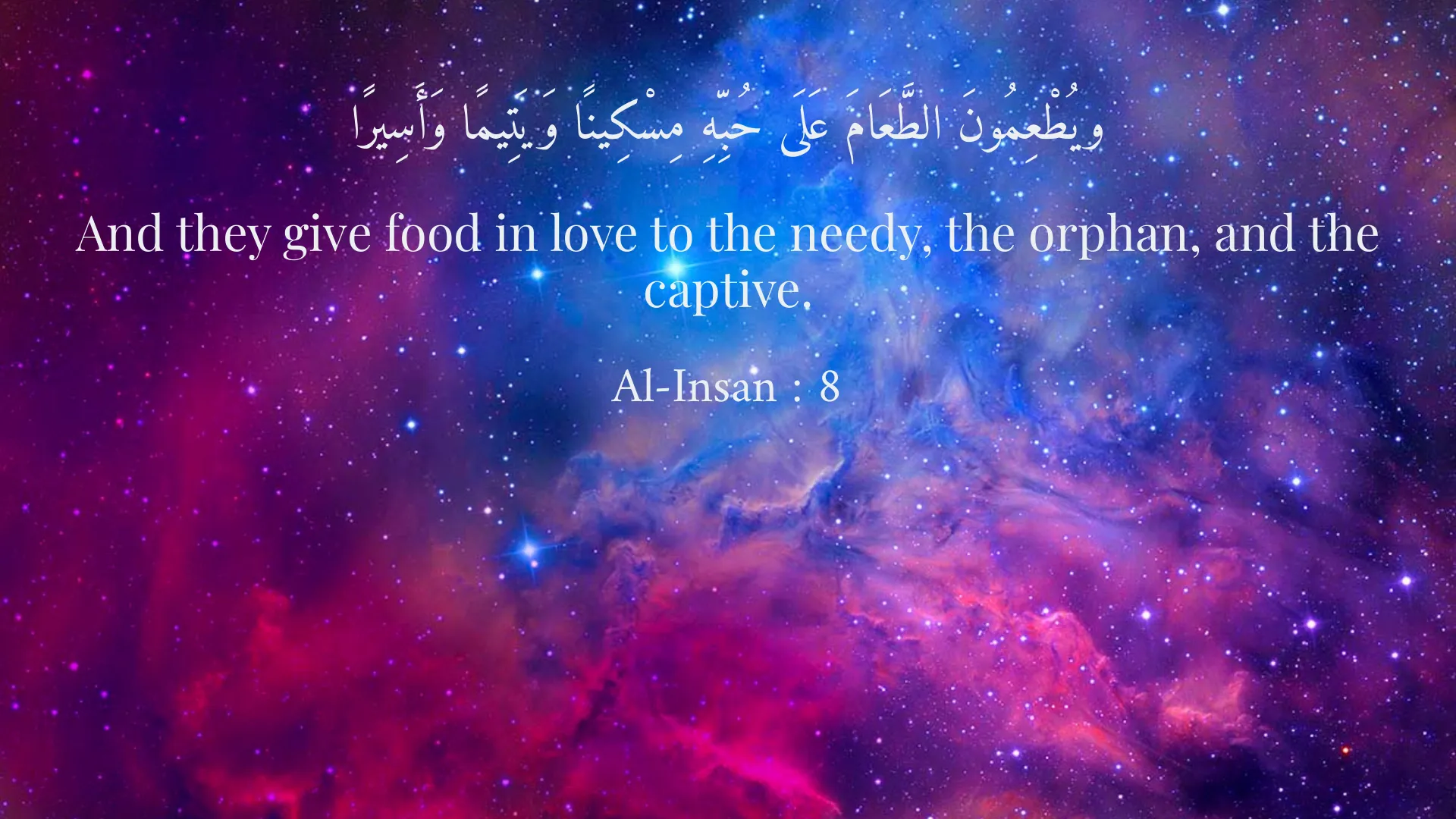
Feeding the needy is one of the fundamental obligations and rights of humanity in Islam, highlighted in the Holy Quran. The practice of feeding those in need is deeply ingrained in Islamic teachings and is seen as a vital aspect of both individual character and community health. In a world where economic disparities and social injustices are increasingly prevalent, the emphasis on charity and support for the less fortunate serves as a reminder of the moral responsibilities that every person holds. This article will delve into the significance of feeding the needy in Islam, exploring its social, spiritual, and ethical implications while drawing upon relevant Quranic verses and Hadiths to illustrate the importance of this noble act in fostering a just society. First and foremost, it is crucial to understand that feeding the needy is mandated in the Holy Quran. Allah instructs the believers to provide commendable food to the needy as a means of not only alleviating hunger but also as a way of pleasing Him. In verse 8 of Surah Al-Insan, it is stated, "And they give food in spite of love for it to the needy, the orphan, and the captive." This verse connects the act of feeding with a selfless spirit of generosity that transcends mere obligation. It encourages Muslims to offer their sustenance to those less fortunate, promoting an ethos of sharing and compassion. The act of giving food to the needy is more than just a charitable gesture; it nurtures the soul and brings immense rewards from God. The Quran assures believers that every act of kindness will be compensated, as reiterated in verse 274 of Surah Al-Baqarah, where Allah promises that those who give charity will receive a great reward on the Day of Judgment. Therefore, it is through the act of feeding and providing for others that individuals cultivate their relationship with Allah, deepening their faith and enhancing their spiritual journey. From a social perspective, the act of feeding others serves to promote a more equitable distribution of wealth. In societies with stark economic divides, the rich often remain detached from the struggles of the poor. By making an effort to feed the needy, individuals can bridge this gap, fostering empathy and understanding between different social strata. Hands-on engagement with charitable acts helps wealthy individuals reflect on their blessings and motivates them to share their resources, which can lead to a more harmonized society. Community cohesion is also profoundly impacted by the act of feeding the needy. When people come together to provide for those in need, it strengthens communal bonds. Events such as charity drives, soup kitchens, and food banks not only provide nourishment but also offer an opportunity for social interaction and collective action. These activities create spaces where people from various backgrounds can unite for a common cause, fostering a sense of belonging and mutual respect. The spiritual implications of feeding the needy are perhaps even more profound. Acts of charity reflect intrinsic qualities such as compassion, love for others, and a profound sense of social responsibility. It is through these acts that believers embody the teachings of Islam, reinforcing their identity as servants of Allah. In verse 9 of Surah Al-Hadid, Allah mentions that feeding the needy is among the characteristics of true believers, thus linking the moral act of giving with one's faith. This connection demonstrates that one’s spiritual standing is intertwined with their social actions, indicating that the two realms—spiritual and social—are not separate in Islam but rather interdependent. Additionally, the teachings of Sunnah further underscore the importance of charity and feeding the needy. The Prophet Muhammad (peace be upon him) emphasized the significance of helping those less fortunate, stating, "He is not a believer whose stomach is filled while the neighbor to his side is hungry." This Hadith illustrates that true belief is reflected not only in worship but also in our interactions with others. The act of feeding the needy is a manifestation of one's faith and serves to elevate an individual’s moral and ethical conduct. Furthermore, in contemporary society, where consumerism and individualism can dominate human interactions, the teachings of Islam regarding feeding the needy serve as a powerful counter-narrative. They remind us of our shared humanity and the collective responsibility we have towards one another. In a world rife with injustice, economic disparity, and anguish, the act of feeding the needy becomes a revolutionary statement—a powerful assertion that every individual deserves dignity and sustenance. In conclusion, feeding the needy is not merely an act of charity but a fundamental tenet ingrained deeply within Islamic teachings. Rooted in compassion and reinforced through divine instruction, this noble act significantly influences both the giver and the receiver. On a social level, it fosters community cohesion and a more equitable distribution of resources, while on a spiritual level, it strengthens one’s relationship with Allah and reflects the core values of faith. As Muslims, fulfilling this obligation serves not only to enhance individual futures but also to nurture a thriving society, characterized by shared value systems, compassion, and interconnection. Thus, let us heed the call of Allah and strive to feed the needy—an act that brings forth both divine rewards and the blossoming of love and compassion among humanity.
Related Verses
ويُطْعِمُونَ الطَّعَامَ عَلَى حُبِّهِ مِسْكِينًا وَيَتِيمًا وَأَسِيرًا
And they give food in love to the needy, the orphan, and the captive.
Al-Insan : 8
الَّذِينَ يُنفِقُونَ أَمْوَالَهُمْ فِي سَبِيلِ اللَّهِ ثُمَّ لَا يُتْبِعُونَ مَا أَنفَقُوا مِنًّا وَلَا أَذًى ۚ لَهُمْ أَجْرُهُمْ عِندَ رَبِّهِمْ وَلَا خَوْفٌ عَلَيْهِمْ وَلَا هُمْ يَحْزَنُونَ
Those who spend their wealth in the way of Allah and do not follow their spending with reminders or injury will have their reward with their Lord, and no fear will there be concerning them, nor will they grieve.
Al-Baqarah : 274
وَاَلَّذِينَ آمَنُوا بِاللَّهِ وَرُسُلِهِ وَأَولَـٰئِكَ هُمُ الصَّادِقُونَ
And those who believe in Allah and His messengers, those are the truthful.
Al-Hadid : 9
Short Story
One day, a man named Hassan was shopping in the market when he noticed a poor man sitting by the street, going without food. Hassan thought to himself, why should I eat only for myself? He decided to share his food with the man. When the man ate the food, his eyes filled with love and gratitude. Hassan felt that he had not only helped the man but also enriched his own soul.