Quranic Answer
The concept of patience, or 'sabr' in Arabic, is a fundamental principle in Islam and is deeply woven into the fabric of a believer's life as illustrated in the Holy Quran. Patience is not merely the ability to endure hardships passively but embodies a profound strength and resilience that reflects faith and trust in Allah. Throughout the Quran, patience is extolled as a virtue essential for navigating the trials and tribulations of life, especially during periods of adversity. It fosters a spiritual connection to God, reminding believers that ultimate success and relief come from Him alone. In Surah Al-Baqarah, verse 153, it is stated: 'O you who have believed, seek help through patience and prayer. Indeed, Allah is with the patient.' This verse encapsulates the essence of patience as both a spiritual and practical tool for believers. The directive to seek assistance through patience and prayer indicates that reliance on God in times of difficulty is paramount. It emphasizes an active form of patience, one that involves engaging in prayer to seek divine support. Here, the Quran provides a blueprint for how to approach life's challenges: by cultivating patience and maintaining a steadfast connection through prayer. Moreover, in Surah Al-Imran, verse 200, Allah commands, 'O you who have believed, persevere and endure and remain stationed and fear Allah that you may be successful.' This verse serves as a motivational call to action for believers to engage in personal and communal patience. It emphasizes the need for enduring hardships together, reinforcing the importance of community support in challenging times. In Islam, patience is not an isolated endeavor; rather, it is a shared experience that strengthens the bonds among believers and enables collective resilience against the trials of life. Patience is viewed as a robust shield that protects believers from despair and hopelessness. Its significance is further underscored by the notion that through enduring adversity patiently, individuals can attain a higher level of spiritual awareness and understanding. When faced with difficulties, whether they be personal, professional, or related to one’s health, patience serves as a guiding force that helps individuals remain calm and focused. Navigating through these challenges allows individuals to not only resolve issues effectively but also enhances their self-awareness and their relationship with Allah. Patience in the face of adversity can also be seen as a form of worship itself. It is a state in which a believer submits their will to God, acknowledging that their trials come from Him and that He has the wisdom to know what is best for them. This submission cultivates a profound sense of trust and reliance on God’s timing and plan. The Quran teaches that while trials may seem overwhelming, maintaining patience can reveal lessons and blessings that are not immediately apparent. In addition, the Quran makes it clear that patience is rewarded. In Surah Az-Zumar, verse 10, it states, 'Indeed, the patient will be given their reward without account.' This promise serves as a motivator for individuals to develop patience, reassuring them that their efforts will not go unnoticed and that divine recompense is guaranteed. It opens the door for believers to maintain hope and perseverance, knowing that their trials are a path to greater spiritual wealth. The cultivation of patience also plays an essential role in shaping one’s character. It teaches important life skills such as self-control, empathy, and perseverance. In a world that often promotes instant gratification and quick fixes, patience encourages individuals to take a step back, reflect, and consider the long-term implications of their actions. It fosters a mindset that values growth and learning over immediate results, allowing believers to develop a deeper understanding of both themselves and the world around them. Furthermore, patience is crucial not only in bearing personal hardships but also in dealing with others in a compassionate manner. Cultivating patience can lead to better interpersonal relationships and communication within families, friendships, and communities. By practicing patience, individuals become more empathetic and understanding, which helps to ease tensions and build stronger social bonds. This communal aspect of patience reinforces the Islamic value of fostering unity and harmony among believers. In conclusion, patience is one of the esteemed qualities highlighted in the Quran, emphasized particularly during times of hardship. Verses from the Holy Quran characterize patience as more than mere endurance; it is a spiritual strength that facilitates a deeper connection with Allah and serves as a foundational virtue in the lives of believers. Patience is a form of worship that allows individuals to gain insight and understanding through their struggles. By turning to God through prayer and actively engaging in perseverance, believers can navigate their challenges effectively and emerge as stronger, more resilient individuals. Ultimately, embracing patience unveils the profound faith that guides individuals on their journey towards success and fulfillment in life.
Related Verses
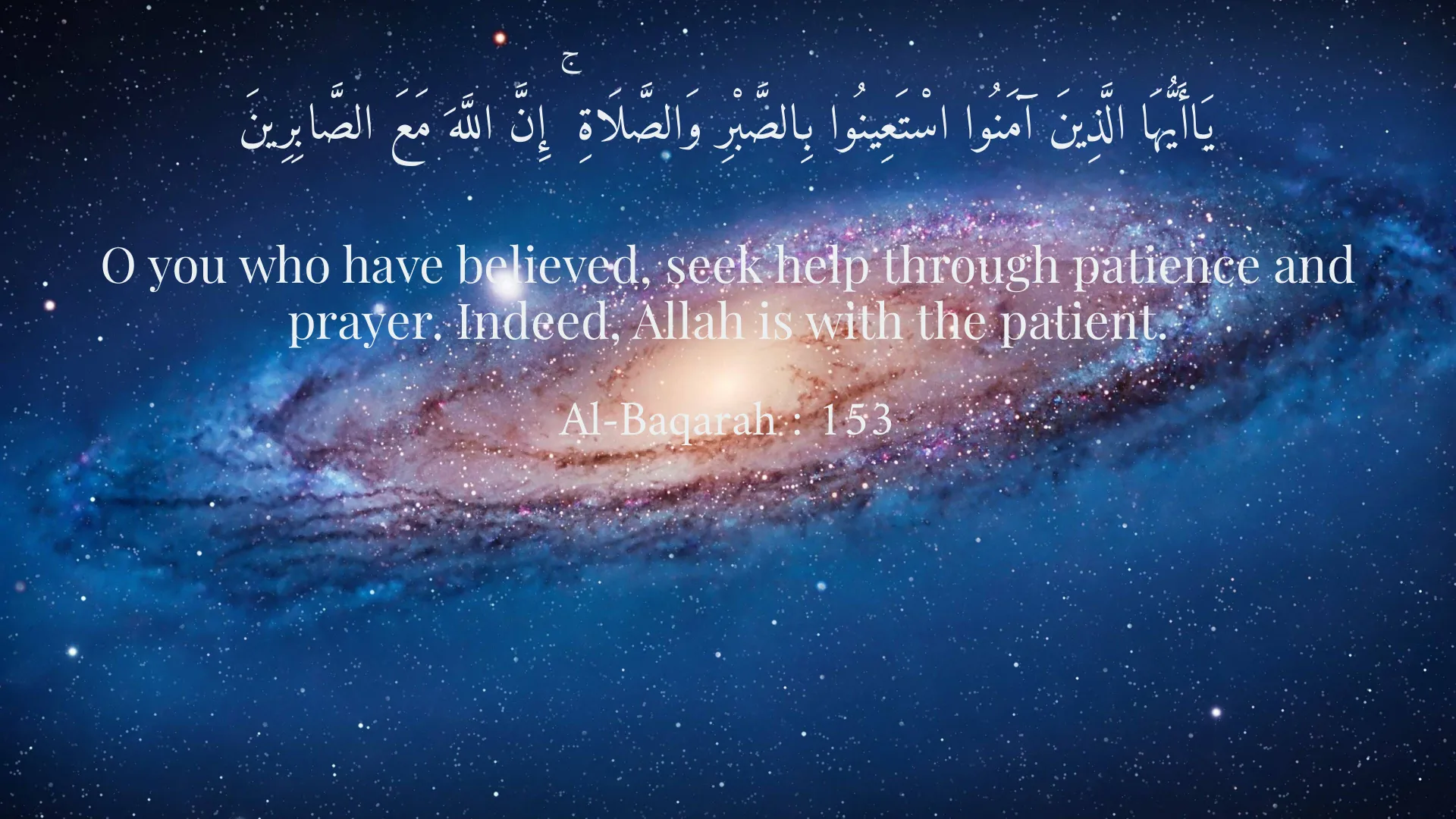
يَاأَيُّهَا الَّذِينَ آمَنُوا اسْتَعِينُوا بِالصَّبْرِ وَالصَّلَاةِ ۚ إِنَّ اللَّهَ مَعَ الصَّابِرِينَ
O you who have believed, seek help through patience and prayer. Indeed, Allah is with the patient.
Al-Baqarah : 153
يَا أَيُّهَا الَّذِينَ آمَنُوا اصْبِرُوا وَصَابِرُوا وَرَابِطُوا وَاتَّقُوا اللَّهَ لَعَلَّكُمْ تُفْلِحُونَ
O you who have believed, persevere and endure and remain stationed and fear Allah that you may be successful.
Al-Imran : 200
Short Story
Once upon a time, a man named Hasan was grappling with many problems in life. He was always worried about his future and didn’t know how to cope with the difficulties. One day, as he sat by a river praying, he noticed a frog trying to leap out of the water. Each time it fell, it tried again to reach the water. Hasan remembered the verses of the Quran and realized he needed to be patient and trust in God. So, he decided to approach his troubles with faith and perseverance.